The lasting influence of American political leaders rests on the statutes they enacted, the treaties they negotiated, and the constitutional precedents they established. This guide examines 23 prominent figures whose official actions reshaped the federal government.
Each entry highlights the primary records—including congressional roll-call votes, Supreme Court opinions, and the United States Code—behind their historical reputations. Together, these leaders established the operational framework of modern American governance across all three federal branches.
How We Selected the Most Enduring American Political Leaders
This list counts 23 political leaders across the executive, legislative, and judicial branches whose official actions altered how the federal government operates. Entries were chosen based on enduring constitutional amendments, foundational statutes, landmark Supreme Court rulings, and major executive reorganizations.
The selection spans from the Founding Era through modern administrations, excluding figures without enforceable statutory, diplomatic, or constitutional achievements.
| Leader | Primary Office | Key Statute or Action | Enduring Milestone |
|---|---|---|---|
| George Washington | 1st President | Judiciary Act of 1789 | Established federal court system |
| Thomas Jefferson | 3rd President | Louisiana Purchase Treaty | Doubled federal land territory |
| Alexander Hamilton | 1st Treasury Secretary | Bank Act of 1791 | Created national fiscal system |
| Benjamin Franklin | Diplomat and Framer | Treaty of Paris (1783) | Secured sovereign independence |
| James Madison | 4th President | Bill of Rights (1791) | Drafted foundational constitutional rights |
| John Marshall | 4th Chief Justice | Marbury v. Madison (1803) | Established doctrine of judicial review |
| Abraham Lincoln | 16th President | Emancipation Proclamation | Preserved Union and abolished slavery |
| Theodore Roosevelt | 26th President | Antiquities Act of 1906 | Youngest person to become president |
| Woodrow Wilson | 28th President | Federal Reserve Act of 1913 | Created modern central banking |
| Franklin D. Roosevelt | 32nd President | Social Security Act of 1935 | Prompted the 22nd Amendment |
| Harry S. Truman | 33rd President | National Security Act of 1947 | Desegregated military via executive order |
| Dwight D. Eisenhower | 34th President | Federal-Aid Highway Act | Enforced school desegregation orders |
| John F. Kennedy | 35th President | Executive Order 10924 | Youngest individual elected president |
| Lyndon B. Johnson | 36th President | Civil Rights Act of 1964 | Established Medicare and Medicaid |
| Richard Nixon | 37th President | Reorganization Plan No. 3 | Resigned after U.S. v. Nixon |
| Ronald Reagan | 40th President | Tax Reform Act of 1986 | Negotiated landmark INF Treaty |
| Sandra Day O’Connor | Supreme Court Justice | Planned Parenthood v. Casey | First female Supreme Court justice |
| Ruth Bader Ginsburg | Supreme Court Justice | United States v. Virginia | Advanced constitutional gender equality |
| John Lewis | U.S. Representative | Public Law 108-184 | Catalyzed the Voting Rights Act |
| Nancy Pelosi | Speaker of the House | Affordable Care Act of 2010 | First female Speaker of the House |
| Barack Obama | 44th President | Dodd-Frank Act of 2010 | First African American president |
| Donald Trump | 45th & 47th President | Tax Cuts and Jobs Act | Second non-consecutive presidency |
| Joe Biden | 46th President | Infrastructure Act of 2021 | Oldest sitting president at exit |
George Washington
George Washington presided over the 1787 Constitutional Convention before serving as the first president from April 30, 1789, to March 4, 1797. He established regular cabinet meetings, executive privilege during the 1796 Jay Treaty debates, and the republican title “Mr. President.”
On September 24, 1789, Washington signed the Judiciary Act of 1789 (1 Stat. 73).
This statute organized the six-member Supreme Court, created 13 federal judicial districts, and established the Office of the Attorney General.
Washington delivered his first inaugural address on April 30, 1789, in New York City, preserved in the National Archives Founders Online repository. He stepped down voluntarily after two terms in March 1797, setting a tenure precedent that held until 1940.
Thomas Jefferson
Thomas Jefferson drafted the 1776 Declaration of Independence, served as the first Secretary of State, and held the presidency from 1801 to 1809. As of July 2026, the declaration reached its 250th anniversary as the nation’s foundational charter.
Jefferson authorized the Louisiana Purchase in 1803, acquiring 828,000 square miles from France. The Senate ratified the treaty on October 20, 1803, by a 24–7 vote, doubling the territory of the United States.
During his presidency, Jefferson dispatched naval forces to fight the First Barbary War (1801–1805) and oversaw the 1807 treason prosecution of former Vice President Aaron Burr. On December 22, 1807, Jefferson signed the Embargo Act of 1807 (2 Stat.
451), halting foreign trade.
Alexander Hamilton
Alexander Hamilton served as a New York delegate to the Constitutional Convention and as the first Secretary of the Treasury from 1789 to 1795. Although frequently mistaken for a president, Hamilton never held elective federal office.
Hamilton delivered his Report on Public Credit to the House of Representatives on January 9, 1790. He engineered the Funding Act of 1790 (1 Stat.
138), through which the federal government assumed $25 million in state Revolutionary War debts.
On February 25, 1791, Hamilton secured the statute chartering the First Bank of the United States (1 Stat. 191).
He died on July 12, 1804, one day after a duel with Vice President Aaron Burr in Weehawken, New Jersey.
Benjamin Franklin
Benjamin Franklin never held the presidency, serving instead as a colonial agent in London, minister to France, and sixth president of the Supreme Executive Council of Pennsylvania.
He is the only Founding Father who signed the Declaration of Independence, the Treaty of Alliance with France, the Treaty of Paris, and the U.S. Constitution.
Franklin signed the Treaty of Paris on September 3, 1783, alongside John Adams and John Jay. That agreement secured British recognition of American sovereignty and ended the Revolutionary War.
On September 17, 1787, Franklin signed the Constitution as the oldest delegate at age 81. He died in Philadelphia on April 17, 1790, at age 84.
James Madison
James Madison served as the fourth president from 1809 to 1817 after authoring the Virginia Plan at the 1787 Constitutional Convention. Between 1787 and 1788, he co-authored The Federalist Papers with Alexander Hamilton and John Jay.
As a U.S. Representative from Virginia, Madison introduced constitutional amendments in the House on June 8, 1789. Ten of those proposals achieved state ratification on December 15, 1791, becoming the Bill of Rights.
During his presidency, Madison signed the congressional declaration of war against Great Britain (2 Stat. 755) on June 18, 1812, initiating the War of 1812.
John Marshall
John Marshall served as the fourth Chief Justice of the United States from January 31, 1801, until his death on July 6, 1835. His 34-year tenure remains the longest of any Chief Justice in Supreme Court history.
Marshall authored the unanimous opinion in Marbury v. Madison (5 U.S. 137) on February 24, 1803. The decision established judicial review, affirming the Supreme Court’s authority to invalidate congressional statutes that conflict with the Constitution.
He reinforced federal supremacy in McCulloch v. Maryland (17 U.S. 316) on March 6, 1819. That unanimous ruling upheld Congress’s implied power to charter a national bank under the Necessary and Proper Clause of Article I, Section 8.
Abraham Lincoln
Abraham Lincoln served as the 16th president from March 4, 1861, until his assassination on April 15, 1865. His leadership during the Civil War preserved the Union and ended chattel slavery.
On January 1, 1863, Lincoln exercised his constitutional war powers to issue the Emancipation Proclamation. The order declared enslaved people in rebelling Confederate territories free and authorized the enlistment of Black soldiers into the Union Army.
Lincoln signed the Homestead Act (12 Stat. 392) and the Pacific Railway Act (12 Stat.
489) in 1862. He also backed the Thirteenth Amendment, which passed the House of Representatives by a 119–56 vote on January 31, 1865.
Theodore Roosevelt
Theodore Roosevelt took the oath of office on September 14, 1901, at age 42 following the assassination of President William McKinley. He remains the youngest person to become President of the United States.
Roosevelt expanded federal conservation authority by signing the Antiquities Act (34 Stat. 225) on June 8, 1906.
The statute empowers presidents to designate national monuments on federal lands by public proclamation.
On June 30, 1906, Roosevelt signed both the Pure Food and Drug Act (34 Stat. 768) and the Meat Inspection Act (34 Stat.
669), establishing federal regulatory oversight of interstate food and pharmaceutical products.
Woodrow Wilson
Woodrow Wilson served as the 28th president from 1913 to 1921. His first term reshaped federal monetary and antitrust regulation.
On December 23, 1913, Wilson signed the Federal Reserve Act (38 Stat. 251) into law.
The statute created 12 regional reserve banks and the Federal Reserve Board to oversee the nation’s currency and credit system.
Wilson signed the Federal Trade Commission Act (38 Stat. 717) on September 26, 1914, and the Clayton Antitrust Act (38 Stat.
730) on October 15, 1914. Following German submarine attacks, he requested the World War I declaration approved by Congress on April 6, 1917.
Franklin D. Roosevelt
Franklin D. Roosevelt served as the 32nd president from March 4, 1933, until his death on April 12, 1945.
Voters elected him to four consecutive presidential terms during the Great Depression and World War II.
His four victories led Congress to propose the Twenty-Second Amendment, which states ratified on February 27, 1951, limiting presidents to two elected terms.
As part of his New Deal program, Roosevelt signed the National Labor Relations Act (49 Stat. 449) on July 5, 1935, and the Social Security Act (49 Stat.
620) on August 14, 1935, establishing federal old-age benefits and unemployment insurance.
Harry S. Truman
Harry S. Truman assumed the presidency on April 12, 1945, overseeing the Allied victory in World War II and the onset of the Cold War.
On July 26, 1947, Truman signed the National Security Act of 1947 (61 Stat. 495).
The statute unified the military services under the National Military Establishment (later renamed the Department of Defense) and created the Central Intelligence Agency and National Security Council.
On July 26, 1948, Truman issued Executive Order 9981, mandating equality of treatment and opportunity across the United States Armed Forces regardless of race, color, religion, or national origin.
Dwight D. Eisenhower
Dwight D. Eisenhower served as the 34th president from 1953 to 1961 after commanding Allied forces in Europe during World War II.
In July 1953, his administration concluded the Korean Armistice Agreement, ending active combat in the Korean War.
On June 29, 1956, Eisenhower signed the Federal-Aid Highway Act of 1956 (70 Stat. 374), authorizing a 41,000-mile Interstate Highway System.
He also signed the National Aeronautics and Space Act (72 Stat. 426) on July 29, 1958, establishing NASA.
Eisenhower issued Executive Order 10730 on September 24, 1957, federalizing the Arkansas National Guard and deploying the 101st Airborne Division to enforce federal court desegregation orders at Little Rock Central High School.
Two weeks earlier, on September 9, 1957, he signed the Civil Rights Act of 1957 (71 Stat. 634).
John F. Kennedy
John F. Kennedy won the 1960 presidential election, becoming the youngest person elected to the presidency at age 43.
He established the Peace Corps via Executive Order 10924 on March 1, 1961, which Congress codified in the Peace Corps Act (75 Stat. 612) on September 22, 1961.
In October 1962, Kennedy ordered a naval quarantine of Cuba during the 13-day Cuban Missile Crisis, securing the removal of Soviet ballistic missiles. He subsequently signed the Limited Nuclear Test Ban Treaty on October 7, 1963.
On June 11, 1963, Kennedy delivered a televised address proposing comprehensive federal civil rights legislation before his assassination in Dallas, Texas, on November 22, 1963.
Lyndon B. Johnson
Lyndon B. Johnson took the presidential oath on November 22, 1963, after serving as House member, Senate Majority Leader, and Vice President.
His “Great Society” agenda produced major civil rights and social welfare statutes.
Johnson signed the Civil Rights Act of 1964 (78 Stat. 241) on July 2, 1964.
The law outlawed segregation in public accommodations and prohibited employment discrimination under Title VII.
On July 30, 1965, Johnson signed the Social Security Amendments of 1965 (79 Stat. 286), creating Medicare and Medicaid.
Seven days later, on August 6, 1965, he signed the Voting Rights Act of 1965 (79 Stat. 437), banning discriminatory voting practices such as literacy tests.
Richard Nixon
Richard Nixon served as the 37th president from January 20, 1969, until his resignation on August 9, 1974.
His visit to Beijing in February 1972 re-established diplomatic contact with the People’s Republic of China, and he signed the Anti-Ballistic Missile Treaty with the Soviet Union on May 26, 1972.
Domestically, Nixon established the Environmental Protection Agency via Reorganization Plan No. 3 on December 2, 1970, and signed the Clean Air Act Amendments of 1970 (84 Stat. 1676).
He also signed Title IX of the Education Amendments of 1972 (86 Stat. 373) on June 23, 1972.
Following the Watergate break-in and cover-up, the Supreme Court ruled 8–0 in United States v. Nixon (418 U.S. 683) on July 24, 1974, rejecting absolute executive privilege over subpoenaed White House tapes. Facing near-certain impeachment, Nixon became the only U.S. president to resign from office.
Ronald Reagan
Ronald Reagan served two terms as Governor of California before serving as the 40th president from 1981 to 1989. His administration enacted sweeping federal income tax reductions and increased defense appropriations.
On August 13, 1981, Reagan signed the Economic Recovery Tax Act of 1981 (95 Stat. 172), cutting the top marginal tax rate from 70% to 50%.
He later signed the Tax Reform Act of 1986 (100 Stat. 2085) on October 22, 1986, which consolidated individual income tax brackets and lowered the top rate to 28%.
On December 8, 1987, Reagan and Soviet General Secretary Mikhail Gorbachev signed the Intermediate-Range Nuclear Forces (INF) Treaty in Washington, D.C. The Senate ratified the agreement by a 93–5 vote on May 27, 1988.
Sandra Day O’Connor
Sandra Day O’Connor became the first female Supreme Court Justice after the Senate confirmed President Ronald Reagan’s nomination by a 99–0 vote on September 21, 1981. She served on the Court from September 25, 1981, until her retirement on January 31, 2006.
O’Connor frequently cast the pivotal vote in closely divided constitutional cases. She co-authored the controlling plurality opinion in Planned Parenthood v. Casey (505 U.S. 833) in 1992 and wrote the 5–4 majority opinion upholding narrow affirmative action admissions policies in Grutter v. Bollinger (539 U.S. 306) in 2003.
President Barack Obama awarded O’Connor the Presidential Medal of Freedom on August 12, 2009. She died on December 1, 2023, at age 93.
Ruth Bader Ginsburg
Ruth Bader Ginsburg served as an Associate Justice of the Supreme Court from August 10, 1993, until her death on September 18, 2020. The Senate confirmed her nomination by President Bill Clinton on August 3, 1993, by a 96–3 vote.
In 1996, Ginsburg authored the 7–1 majority opinion in United States v. Virginia (518 U.S. 515). The decision held that the Virginia Military Institute’s male-only admissions policy violated the Fourteenth Amendment’s Equal Protection Clause.
Her dissent in the 5–4 pay-discrimination ruling Ledbetter v. Goodyear Tire & Rubber Co. (550 U.S. 618) in 2007 prompted congressional action. Congress overturned the statutory interpretation by passing the Lilly Ledbetter Fair Pay Act of 2009 (123 Stat.
5), signed into law on January 29, 2009.
John Lewis
John Lewis chaired the Student Nonviolent Coordinating Committee from 1963 to 1966 before representing Georgia’s 5th congressional district in the U.S. House of Representatives from 1987 until his death on July 17, 2020.
On March 7, 1965—”Bloody Sunday”—Alabama state troopers fractured Lewis’s skull as he led voting rights marchers across the Edmund Pettus Bridge in Selma, Alabama. National coverage of the assault accelerated congressional passage of the Voting Rights Act of 1965.
According to the Biographical Directory of the U.S. Congress, Lewis served 17 terms in the House. He sponsored H.R.
3491, enacted on December 16, 2003, as Public Law 108-184 (117 Stat. 2676), which established the National Museum of African American History and Culture.
Nancy Pelosi
Nancy Pelosi made legislative history on January 4, 2007, when the House of Representatives elected her as the first female Speaker of the House.
Representing California in the House since June 2, 1987, she served two non-consecutive speakerships from 2007 to 2011 and from 2019 to 2023.
The House History Archives document her floor management of the Patient Protection and Affordable Care Act (124 Stat. 119).
On March 21, 2010, the House passed the Senate bill by a 219–212 vote under her gavel.
During her second speakership, Pelosi presided over two impeachments of President Donald Trump in December 2019 and January 2021. She stepped down from House Democratic leadership in January 2023, receiving the honorary title Speaker Emerita while continuing to represent California’s 11th congressional district.
Barack Obama
Barack Obama served as a U.S. Senator from Illinois from 2005 to 2008 before serving as the 44th president from 2009 to 2017, becoming the first African American president.
On February 17, 2009, he signed the $787 billion American Recovery and Reinvestment Act of 2009 (123 Stat. 115) in response to the Great Recession.
On March 23, 2010, Obama signed the Patient Protection and Affordable Care Act (124 Stat. 119).
The statute prohibited health insurers from denying coverage for pre-existing conditions, expanded Medicaid eligibility, and created state and federal insurance exchanges.
Obama signed the Dodd-Frank Wall Street Reform and Consumer Protection Act (124 Stat. 1376) on July 21, 2010, establishing the Consumer Financial Protection Bureau.
He also appointed Associate Justices Sonia Sotomayor (confirmed 68–31 in 2009) and Elena Kagan (confirmed 63–37 in 2010) to the Supreme Court.
Donald Trump
Donald Trump served as the 45th president from 2017 to 2021 and was inaugurated as the 47th president on January 20, 2025. He joined Grover Cleveland (22nd and 24th president) as the second chief executive in U.S. history to serve non-consecutive terms.
At his second inauguration on January 20, 2025, Trump was 78 years and 7 months old, surpassing Joe Biden’s 2021 record as the oldest person inaugurated president.
During his first term, Trump signed the Tax Cuts and Jobs Act of 2017 (131 Stat. 2054) on December 22, 2017, lowering the statutory corporate tax rate from 35% to 21%.
He also appointed three Supreme Court Justices: Neil Gorsuch (2017), Brett Kavanaugh (2018), and Amy Coney Barrett (2020).
Joe Biden
Joe Biden represented Delaware in the U.S. Senate for 36 years (1973–2009) and served two terms as the 47th vice president (2009–2017) before serving as the 46th president from 2021 to 2025.
Biden concluded his presidential term on January 20, 2025, at 82 years and 2 months of age, making him the oldest sitting president in United States history.
Biden signed the $1.2 trillion Infrastructure Investment and Jobs Act (135 Stat. 429) on November 15, 2021, and the CHIPS and Science Act (136 Stat.
1366) on August 9, 2022. On August 16, 2022, he signed the Inflation Reduction Act of 2022 (136 Stat.
1818), which passed the Senate 51–50 with Vice President Kamala Harris breaking the tie.
How Enduring Political Legacies Shape the Modern Federal Balance
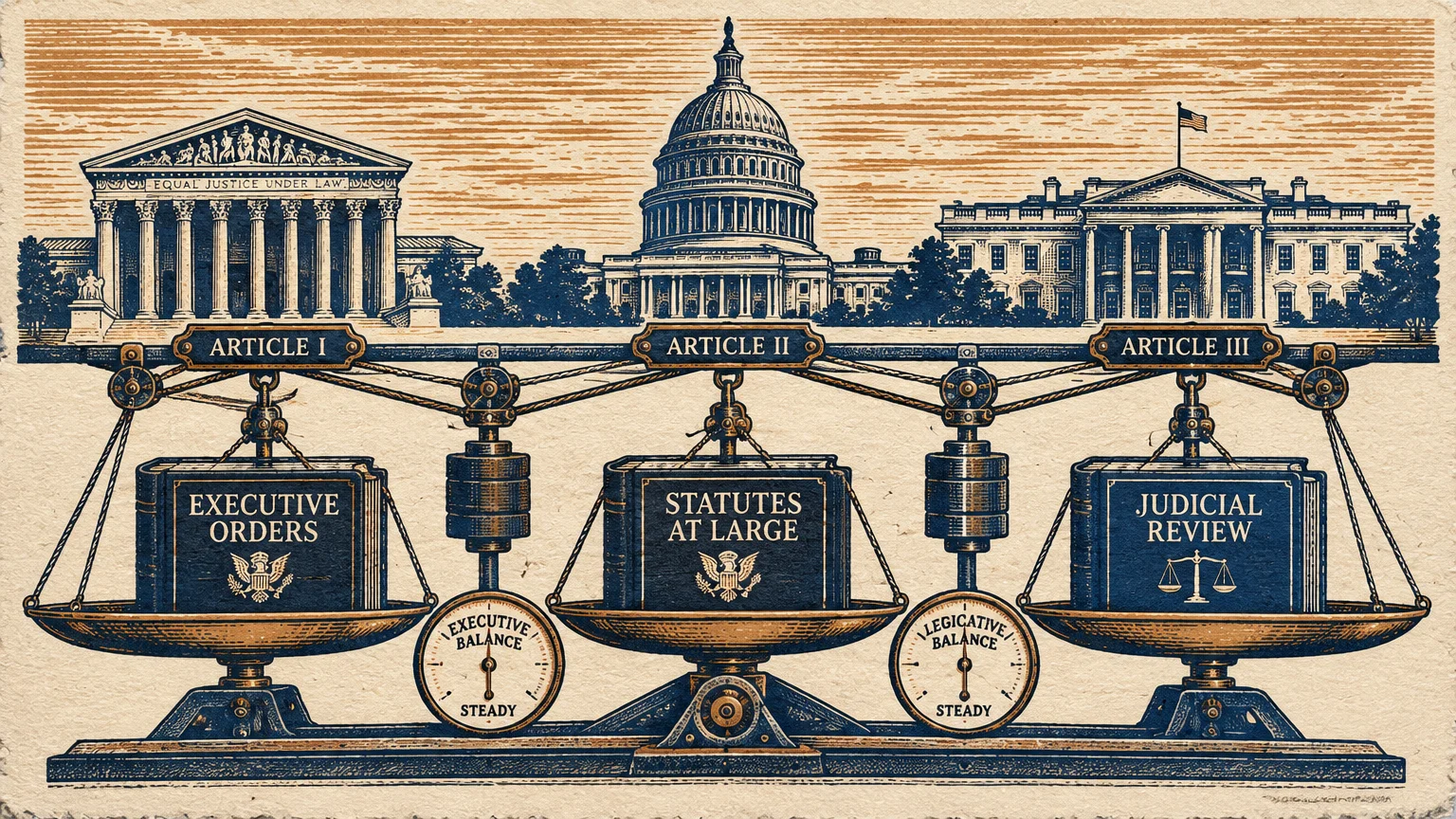
Across American history, lasting authority rests on formal statutory enactments, administrative structures, and constitutional precedents rather than campaign rhetoric. Presidents such as George Washington and Franklin D.
Roosevelt defined the scope of executive power, prompting structural checks like the Twenty-Second Amendment.
Similarly, congressional leaders like Nancy Pelosi and John Lewis demonstrated how legislative procedure translates policy proposals into permanent statutes governing civil rights and healthcare.
On the bench, jurists including John Marshall, Sandra Day O’Connor, and Ruth Bader Ginsburg issued rulings that continue to govern federal-state relations and equal protection doctrine.
Frequently Asked Questions About Historic Political Leaders
Who was the youngest person to serve as President of the United States?
Theodore Roosevelt was the youngest individual to serve as president. He assumed office on September 14, 1901, at age 42 years and 322 days following the assassination of William McKinley.
John F. Kennedy was the youngest person elected to the presidency, taking the oath of office on January 20, 1961, at age 43 years and 236 days.
Why were Alexander Hamilton and Benjamin Franklin never president?
Neither Alexander Hamilton nor Benjamin Franklin ever ran for the presidency. Franklin was 83 years old when the federal government convened under the Constitution in 1789 and died in April 1790.
Hamilton served as the nation’s first Secretary of the Treasury from 1789 to 1795 and never sought the presidency before his death in July 1804.
How did Franklin D. Roosevelt’s presidency alter constitutional term limits?
Roosevelt won four consecutive presidential elections between 1932 and 1944, departing from the voluntary two-term tradition established by George Washington in 1796.
In response, the 80th Congress approved the Twenty-Second Amendment on March 21, 1947, and the required 36 states completed ratification on February 27, 1951, capping future presidents at two elected terms.
Which president lived the longest after leaving office?
Jimmy Carter lived the longest of any American president, reaching 100 years of age on October 1, 2024, before dying on December 29, 2024.
His post-presidential retirement lasted 43 years and 344 days following the conclusion of his single term on January 20, 1981.