
Foreign confrontations do not just trigger overseas military deployments; they force American presidents and Congress to rewrite statutory authorities, trade powers, and national defense doctrines. Examining these flashpoints shows how the modern system of executive action and international statecraft evolved.
From 18th-century maritime disputes to 21st-century tariff showdowns, international friction shapes the federal government’s legal reach and global commitments. These pivotal confrontations created durable frameworks that continue to govern American trade, alliances, and emergency powers.
Selection Criteria and the Constitutional Stakes of Executive Flashpoints
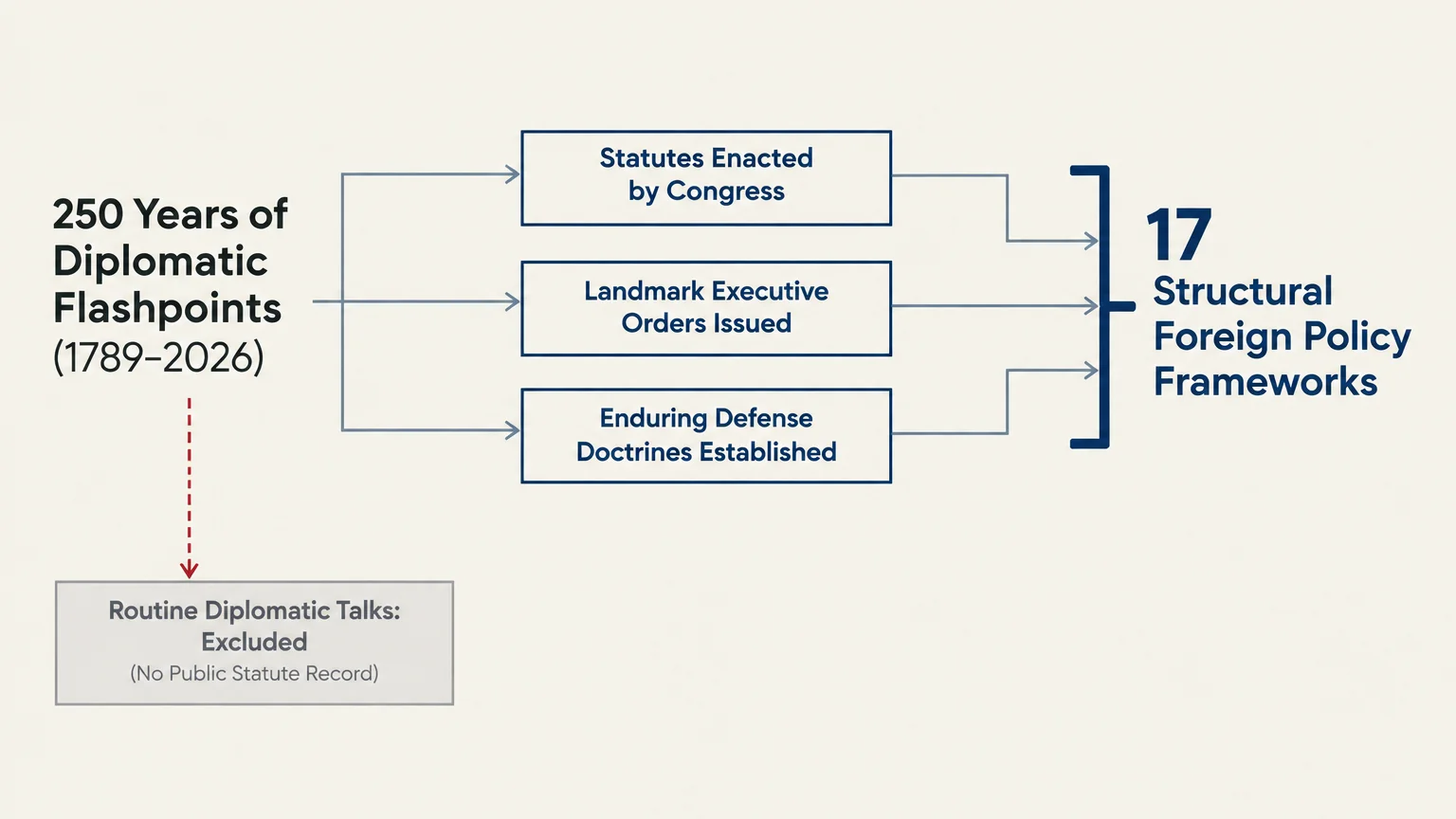
This list tracks 17 foreign heads of state whose direct standoffs with U.S. presidents produced lasting structural changes in American law and policy. As of October 2026, this record spans more than 230 years of diplomatic engagement from the founding era to the present.
Each entry requires a documented confrontation that prompted Congress to enact statutes, led the White House to issue landmark executive orders, or established enduring defense doctrines. Routine diplomatic negotiations that left no trace in the public statute books are excluded.
King George III
British monarch King George III repeatedly challenged early American sovereignty, sparking George Washington’s Proclamation of Neutrality on April 22, 1793. The proclamation established that the young republic would remain impartial in European wars.
British maritime seizures compelled Chief Justice John Jay to negotiate the Jay Treaty of 1794. The Senate ratified the treaty on June 24, 1795, by a narrow two-thirds vote of 20–10.
Ratification sparked fierce debate in the House of Representatives over whether lawmakers had to appropriate funds for ratified treaties. Representative James Madison defended legislative discretion, but the House voted 51–48 to fund the treaty on April 30, 1796.
Continued British impressment of American sailors later prompted Thomas Jefferson to sign the Embargo Act of 1807 (2 Stat. 451) on December 22, 1807.
Kaiser Wilhelm II
German Emperor Wilhelm II escalated maritime conflict against Woodrow Wilson by authorizing unrestricted submarine warfare on January 31, 1917. German officials also transmitted the Zimmermann Telegram, secretly proposing an anti-American military alliance with Mexico.
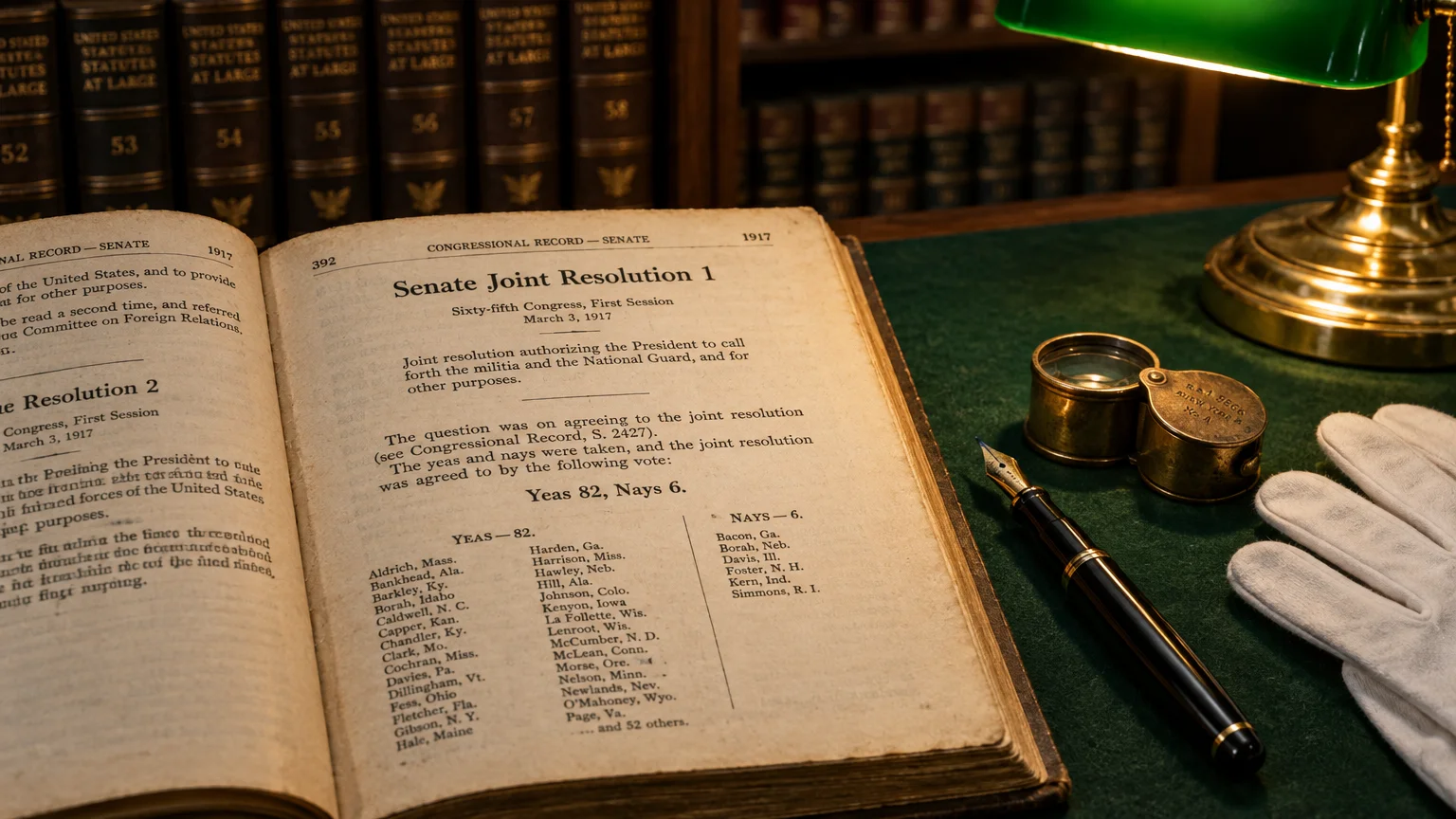
Wilson asked Congress for a formal war declaration on April 2, 1917. The Senate approved Senate Joint Resolution 1 on April 4 by an 82–6 vote, followed by a 373–50 House vote on April 6 (40 Stat.
1).
The confrontation dismantled decades of non-entanglement and prompted Wilson to deliver his Fourteen Points address to Congress on January 8, 1918. Although the Senate rejected the Treaty of Versailles by a 49–35 vote on March 19, 1920, Wilson’s framework guided later collective security treaties.
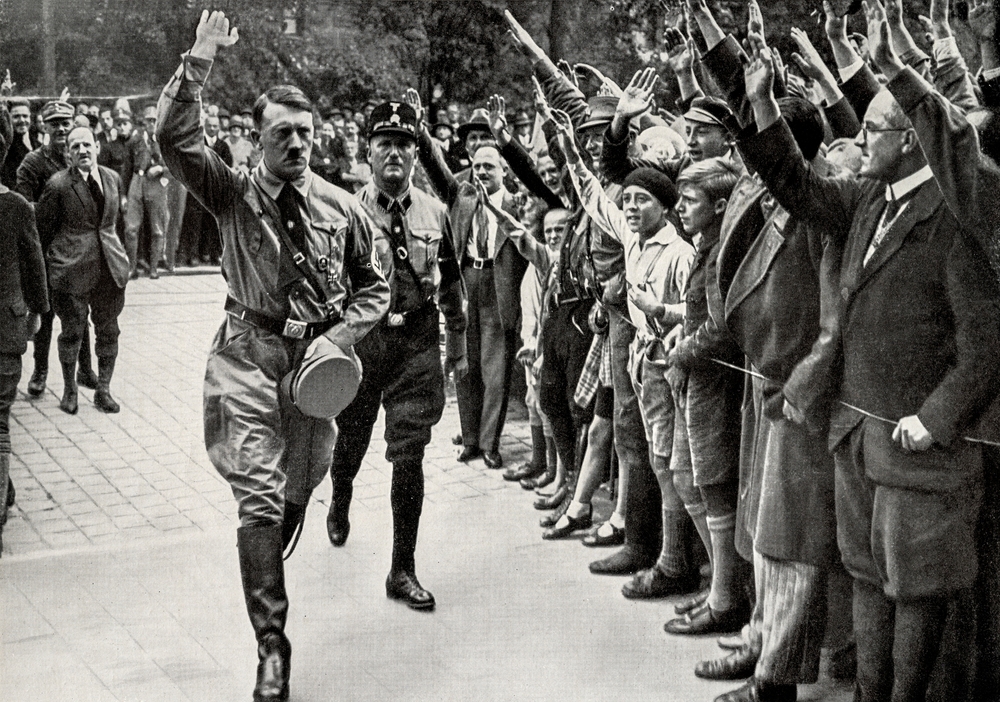
Adolf Hitler
German Chancellor Adolf Hitler’s conquest of Europe forced Franklin D. Roosevelt to challenge the statutory constraints of the 1930s Neutrality Acts.
Roosevelt pressed lawmakers to convert American industrial output into an “Arsenal of Democracy.”
Congress passed the Lend-Lease Act (Public Law 77-11) on March 11, 1941, after a 317–71 House vote and a 60–31 Senate vote. The statute authorized the president to sell, transfer, or lease defense articles to any nation deemed vital to U.S. defense.
Hitler declared war on the United States on December 11, 1941, four days after the Japanese attack on Pearl Harbor.
Congress responded that same day by passing Public Law 77-331, declaring war on Germany by votes of 88–0 in the Senate and 393–0 in the House.
This global conflict restructured American defense architecture, culminating in the National Security Act of 1947 (Public Law 80-253).
Mao Zedong
Chinese Communist Party Chairman Mao Zedong intervened in the Korean War in October 1950, clashing directly with Harry S. Truman’s administration.
Truman committed U.S. forces under United Nations Security Council Resolution 84 without seeking a formal congressional declaration of war.
Mao’s artillery barrages against Quemoy and Matsu prompted Congress to pass the Formosa Resolution on January 29, 1955. Lawmakers approved House Joint Resolution 159 (Public Law 84-4) by votes of 410–3 in the House and 85–3 in the Senate to defend Taiwan.
Richard Nixon later pursued diplomatic outreach to Beijing via the 1972 Shanghai Communiqué, and Jimmy Carter normalized relations in 1979. In response, Congress enacted the Taiwan Relations Act (Public Law 96-8) on April 10, 1979.
Codified at 22 U.S.C. 3301, that statute mandates making defensive arms available to Taiwan and governs unofficial U.S.-Taiwan relations.
Gamal Abdel Nasser
Egyptian President Gamal Abdel Nasser nationalized the Suez Canal Company on July 26, 1956, prompting a joint invasion by Britain, France, and Israel. President Dwight D.
Eisenhower pressured the European allies and Israel to withdraw through diplomatic and financial leverage.
Warning that the Soviet Union would fill the regional power vacuum, Eisenhower addressed a joint session of Congress on January 5, 1957. He requested advance statutory authorization to use military force in the Middle East.
Congress approved Public Law 85-7 on March 9, 1957, establishing the Eisenhower Doctrine. The resolution authorized economic assistance and armed intervention to protect Middle Eastern nations requesting aid against international communist aggression.
Eisenhower invoked that statutory authority in July 1958, deploying over 14,000 U.S. troops to Lebanon during Operation Blue Bat.
Fidel Castro
Cuban Prime Minister Fidel Castro nationalized U.S.-owned properties and aligned with Moscow, prompting Dwight D. Eisenhower to restrict exports on October 19, 1960.
John F. Kennedy expanded those measures into a comprehensive trade embargo.
Kennedy signed Presidential Proclamation 3447 on February 3, 1962, invoking Section 620(a) of the Foreign Assistance Act of 1961 to prohibit bilateral trade. Castro’s acceptance of Soviet nuclear missiles triggered the Cuban Missile Crisis in October 1962.
Congress codified the executive embargo into statute through the Cuban Liberty and Democratic Solidarity (LIBERTAD) Act of 1996 (Public Law 104-114). The law bars any president from lifting the embargo without certifying a democratic transition in Havana.
As of October 2026, the statutory embargo under 22 U.S.C. 6021 et seq. remains in effect, alongside Cuba’s State Sponsor of Terrorism designation.
Nikita Khrushchev
Soviet Premier Nikita Khrushchev confronted John F. Kennedy at the June 1961 Vienna Summit, demanding Western withdrawal from West Berlin.
Khrushchev approved construction of the Berlin Wall in August 1961 and deployed R-12 and R-14 ballistic missiles to Cuba in 1962.
Kennedy ordered a naval quarantine via Presidential Proclamation 3504 on October 23, 1962, citing the 1947 Inter-American Treaty of Reciprocal Assistance.
Khrushchev agreed on October 28 to dismantle the sites in exchange for a U.S. non-invasion pledge and a secret agreement to remove Jupiter missiles from Turkey.
The standoff led Washington and Moscow to sign the Direct Communications Link (“Hot Line”) Memorandum of Understanding on June 20, 1963. The Senate ratified the Limited Nuclear Test Ban Treaty (14 UST 1313) on September 24, 1963, by an 80–19 vote.
Ho Chi Minh
North Vietnamese President Ho Chi Minh directed military campaigns in Vietnam, prompting Lyndon B. Johnson to seek broad statutory war powers.
Johnson cited August 1964 naval clashes in the Gulf of Tonkin to request congressional action.
Congress passed House Joint Resolution 445 (Public Law 88-408) on August 7, 1964, by votes of 416–0 in the House and 88–2 in the Senate.
The Gulf of Tonkin Resolution authorized the president to take all necessary measures to repel armed attacks and prevent further aggression.
Mounting casualties and war expansion led Congress to repeal the resolution via an amendment to the Foreign Military Sales Act on January 12, 1971. Lawmakers then overrode Richard Nixon’s veto of the War Powers Resolution (Public Law 93-148) on November 7, 1973.
Codified at 50 U.S.C. 1541–1548, the statute established 48-hour reporting rules and a 60-day limit on unauthorized hostilities.
Ayatollah Ruhollah Khomeini
Iranian Supreme Leader Ayatollah Ruhollah Khomeini backed the seizure of the U.S. Embassy in Tehran on November 4, 1979, where 52 Americans were held for 444 days. President Jimmy Carter responded by invoking statutory emergency powers.
Carter issued Executive Order 12170 on November 14, 1979, blocking Iranian government property under the International Emergency Economic Powers Act (50 U.S.C. 1701).
It was the first invocation of IEEPA following its enactment in Public Law 95-223 on December 28, 1977.
To secure the hostages’ release, Carter concluded the Algiers Accords on January 19, 1981, suspending private American claims in U.S. courts. The Supreme Court unanimously upheld that executive action in Dames & Moore v. Regan, 453 U.S. 654 (1981), on July 2, 1981.
Daniel Ortega
Nicaraguan leader Daniel Ortega aligned the Sandinista government with Cuba and the Soviet Union after taking power in 1979. President Ronald Reagan authorized the CIA to organize and fund anti-Sandinista Contra rebels in Central America.
Seeking to limit U.S. involvement, Congress enacted the Boland Amendments between 1982 and 1984, including strict funding prohibitions in Public Law 98-473. The October 1984 provision barred any defense or intelligence agency from spending funds to support military operations in Nicaragua.
National Security Council staff circumvented the ban by diverting proceeds from covert Iranian arms sales to the Contras. Following the 1987 joint congressional Iran-Contra investigation, Congress enacted the Intelligence Authorization Act, Fiscal Year 1991 (Public Law 102-88), requiring written presidential findings for covert actions.
Muammar Gaddafi
Libyan leader Muammar Gaddafi clashed with Ronald Reagan over maritime claims in the Gulf of Sidra and state-sponsored terrorism, including the 1986 West Berlin discotheque bombing. Reagan ordered Operation El Dorado Canyon on April 14, 1986, striking military targets in Tripoli and Benghazi.
In March 2011, Gaddafi deployed military forces against civilian protesters and rebels, prompting Barack Obama to authorize U.S. participation in Operation Odyssey Dawn. Acting alongside NATO allies, U.S. forces enforced a no-fly zone under United Nations Security Council Resolution 1973.
When operations exceeded the War Powers Resolution’s 60-day window on May 20, 2011, the administration did not seek congressional authorization.
In a June 15, 2011, report to Congress, the White House argued that limited kinetic support and drone strikes without U.S. ground troops did not constitute statutory “hostilities.”
Saddam Hussein
Iraqi President Saddam Hussein ordered the invasion of Kuwait on August 2, 1990, prompting George H.W. Bush to assemble a 35-nation coalition under UN Security Council Resolution 678.
Congress passed the Authorization for Use of Military Force Against Iraq Resolution (Public Law 102-1) on January 12, 1991, by votes of 250–183 in the House and 52–47 in the Senate.
Following a decade of disputes over UN weapons inspections, George W. Bush requested new military authority in 2002.
Congress passed the 2002 Iraq AUMF (Public Law 107-243) on October 11, 2002, by votes of 296–133 in the House and 77–23 in the Senate.
Successive administrations cited the 2002 statute for two decades to justify military operations against ISIS in Iraq and Syria. The Senate voted 66–30 on March 29, 2023, to repeal the 1991 and 2002 Iraq AUMFs (S.
316), highlighting enduring debate over open-ended war authorizations.
Slobodan Milošević
Serbian President Slobodan Milošević backed Bosnian Serb forces during the breakup of Yugoslavia before signing the U.S.-brokered Dayton Accords in December 1995. In 1998, Milošević launched a military crackdown against ethnic Albanians in Kosovo.
President Bill Clinton authorized U.S. participation in NATO’s Operation Allied Force on March 24, 1999, without UN Security Council approval or a congressional AUMF. NATO conducted a 78-day aerial campaign until Belgrade agreed to withdraw forces from Kosovo on June 9, 1999.
During the conflict, the House voted on April 28, 1999, rejecting a formal declaration of war 2–427 and deadlocking 213–213 on a resolution to authorize the air campaign (S.Con.Res. 21).
Clinton continued operations using defense appropriations until Milošević capitulated.
Kim Jong Un
North Korean leader Kim Jong Un accelerated nuclear warhead and intercontinental ballistic missile testing in 2017. Congress responded by passing the Countering America’s Adversaries Through Sanctions Act (Public Law 115-44) on August 2, 2017, expanding mandatory financial sanctions on Pyongyang.
Donald Trump held the first summit between a sitting U.S. president and a North Korean leader in Singapore on June 12, 2018. A second summit in Hanoi in February 2019 ended without an agreement over the sequencing of sanctions relief and nuclear dismantlement.
After Pyongyang resumed ICBM testing, Joe Biden convened the August 18, 2023, Camp David summit with South Korea and Japan. The three nations signed the “Camp David Principles,” institutionalizing annual trilateral military exercises and real-time missile warning data sharing.
Vladimir Putin
Russian President Vladimir Putin annexed Crimea in March 2014 and launched a full-scale invasion of Ukraine on February 24, 2022.
Congress enacted the Countering America’s Adversaries Through Sanctions Act (Public Law 115-44) in August 2017, requiring a 30-day congressional review before a president can waive or terminate certain Russia sanctions.
After the 2022 invasion, Congress passed the Suspending Normal Trade Relations with Russia and Belarus Act (Public Law 117-110) on April 8, 2022. The confrontation also reshaped trans-Atlantic security; the U.S. Senate voted 95–1 on August 3, 2022, to ratify NATO accession protocols for Finland and Sweden.
In April 2024, Congress enacted the REPO for Ukrainians Act within Public Law 118-50, authorizing the president to seize immobilized Russian sovereign assets in U.S. jurisdiction and transfer them to a Ukraine support fund.
Xi Jinping
Chinese President Xi Jinping’s industrial subsidies and technology transfer policies prompted the Trump administration to impose tariffs on over $350 billion of Chinese imports starting in 2018 under Section 301 of the Trade Act of 1974 (19 U.S.C. 2411).
The two nations signed a Phase One economic agreement on January 15, 2020, leaving most duties in place.
Congress responded to strategic competition with Beijing by enacting the Uyghur Forced Labor Prevention Act (Public Law 117-78) in December 2021 and the CHIPS and Science Act (Public Law 117-167) on August 9, 2022.
The CHIPS Act appropriated $52.7 billion for domestic semiconductor manufacturing while restricting recipients from expanding advanced chip production in China for 10 years.
In May 2024, the Biden administration maintained the Section 301 framework and increased tariffs on $18 billion of Chinese imports, including a 100 percent duty on electric vehicles.
As of October 2026, both Section 301 tariffs and Bureau of Industry and Security semiconductor export controls remain central tools of U.S. trade policy toward Beijing.
Volodymyr Zelenskyy
Ukrainian President Volodymyr Zelenskyy’s July 25, 2019, telephone call with Donald Trump concerning U.S. military aid became the focus of a congressional impeachment inquiry.
On December 18, 2019, the House adopted House Resolution 755, impeaching Trump for abuse of power (230–197) and obstruction of Congress (229–198); the Senate acquitted him on February 5, 2020.
Following Russia’s February 2022 invasion, Zelenskyy addressed a joint meeting of Congress in person on December 21, 2022. Between February 2022 and April 2024, Congress enacted five supplemental appropriations laws totaling roughly $175 billion in security, economic, and humanitarian aid related to the conflict.
Congress also revived a World War II statutory mechanism by passing the Ukraine Democracy Defense Lend-Lease Act of 2022 (Public Law 117-118) on May 9, 2022.
After six months of legislative debate over aid conditions, Congress passed the Ukraine Security Supplemental Appropriations Act, 2024 (Public Law 118-50) on April 24, 2024, providing $60.8 billion in assistance, including $9.5 billion structured as forgivable economic loans.
| Foreign Leader | U.S. President | Key Year | Primary Policy or Legal Impact |
|---|---|---|---|
| King George III | George Washington | 1794 | Jay Treaty; Proclamation of Neutrality |
| Kaiser Wilhelm II | Woodrow Wilson | 1917 | WWI Declaration (S.J.Res. 1); Fourteen Points |
| Adolf Hitler | Franklin D. Roosevelt | 1941 | Lend-Lease Act (P.L. 77-11); National Security Act |
| Mao Zedong | Dwight D. Eisenhower | 1955 | Formosa Resolution; Taiwan Relations Act (P.L. 96-8) |
| Gamal Abdel Nasser | Dwight D. Eisenhower | 1957 | Eisenhower Doctrine (P.L. 85-7) |
| Fidel Castro | John F. Kennedy | 1962 | Cuban Embargo (Proc. 3447); LIBERTAD Act (P.L. 104-114) |
| Nikita Khrushchev | John F. Kennedy | 1962 | Naval Quarantine (Proc. 3504); Limited Test Ban Treaty |
| Ho Chi Minh | Lyndon B. Johnson | 1964 / 1973 | Tonkin Gulf Resolution; War Powers Resolution (P.L. 93-148) |
| Ayatollah Khomeini | Jimmy Carter | 1979 | IEEPA asset freeze (E.O. 12170); Dames & Moore v. Regan |
| Daniel Ortega | Ronald Reagan | 1984 | Boland Amendments (P.L. 98-473); Intelligence oversight |
| Muammar Gaddafi | Ronald Reagan / Barack Obama | 1986 / 2011 | Executive interpretation of WPR “hostilities” |
| Saddam Hussein | G.H.W. Bush / G.W. Bush | 1991 / 2002 | 1991 & 2002 Iraq AUMFs (P.L. 102-1; P.L. 107-243) |
| Slobodan Milošević | Bill Clinton | 1999 | Kosovo air campaign without UN or AUMF approval |
| Kim Jong Un | Donald Trump / Joe Biden | 2017–2023 | CAATSA sanctions (P.L. 115-44); Camp David trilateral pact |
| Vladimir Putin | Donald Trump / Joe Biden | 2017–2024 | CAATSA review limits; REPO Act (P.L. 118-50); NATO expansion |
| Xi Jinping | Donald Trump / Joe Biden | 2018–2024 | Section 301 tariffs; CHIPS and Science Act (P.L. 117-167) |
| Volodymyr Zelenskyy | Donald Trump / Joe Biden | 2019–2024 | H.Res. 755 impeachment; Ukraine supplementals (P.L. 118-50) |
How Executive Confrontations Reshaped Statutory Powers
Foreign crises consistently shift constitutional authority between the legislative and executive branches. When overseas adversaries threaten American interests, presidents frequently invoke broad commander-in-chief or delegated statutory powers, prompting Congress to respond with new legislative checks.
Framework statutes like the War Powers Resolution of 1973 (50 U.S.C. 1541) and the International Emergency Economic Powers Act of 1977 (50 U.S.C.
1701) emerged directly from these confrontations. Both laws sought to reclaim congressional authority after decades of broad cold-war delegations.
In practice, however, statutory checks often require supermajorities to enforce over a presidential veto after the Supreme Court struck down the legislative veto in INS v. Chadha, 462 U.S. 919 (1983).
Consequently, modern laws like the 2017 CAATSA statute rely on mandatory reporting periods and joint resolutions of disapproval to oversee executive diplomacy.
Frequently Asked Questions
Can a U.S. president unilaterally declare war against a foreign adversary?
No, Article I, Section 8, Clause 11 of the Constitution grants Congress the sole power to declare war.
Congress has enacted 11 formal declarations of war across five conflicts, most recently during World War II, while authorizing later conflicts through statutory Authorizations for Use of Military Force.
How does the War Powers Resolution constrain presidential military deployments?
Codified at 50 U.S.C. 1541–1548, the 1973 law requires the president to notify Congress within 48 hours of introducing armed forces into hostilities.
Forces must be withdrawn within 60 days—with a possible 30-day extension—unless Congress declares war or passes a specific statutory authorization.
How do federal statutes allow presidents to impose tariffs or sanctions during foreign crises?
Congress has delegated trade and sanction authorities through statutes including Section 301 of the Trade Act of 1974 (19 U.S.C. 2411), Section 232 of the Trade Expansion Act of 1962 (19 U.S.C.
1862), and the International Emergency Economic Powers Act (50 U.S.C. 1701).
These laws allow the executive branch to restrict imports or freeze foreign assets after making specific national security or unfair-trade findings.
What distinguishes an executive agreement from a formal treaty?
Under Article II, Section 2 of the Constitution, treaties require advice and consent from two-thirds of the Senate to become binding federal law.
Executive agreements are concluded by the president under constitutional or prior statutory authority and can generally be modified or revoked by subsequent administrations.




1 Comment
Comments are closed.