You can trace the modern foundation of American representative democracy through the pioneering women who entered the Capitol long before gender parity became a standard policy goal. These early legislators reshaped national policy across two world wars, the Great Depression, and the civil rights movement.
Before 1975, only a handful of trailblazers broke through institutional resistance to claim seats in the House and Senate. Their breakthroughs altered legislative agendas, expanded constitutional civil rights protections, and proved that women could wield lasting federal power.
Here is your guide to eight barrier-breaking women who permanently altered the United States Congress before 1975, verified against official congressional records.
Criteria for Congressional Pioneers Before the 1975 Milestone
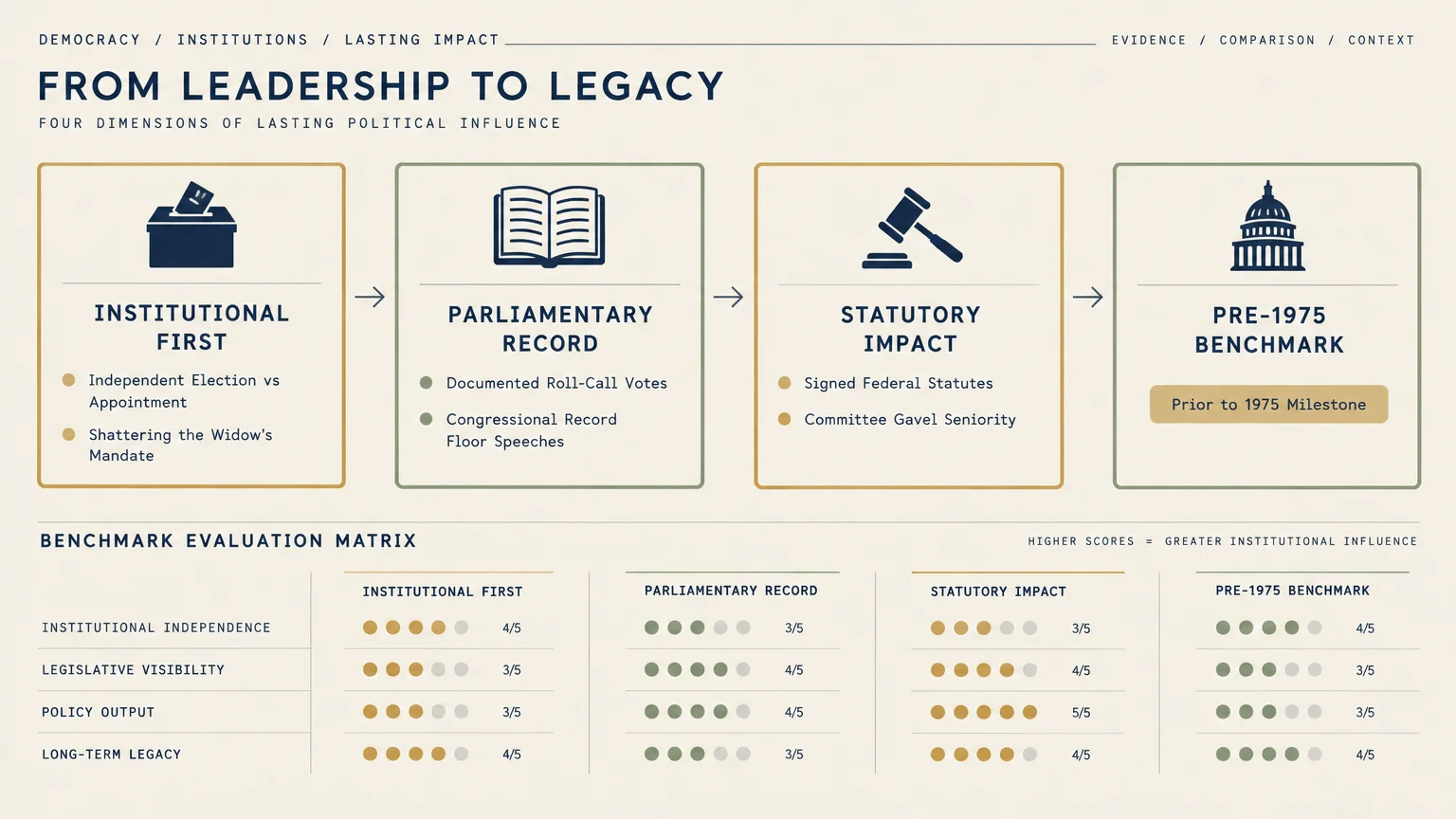
To evaluate these historic achievements, you need to examine the specific legislative environment that existed before 1975. That year marked the United Nations International Women’s Year, which catalyzed modern federal gender-equity initiatives across Washington.
Before that turning point, female lawmakers served in an institution designed almost entirely without female participation. Gaining a seat required navigating hostile party machines, unwritten chamber rules, and entrenched political resistance.
Every lawmaker featured on this list met rigorous historical benchmarks verified by the Office of the Historian of the U.S. House and the Senate Historical Office. Each pioneer achieved an indisputable institutional first in federal governance.
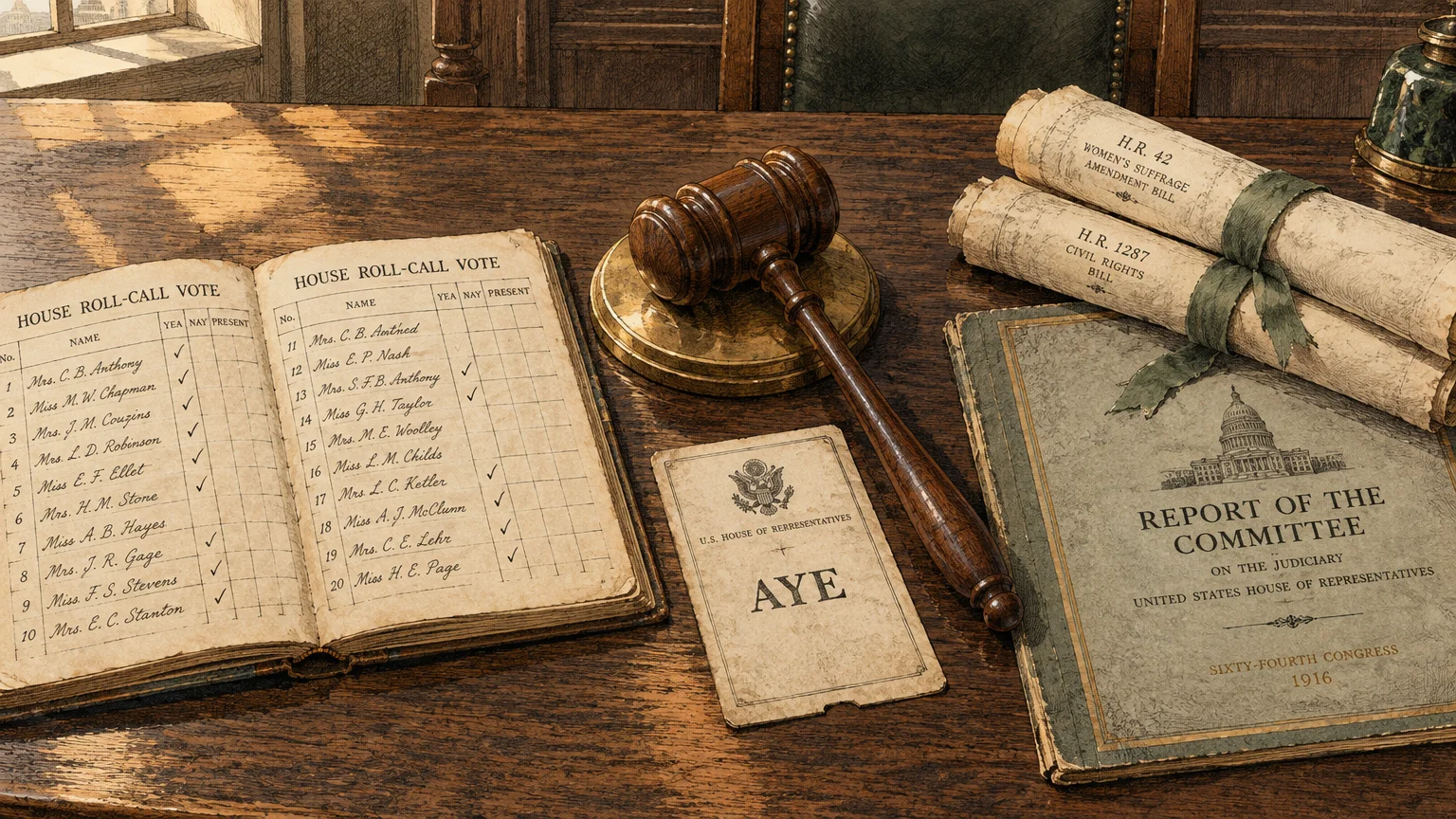
Our editorial team selected these eight profiles based on documented roll-call votes, floor speeches in the Congressional Record, and signed federal statutes. Their careers demonstrate how individual lawmakers can fundamentally reshape American public law.
Some of these women entered federal office before the Constitution guaranteed their own right to vote nationwide. Others dismantled the informal “widow’s mandate,” transforming temporary appointed vacancies into formidable, multi-decade legislative careers.
You will discover how these legislators leveraged committee gavels, procedural rules, and national floor debates to pass landmark laws. Their achievements created lasting statutory protections that continue to govern American life today.
This historical period highlights the transition from symbolic representation to direct legislative power. These lawmakers proved that women could command vital committees, influence fiscal policy, and direct national defense authorizations.
By studying their official records, you can better understand how institutional power operates inside the Capitol. The modern Congress reflects the procedural precedents and statutory milestones established by these eight pioneering women.
You can also track how early congresswomen built coalitions across geographical and ideological divisions. Their legislative strategies established durable blueprints for navigating partisan polarization during moments of severe national crisis.
Each woman profiled below faced distinct institutional obstacles while pursuing major statutory reforms. Their official actions created the legal foundation for modern equality under federal law.
Understanding these historical paths provides you with practical perspective on modern legislative battles. You can evaluate current debates over equal representation by analyzing the specific institutional tools these early lawmakers used to overcome structural obstacles.
Their legislative records also illuminate the critical role of committee seniority in American governance. By securing safe seats and maintaining continuous service, these women built the institutional standing required to control the national statutory agenda.
You should also note how regional political dynamics shaped their individual paths to Capitol Hill. While western states often led in expanding voting access, mid-Atlantic and northeastern urban centers produced lawmakers who commanded urban and labor policy.
Each milestone detailed in this explainer represents a permanent expansion of federal representative authority. By breaking procedural barriers, these lawmakers transformed Congress from a closed fraternity into a more representative national assembly.
Jeannette Rankin
You can trace female representation in the federal government directly to Montana Republican Jeannette Rankin. She won an at-large seat in the U.S. House of Representatives on August 29, 1916, nearly four years before ratification of the Nineteenth Amendment.
Rankin officially took her oath of office on April 2, 1917, as documented by the House Historian’s official biography. Her swearing-in proved that individual states could grant women full political franchise ahead of national constitutional reform.
Four days into her term, Rankin joined 49 colleagues in voting against American entry into World War I on April 6, 1917. Decades later, on December 8, 1941, she cast the sole dissenting vote against entering World War II.
That 388-to-1 House roll call on House Joint Resolution 254 made Rankin the only member of Congress to oppose American entry into both world wars. Her career showed that women could maintain unyielding principles on the House floor.
Rebecca Latimer Felton
Rebecca Latimer Felton entered congressional history as the first woman to serve in the United States Senate. Georgia Governor Thomas Hardwick appointed the 87-year-old Democrat to the upper chamber on October 3, 1922, following Senator Thomas E.
Watson’s death.
Hardwick made the symbolic appointment to court newly enfranchised female voters after previously opposing woman suffrage. Because the Senate was in recess, Felton waited until November 21, 1922, to take her official oath of office.
According to the Senate Historical Office, Felton served for just 24 hours before Senator-elect Walter F. George presented his credentials.
Her brief tenure gave her the shortest service of any female senator in American history.
Felton remains the oldest freshman senator ever to enter the chamber. Her presence permanently shattered the Senate’s all-male exclusivity, proving that women could sit and speak on the floor of the world’s most deliberative body.
Mary Teresa Norton
Mary Teresa Norton dismantled traditional barriers when New Jersey voters elected her to the House of Representatives in November 1924. Taking office on March 4, 1925, she became the first Democratic woman to serve in Congress.
Unlike many early female lawmakers, Norton did not succeed a deceased husband or father. The House Historian’s Norton records show she built her political power directly through municipal service, labor alliances, and grassroots Democratic organizing.
In 1931, Norton became the first woman to chair a congressional committee when she led the Committee on the District of Columbia. She later chaired the critical House Committee on Labor from 1937 through 1947.
Norton shepherded the landmark Fair Labor Standards Act of 1938 through ferocious floor opposition, establishing the federal minimum wage and 40-hour workweek under 29 U.S.C. Chapter 8.
Her 13 terms proved women could command major economic legislation.
Edith Nourse Rogers
Edith Nourse Rogers entered the House of Representatives on June 30, 1925, following a special election in Massachusetts to succeed her deceased husband. She rapidly transformed an appointment into one of the most durable careers in congressional history.
Rogers won 18 consecutive general elections, serving Massachusetts for over 35 years until her death on September 10, 1960. Her tenure stood as the House female longevity record until Representative Marcy Kaptur surpassed it on March 18, 2018.
During World War II, Rogers authored the 1942 legislation creating the Women’s Army Auxiliary Corps, securing full military status for female servicemembers. She also co-sponsored the Servicemen’s Readjustment Act of 1944, famously known as the G.I.
Bill.
As chair of the House Veterans’ Affairs Committee during two Congresses, Rogers established enduring standards for veteran healthcare, pensions, and home-loan programs. Her work demonstrated that women could direct national defense and veterans’ welfare policy.
Hattie Wyatt Caraway
Hattie Wyatt Caraway became the first woman elected to the United States Senate after winning a special election in Arkansas on January 12, 1932. Governor Harvey Parnell initially appointed her on November 13, 1931, following her husband’s death.
Caraway shocked the political establishment by running for a full term in November 1932, defeating six experienced male primary opponents. She won re-election again in 1938, serving continuously in the Senate until January 3, 1945.
According to the Senate Historical Office, Caraway became the first woman to preside over the Senate on May 9, 1932. In 1933, she became the first woman to chair a Senate committee, leading the Committee on Enrolled Bills.
Caraway co-sponsored the Equal Rights Amendment in 1943, creating early Senate momentum for constitutional gender protections. Her 13-year service proved that female senators could maintain statewide coalitions and exercise independent legislative authority.
Margaret Chase Smith
Margaret Chase Smith carved a historic path by becoming the first woman to serve in both the House and the Senate. The Maine Republican served in the House from 1940 to 1949 before winning election to the Senate.
Smith made history on June 1, 1950, by delivering her famous “Declaration of Conscience” speech on the Senate floor. She forcefully condemned Senator Joseph McCarthy’s smear tactics, defending an American’s constitutional right to hold unpopular beliefs.
Six fellow Republican senators signed her declaration, establishing an early public record against political character assassination during the Cold War. Her speech challenged her party’s leadership and established a vital defense of individual civil liberties.
In 1964, Smith became the first woman nominated for the presidency by a major political party at the Republican National Convention. Her 24 years of Senate service established the benchmark for female leadership on national security and defense committees.
Patsy Takemoto Mink
Patsy Takemoto Mink shattered racial and gender barriers when Hawaii voters elected her to the House of Representatives in 1964. Sworn in on January 3, 1965, she became the first woman of color and first Asian-American woman in Congress.
Mink served from 1965 to 1977 and returned from 1990 until her death in September 2002. She acted as the principal author and sponsor of Title IX of the Education Amendments of 1972, signed into law on June 23, 1972.
Codified at 20 U.S.C. Section 1681, the statute bars sex discrimination in federally funded education, opening classrooms and athletics to millions of women.
On October 29, 2002, Congress officially renamed the law the “Patsy T. Mink Equal Opportunity in Education Act.”
Her legislative leadership, preserved in the Library of Congress Patsy T. Mink Papers, permanently transformed higher education admissions. Mink proved that female lawmakers could use federal statutory authority to dismantle systemic barriers across American society.
Shirley Chisholm
Shirley Chisholm broke a historic barrier in November 1968 by becoming the first Black woman elected to Congress. The New York Democrat represented Brooklyn’s 12th Congressional District from January 3, 1969, until her retirement in January 1983.
Running under the slogan “Unbought and Unbossed,” Chisholm challenged chamber traditions by refusing an assignment to the House Agriculture Committee. Reassigned to Education and Labor, she focused federal policy on early childhood education and urban poverty relief.
Chisholm played an instrumental role in creating the Special Supplemental Nutrition Program for Women, Infants, and Children, enacted under Public Law 92-433 in 1972. She also helped co-found the Congressional Black Caucus in 1971 to advocate for minority interests.
In 1972, Chisholm became the first Black major-party presidential candidate and the first woman to seek the Democratic nomination, winning 152 convention delegates. Her groundbreaking candidacy expanded national political representation and inspired generations of minority leaders.
Milestones of Early Women in Congress
You can compare the tenures, chambers, and institutional achievements of these eight trailblazing lawmakers in the reference table below.
| Lawmaker | Chamber & State | Sworn In | Key Institutional Milestone |
|---|---|---|---|
| Jeannette Rankin | House (MT) | 1917 | First woman in Congress; sole vote against WWII |
| Rebecca Latimer Felton | Senate (GA) | 1922 | First woman in Senate; oldest freshman senator |
| Mary Teresa Norton | House (NJ) | 1925 | First Democratic woman; shepherded 1938 FLSA |
| Edith Nourse Rogers | House (MA) | 1925 | Created WAAC; co-sponsored 1944 G.I. Bill |
| Hattie Wyatt Caraway | Senate (AR) | 1931 | First woman elected to Senate; chaired committee |
| Margaret Chase Smith | House / Senate (ME) | 1940 / 1949 | First woman in both chambers; Declaration of Conscience |
| Patsy Takemoto Mink | House (HI) | 1965 | First woman of color in Congress; authored Title IX |
| Shirley Chisholm | House (NY) | 1969 | First Black congresswoman; major presidential run |
How Early Women Lawmakers Reshaped Modern Congressional Power
When you examine these eight careers, you can see how female lawmakers altered the inner workings of Congress. Their service transitioned women’s presence from isolated political tokens into institutional leaders who controlled major committee gavels.
During the early twentieth century, party leaders often viewed female appointments as brief placeholders for deceased husbands. Pioneers like Edith Nourse Rogers and Hattie Caraway dismantled that assumption by winning multi-term statewide and district campaigns.
Their presence altered the national statutory landscape across four critical decades. Without Mary Teresa Norton, the Fair Labor Standards Act of 1938 might have collapsed under intense conservative regional opposition in the House.
Similarly, Patsy Mink’s authoring of Title IX and Shirley Chisholm’s expansion of WIC permanently redefined federal civil rights and anti-poverty policy. They demonstrated that female representatives would prioritize legislative issues that male majorities regularly overlooked.
These eight women also transformed chamber floor procedures. Margaret Chase Smith’s floor challenge to Joseph McCarthy proved that backbench female senators could exercise profound moral leadership against demagoguery when senior leaders remained silent.
Their achievements laid the groundwork for the modern congressional era. Today, women regularly serve as committee chairs, party whips, floor leaders, and constitutional officers across both legislative chambers.
As of late 2025, 156 voting women serve across the Capitol, including 129 in the House and a record-high 27 in the Senate. That record representation stands as a direct consequence of the legal and procedural doors these eight pioneers forced open.
You can track the ongoing evolution of congressional power through the precedent-setting bills these women authored. Their statutory contributions continue to shape federal employment standards, education access, and veterans’ benefits for all Americans.
These historical breakthroughs demonstrate that institutional reform requires both legislative tenacity and procedural mastery. Early congresswomen proved that understanding chamber rules is just as vital as winning broad public support.
Their collective legacy remains visible in every major policy debate across the Capitol today. When you look at contemporary federal law, you see the enduring imprint of their strategic governance.
You can also see how these early pioneers reshaped constituent service into a cornerstone of congressional tenure. Representatives like Edith Nourse Rogers established responsive district casework offices that set the modern standard for federal constituent engagement.
Their careers also proved that policy expertise could outlast shifting party control in the White House. Lawmakers like Mary Teresa Norton and Margaret Chase Smith maintained their legislative influence across both Democratic and Republican administrations.
Furthermore, their strategic use of floor speeches redefined public debate inside the Capitol. From Rankin’s war dissents to Smith’s anti-McCarthy declarations, these lawmakers demonstrated that floor statements could permanently shape national historical memory.
When you study these eight women, you gain an actionable framework for evaluating contemporary legislative leadership. Their foundational service proved that institutional perseverance, procedural mastery, and principled floor votes can transform American democracy.
Frequently Asked Questions About Pre-1975 Women in Congress
Who was the first woman to preside over the U.S. Senate?
Hattie Wyatt Caraway became the first woman to preside over the Senate chamber on May 9, 1932. Vice President Charles Curtis invited her to take the presiding officer’s chair during floor proceedings.
Caraway also became the first woman to chair a Senate committee in 1933, leading the Senate Committee on Enrolled Bills during the 73rd Congress.
What was the “widow’s mandate” in early congressional politics?
The “widow’s mandate” refers to an informal twentieth-century tradition where governors appointed the widows of deceased congressmen to fill their vacant seats. Party machines often expected these women to serve quietly as brief placeholders.
Lawmakers like Edith Nourse Rogers and Hattie Caraway broke this mold by launching independent campaigns. They converted temporary appointments into long-term legislative careers that produced landmark national laws.
Who holds the all-time record for the longest-serving woman in Congress?
Representative Marcy Kaptur of Ohio holds the all-time record for the longest-serving woman in congressional history. She broke Edith Nourse Rogers’s longstanding record of 35 years and 2 months on March 18, 2018.
In the Senate, the late Senator Dianne Feinstein of California holds the female tenure record, having served nearly 31 years from November 1992 until her passing in September 2023.
Did women have nationwide voting rights when the first woman was elected to Congress?
No, women did not possess nationwide voting rights when Montana voters elected Jeannette Rankin in August 1916. Rankin won her seat nearly four years before the Nineteenth Amendment gained national ratification in August 1920.
Rankin could run because individual western states, including Montana in 1914, had already passed state laws granting women full voting rights and the ability to hold public office.