An independent strategist managing a 2026 Louisiana campaign on a tight budget cannot plan cash reserves around standard 47-state plurality rules. When a three-way race stalls at 48 percent, state statutes decide whether the contest ends or enters a runoff.
Treating all runoffs alike wastes funds because Louisiana splits 2026 offices between spring party primaries and a November open primary. General-election runoffs also retain nearly 90 percent of initial turnout, whereas primary runoffs suffer sharp participation drops across 10 runoff states.
Documents and Official Records to Gather Before Setting Runoff Reserves
Before locking ad buys or vendor contracts for a 2026 race, pull the statutory text and election calendars governing your office. Relying on national election assumptions leaves an independent campaign exposed to unbudgeted second-round costs.
Gather these five records from official portals and your campaign ledger before finalizing cash reserves:
- Statutory office rules: Pull Louisiana Revised Statutes §§ 18:402 and 18:511, Act 1 of the 2024 First Extraordinary Session, and Act 7 of 2026 to confirm your ballot system.
- Secretary of state calendar: Download filing deadlines and vote-threshold notices, verifying November 3 and December 12 dates for 2026 Louisiana U.S. House contests.
- County registrar freeze dates: Check voter registration cutoffs and early-voting hours, since states like Georgia bar new registrations between rounds.
- Overseas ballot schedule: Confirm on FVAP.gov or your state portal how your state meets the federal 45-day overseas transmission rule.
- Campaign cash and vendor terms: Separate fixed first-round bills from cash held back for a compressed three- or four-week sprint.
How to Match Your Gathered Records to State Threshold Rules
Match your office’s statutory notice against the table below to see whether a sub-50-percent finish triggers a runoff. Checking neighboring states also stops multi-state teams from importing wrong assumptions across state lines.
As of November 2026, only three states mandate general-election runoffs, while 10 states use primary thresholds from 30 percent to 50 percent plus one.
| Jurisdiction | Election Type | Threshold | Covered Offices | Governing Law |
|---|---|---|---|---|
| Georgia | General and primary | Over 50% | Federal, state, and local offices | Ga. Code Ann. § 21-2-501(a) |
| Louisiana (state/local and 2026 U.S. House) | All-comers primary / general runoff | Over 50% | State executive, legislative, local; 2026 U.S. House | La. Rev. Stat. Ann. §§ 18:402, 18:511; Act 7 (2026) |
| Louisiana (covered 2026 party primaries) | Party primary and primary runoff | Over 50% | U.S. Senate, La. Supreme Court, PSC, BESE (U.S. House from 2027) | Act 1 (2024 1st Ex. Sess.) |
| Mississippi | General and primary | Over 50% | Statewide executive and judicial (general); party primaries | Miss. Const. art. V, § 140 |
| AL, AR, OK, SC, TX | Party primary | Over 50% | Covered party primary nominations | State primary election codes |
| North Carolina | Party primary | 30% or more | Party primaries (runoff only if runner-up requests) | NCSL primary runoff rules |
| South Dakota | Party primary | 35% or more | U.S. Senate, U.S. House, and governor (3+ candidates) | S.D. Codified Laws § 12-6-51.1 |
| Vermont | General election | Over 50% | Governor, lieutenant governor, treasurer (legislature decides) | Vermont Constitution |
Verify the covered-office column before projecting second-round expenses, because federal seats and statewide offices within one state can follow separate rules.
General-Election Majority Mandates and Louisiana’s Split 2026 Calendar
The first four of the seven runoff rules determine when November contests require an absolute majority, how Louisiana divides 2026 offices, and how registration freezes affect turnout.
Majority General-Election Mandates in Only Three States
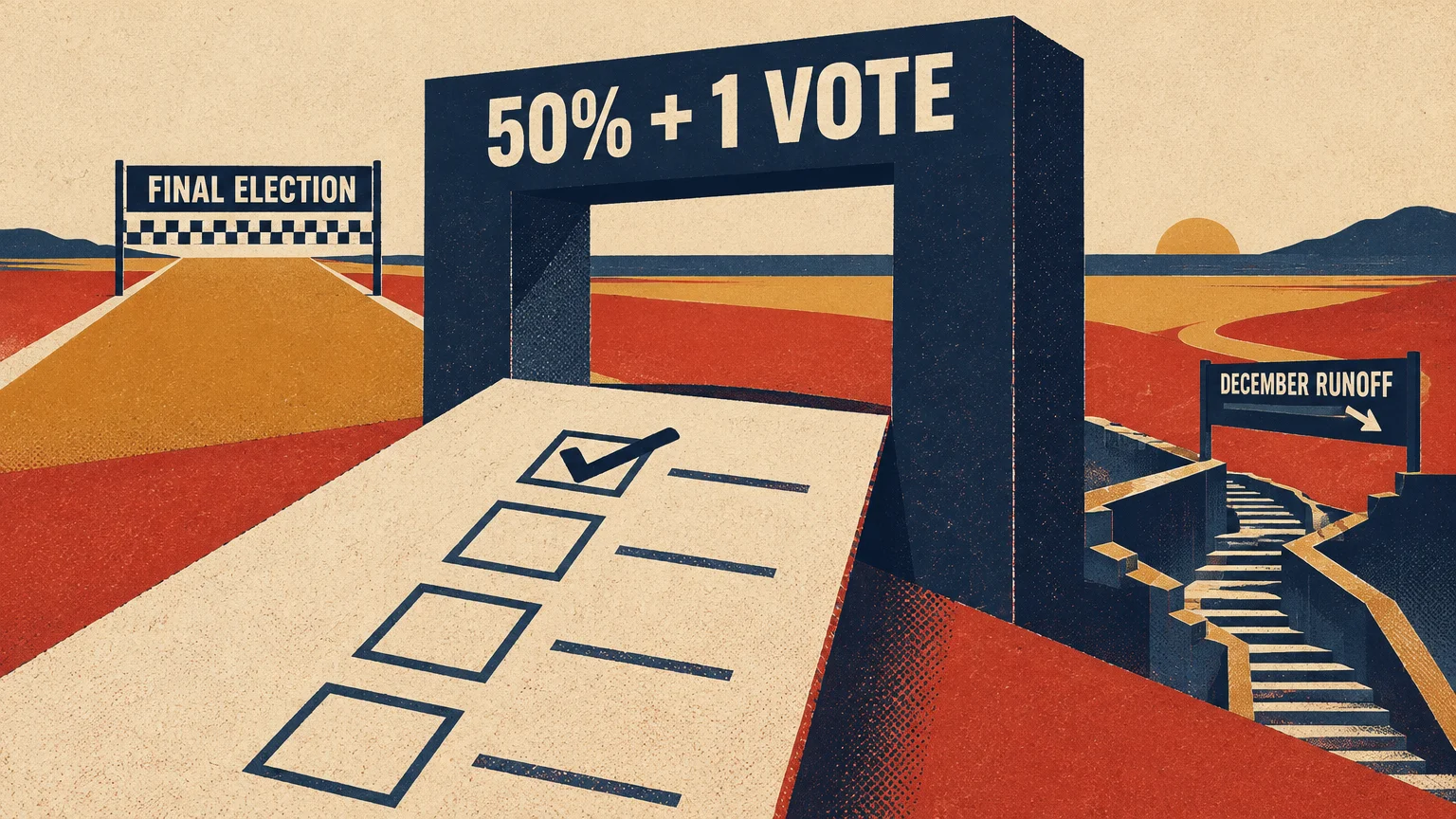
In 47 states, a candidate finishing first in November wins immediately even with 40 or 48 percent. Only Georgia, Louisiana, and Mississippi require general-election runoffs when no contender clears 50 percent plus one in covered races.
For an independent campaign, this rule creates leverage in tight two-party contests. Pulling even a small single-digit share below 50 percent can send the top two finishers into a head-to-head runoff.
Louisiana’s Split 2026 Rules Under Act 1 and Act 7
Since 1975, Louisiana used an all-comers open primary under Revised Statutes §§ 18:402 and 18:511, placing all candidates on one ballot. Clearing 50 percent won outright, while lower finishes sent the top two to a general-election runoff.
Act 1 of the 2024 First Extraordinary Session, effective January 1, 2026, moved U.S. Senate, U.S. House, Louisiana Supreme Court, Public Service Commission, and Board of Elementary and Secondary Education races to party primaries. Unaffiliated voters may choose either party’s ballot.
Covered Act 1 contests require over 50 percent in the spring primary or a primary runoff before a plurality November election. State executive, legislative, and local offices stay in the all-comers runoff system.
After the U.S. Supreme Court’s April 29, 2026 ruling in Louisiana v. Callais, Act 7 on May 14, 2026 cancelled the May U.S. House party primary. U.S. Senate and covered state offices still held May 2026 party primaries.
Act 7 kept 2026 U.S. House races in the November 3 open primary, with a December 12 runoff if needed. Under Act 1, U.S. House seats shift to the party primary system in 2027.
Mississippi’s Direct Statewide Runoffs and Federal Plurality Carve-Outs
For 130 years, Article 5, Section 140 of the Mississippi Constitution required statewide winners to win both a popular-vote majority and a majority of state House districts. Otherwise, the Mississippi House of Representatives selected the winner.
In November 2020, voters passed House Concurrent Resolution 47, replacing that legislative tiebreaker with direct popular-vote runoffs when statewide executive candidates fall short of 50 percent. However, strategists must check ballot lines carefully.
A September 10, 2026 clarification from Secretary of State Michael Watson confirms that while statewide and judicial races require a majority, regular federal congressional general elections use plurality rules.
Georgia’s Four-Week Schedule and Closed Registration Window
Under Georgia Code § 21-2-501(a), primary and general elections require a runoff whenever no candidate exceeds 50 percent. State law compresses general-election runoffs into a four-week window and generally bars voters who missed the November deadline from registering anew.
Because only initial-round voters participate, Federal Election Commission certified totals show Georgia’s 2022 U.S. Senate race drew 3,935,924 votes on November 8 and 3,541,877 votes on December 6, or 89.99 percent. General-election runoff budgets therefore require near-full turnout spending.
Federal Ballot Rules, Primary Thresholds, and Legislative Tiebreakers
The remaining three rules cover federal overseas ballot deadlines, lower primary thresholds across 10 states, and legislative selection in Vermont. Each rule shapes outreach timing and turnout assumptions.
Federal 45-Day Transmission Mandates for Overseas Voters
Under 52 U.S.C. § 20302, enacted through the Uniformed and Overseas Citizens Absentee Voting Act and amended by the 2009 MOVE Act, states must transmit absentee ballots to military and overseas voters at least 45 days before a federal election.
Because three- or four-week runoffs leave too little time for international mail, states send overseas voters instant-runoff ballots before the first vote so backup rankings count automatically. Campaigns must reach overseas voters before the initial election.
Primary Runoff Rules in Ten States and Steep Turnout Drops
As of October 2026, National Conference of State Legislatures tracking counts 10 states with primary runoffs, including nine Southern states plus South Dakota. Alabama, Arkansas, Georgia, Mississippi, Oklahoma, South Carolina, Texas, and Louisiana require over 50 percent for covered primaries.
Two states use lower bars: North Carolina holds a runoff below 30 percent if the runner-up asks. Under South Dakota Codified Laws § 12-6-51.1, three-candidate U.S. Senate, U.S. House, or governor primaries run off eight weeks later below 35 percent.
A FairVote study of 276 scheduled congressional primary runoffs from 1994 through 2022 found turnout fell in 266 races, with a median drop of 40 percent and 89 comebacks. Trailing primary contenders should concentrate runoff funds on reliable primary voters.
Vermont’s Legislative Tiebreaker Instead of a Public Runoff
Vermont requires over 50 percent for governor, lieutenant governor, and state treasurer without a second public vote. When no contender clears 50 percent, the Vermont House and Senate elect the winner in joint assembly from the top three finishers.
Verifying Certified Totals and Recount Thresholds Before Spending Reserves
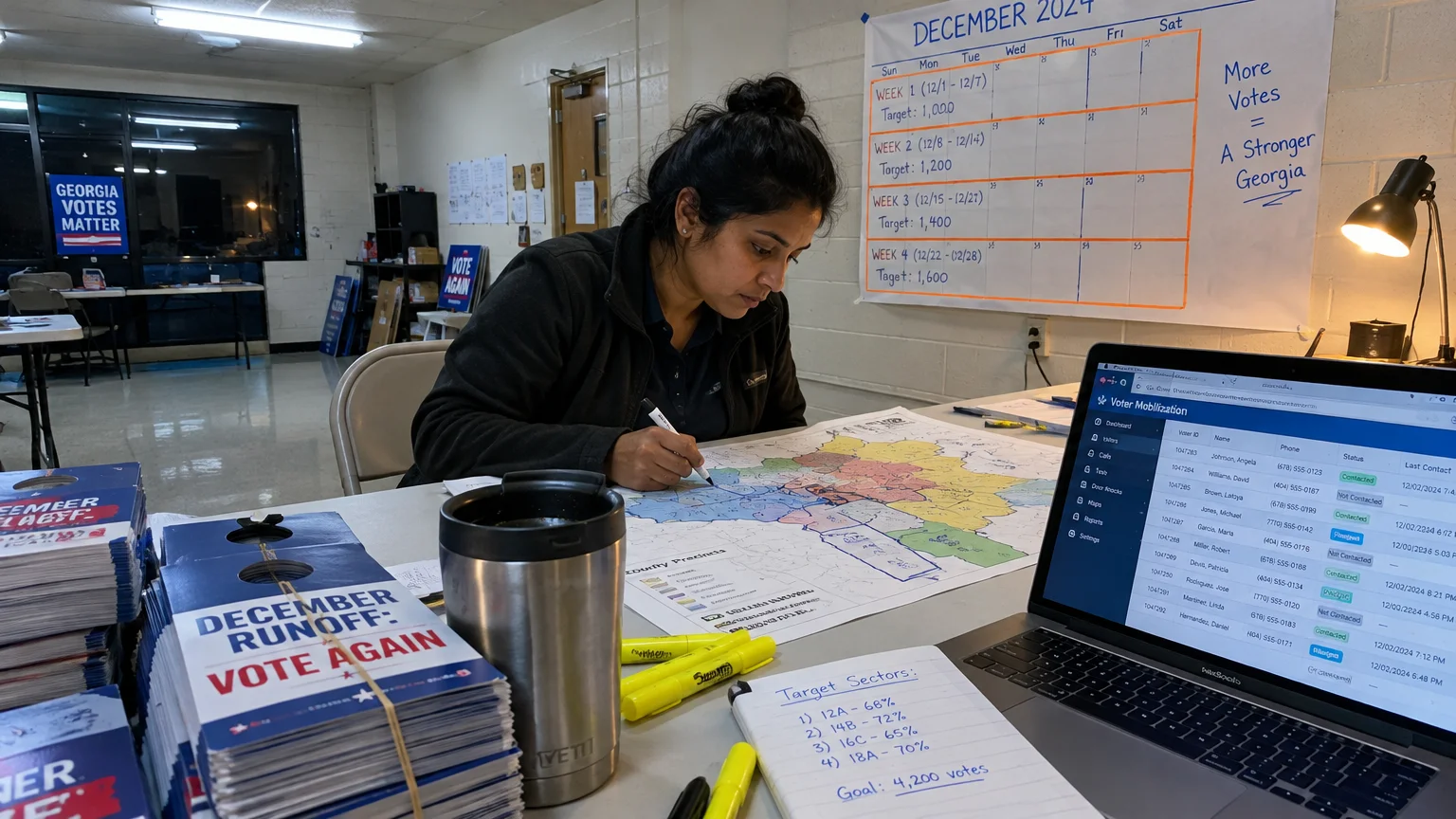
Unofficial election-night returns at 48 or 49 percent never guarantee a runoff until late absentee, military, and provisional ballots clear. Narrow margins can also trigger state recount or audit thresholds before any runoff ballot prints.
After local boards complete official election certification, run three quick checks on your gathered records before releasing runoff funds:
- State certified canvass: Verify whether late provisional and overseas ballots pushed the leader past 50 percent or locked in a December 12 runoff.
- County registrar updates: Confirm consolidated polling sites, early-voting hours, and registration freezes before printing runoff mailers.
- Overseas ballot tracker: Check FVAP.gov or your state portal to verify initial instant-runoff rankings have been tallied.
Because legislatures revise primary rules, runoff dates, and covered offices between cycles, confirm deadlines directly with your state election office before signing vendor contracts. This guide provides general civic information rather than legal advice.