How Congressional Committees Write, Amend, and Bury Federal Legislation
How congressional committees control federal legislation through jurisdiction rules, silent pigeonholing, substitute amendments, and discharge petitions.
Politics, history and the people who made it

20 stories · page 2
How congressional committees control federal legislation through jurisdiction rules, silent pigeonholing, substitute amendments, and discharge petitions.
How the State of the Union evolved from George Washington's 1790 spoken address and Thomas Jefferson's 1801 written letter into a prime-time…
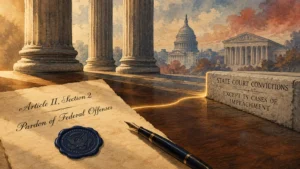
Article II grants sweeping presidential clemency power, but eight constitutional rules and Supreme Court precedents set strict limits on pardons.
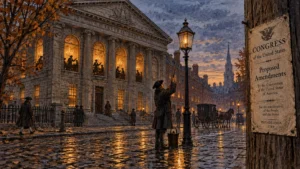
How the First Congress pared over 200 state proposals down to 12 constitutional amendments, why 2 failed in 1791, and how 10…
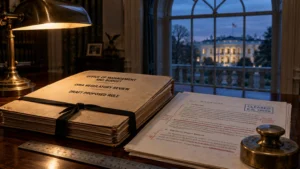
Discover 8 statutory facts and executive orders explaining how the White House OMB and OIRA review, rewrite, or block federal agency regulations.
From closed doors to live broadcasts, these nine historic Supreme Court confirmation hearings established how the Senate questions judicial nominees.
Since 1789, 16 U.S. House Speaker elections have required multiple ballots. Explore 6 historic floor deadlocks, from the 133-ballot 1855 marathon to…
From an 1806 rulebook deletion to modern 60-vote cloture battles, explore 12 historic U.S. Senate filibusters that reshaped congressional procedure.
Congress has approved 33 constitutional amendments since 1789, but only 27 became law. Here are the 6 proposals that stalled in the…
From John Adams in 1789 to JD Vance in 2025, explore nine historic times a vice president cast a tie-breaking Senate vote…