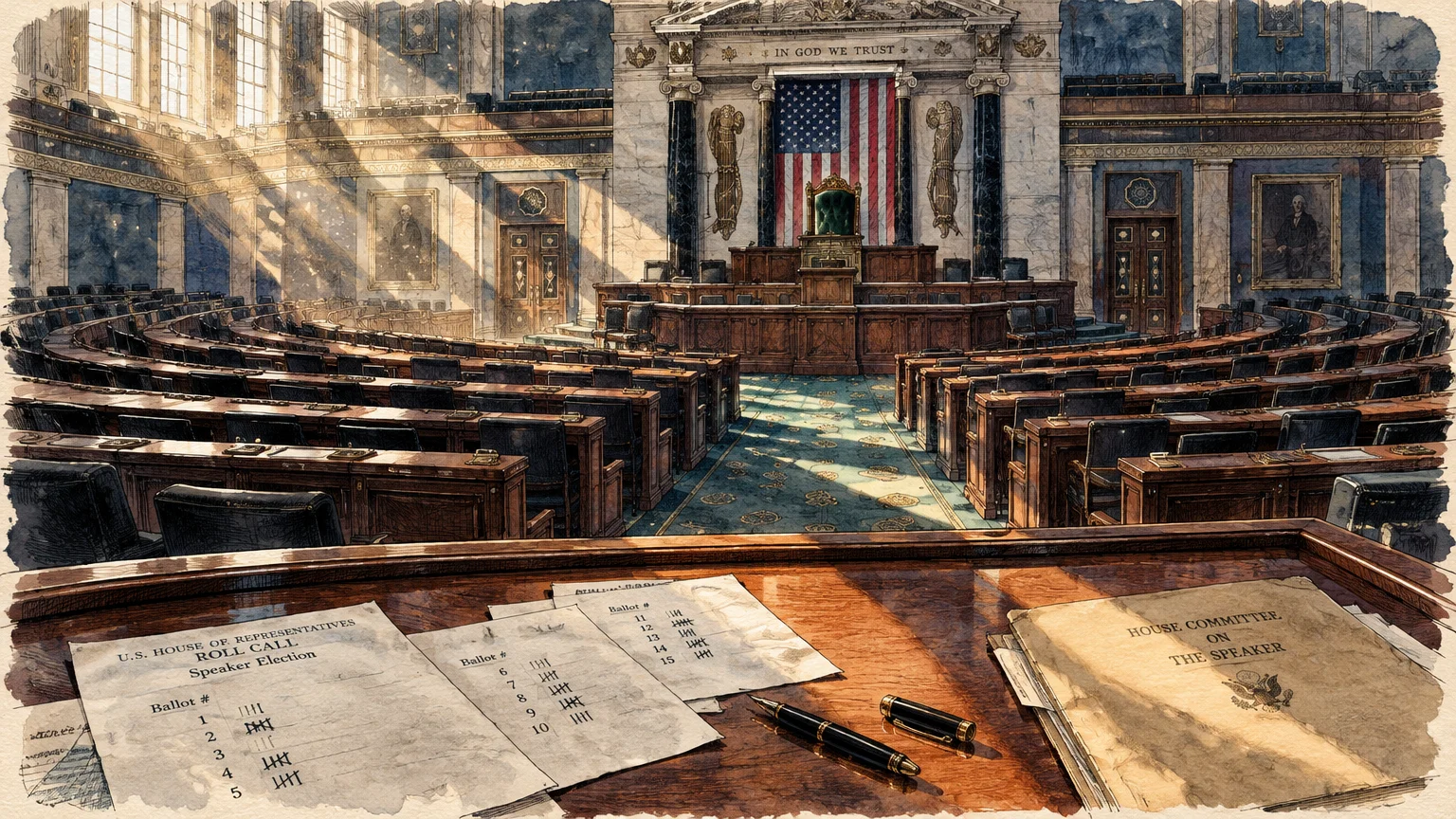
When the U.S. House of Representatives fails to elect a Speaker on the first roll call, all legislative business stops. You watch members cast ballot after ballot because the House cannot swear in representatives or pass bills without a presiding officer.
While first-ballot victories remain the standard, contested floor fights have halted the chamber 16 times since 1789. Deep ideological divides and razor-thin majorities regularly forced lawmakers into protracted floor negotiations.
You can track how political power shifts during these gridlocks by looking at historical standoffs. Here is how six multi-ballot Speaker elections reshaped House governance and national politics.
How House Speaker Elections Break Down and Why Multi-Ballot Contests Occur
Under Article I, Section 2 of the U.S. Constitution, the House of Representatives chooses its Speaker. That constitutional directive places the election of the presiding officer before any other legislative activity.
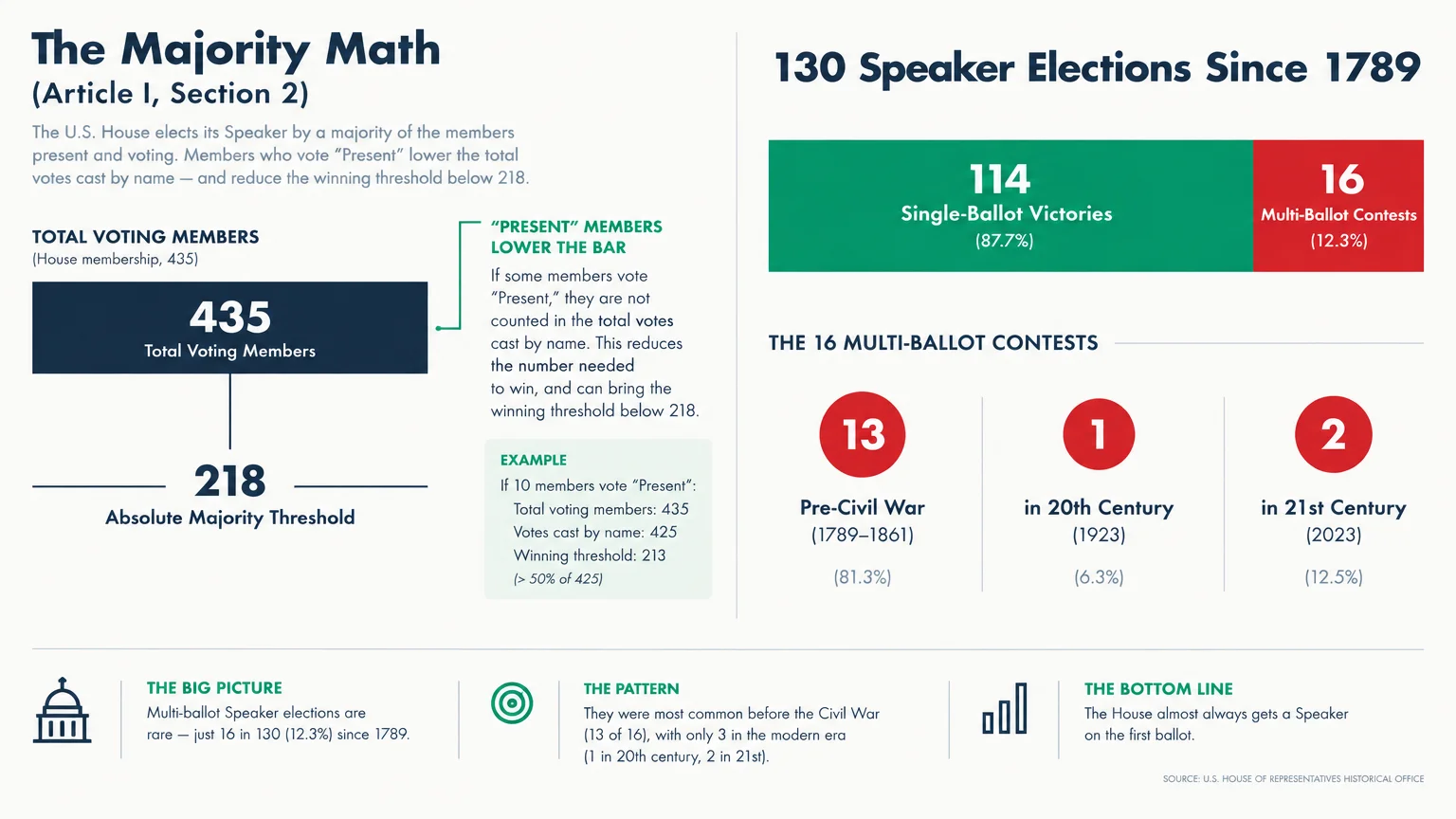
Under longstanding House precedent, a candidate must win an absolute majority of all votes cast for persons by name. In a fully attended chamber with 435 voting members, that threshold stands at 218 votes.
When lawmakers choose to vote “present” or miss the roll call entirely, they reduce the total votes cast. That reduction lowers the mathematical majority needed to claim the gavel.
Since the 1st Congress convened in 1789, the House has conducted 130 separate Speaker elections. Only 16 of those 130 contests required multiple ballots to decide the winner.
According to the Office of the Historian’s multi-ballot records, 13 of those multi-ballot elections took place before the American Civil War. During that era, national parties fractured repeatedly over slavery and regional expansion.
Following the Civil War, multi-ballot elections became exceedingly rare as centralized party leadership strengthened. Only one multi-ballot contest took place in the 20th century, which occurred in 1923.
The 21st century experienced two distinct multi-ballot elections, both taking place during the deeply divided 118th Congress in 2023. These contests demonstrated how razor-thin majorities grant leverage to small ideological factions.
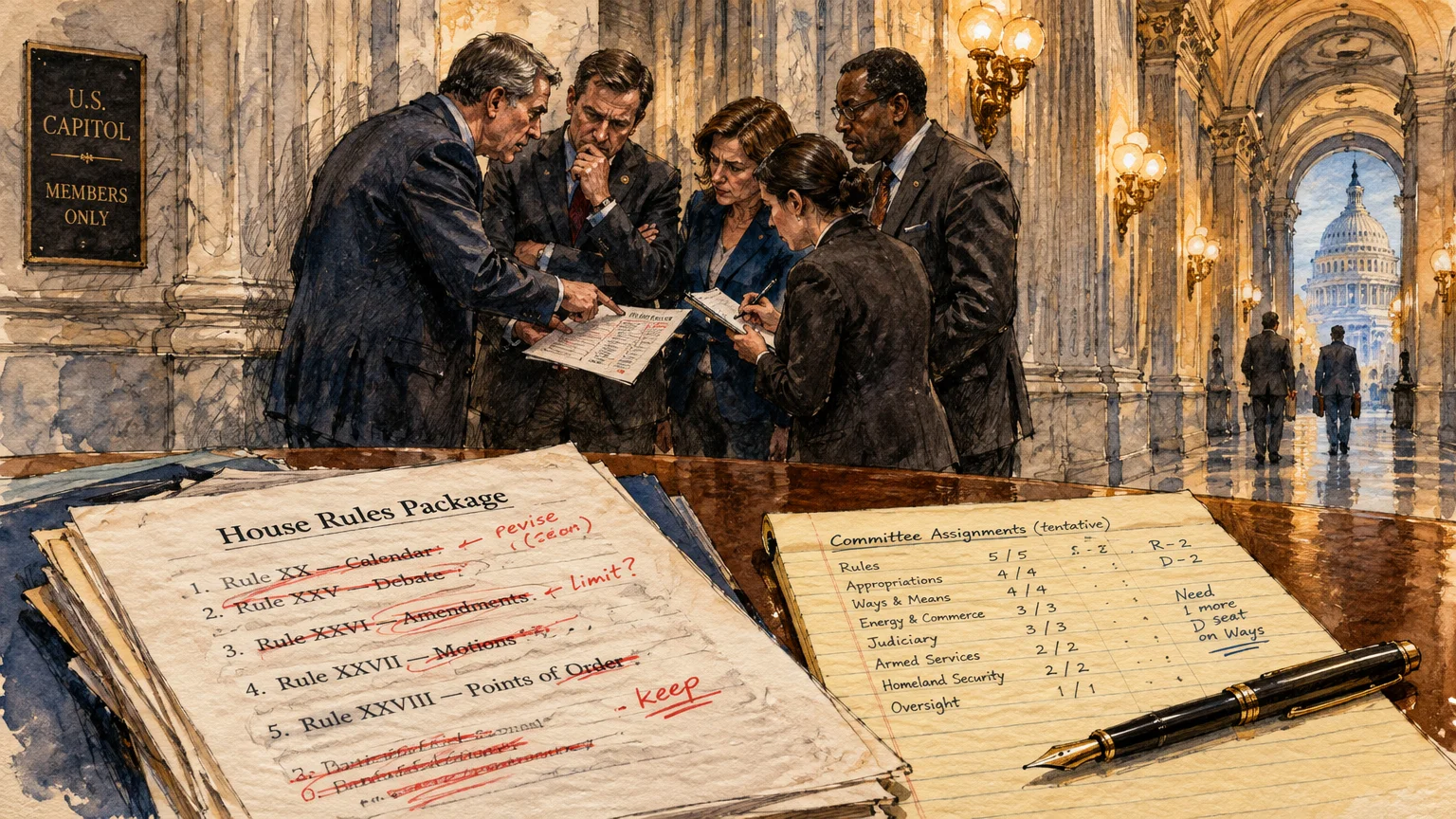
As documented by the Congressional Research Service report on Speaker elections, multi-ballot fights force significant concessions. Party leaders must negotiate committee seats and rule changes in plain view of the public.
This list covers six multi-ballot elections that produced profound procedural shifts, historic vote counts, or lasting institutional precedents. Each selection showcases how lawmakers navigated deep political gridlock to organize the House.
Understanding these six pivotal moments helps you assess how modern congressional leadership negotiates power, enforces discipline, and navigates internal dissent.
Howell Cobb and the Sectional Stalemate of 1849
The 31st Congress convened on December 3, 1849, under intense sectional conflict over slavery expansion. The acquisition of vast western territories after the Mexican-American War fueled sharp divisions between northern and southern representatives.
Whigs held 105 seats while Democrats held 112 seats, leaving neither major party with an outright majority. A bloc of nine Free Soil Party lawmakers held the balance of power on the floor.
Southern Democrat Howell Cobb of Georgia battled northern Whig Robert C. Winthrop of Massachusetts for the Speakership.
Free Soil members refused to endorse either candidate without explicit commitments on anti-slavery committee appointments.
The voting dragged on for nearly three weeks as members cast ballot after ballot without resolution. A staggering 94 different candidates received votes across 62 unsuccessful roll calls.
On December 22, 1849, the House adopted a temporary resolution to escape the ongoing paralysis. Lawmakers agreed that whoever led the 63rd ballot would win election by a plurality rather than an absolute majority.
On the 63rd ballot, Howell Cobb captured 102 votes while Robert Winthrop secured 99 votes. Third-party candidates received 20 scattered ballots, bringing total votes cast to 221.
Cobb won the Speakership with only 46 percent of the total vote. The House then ratified his victory by passing a formal resolution declaring him the duly elected Speaker.
This contest marked the first time the House abandoned the absolute majority requirement to choose a leader. You can trace early cracks in the second party system directly to this heated floor battle.
Cobb’s plurality win required the House to approve an additional resolution confirming that a plurality winner could legitimately administer the oath of office.
The bitter divisions exposed during the 1849 election foreshadowed the political collapse that led to the Compromise of 1850.
Nathaniel Banks and the 133-Ballot Marathon of 1855–1856
When the 34th Congress assembled on December 3, 1855, the fallout from the Kansas-Nebraska Act had shattered traditional coalitions. The Whig Party had disintegrated, scattering representatives into competing regional factions.
Three primary groups vied for control: pro-slavery Democrats, the nativist American (Know-Nothing) Party, and emerging anti-slavery Republicans. No single faction commanded anything close to the 118 votes needed for an outright majority.
Nathaniel P. Banks of Massachusetts emerged as the champion of anti-slavery northern coalitions.
Southern Democrats rallied primarily behind William Aiken of South Carolina, a wealthy planter, to counter Banks’s rising momentum.
According to the Congressional Globe records at the Library of Congress, the balloting continued for two full months. Lawmakers cast 133 separate ballots, while 135 different individuals received votes during the marathon.
The legislative branch ground to a complete halt during December 1855 and January 1856. President Franklin Pierce grew so impatient that he sent his annual message to an unorganized House on December 31.
Facing indefinite gridlock, the House voted on February 1, 1856, to adopt a plurality rule for the 133rd ballot. The resolution mirrored the procedural escape hatch first utilized during the 1849 contest.
On February 2, 1856, Banks captured 103 votes to defeat Aiken, who finished with 100 votes. Eleven ballots went to third-party candidates, resulting in 214 total votes cast.
Banks claimed the Speakership, delivering the newly formed anti-slavery coalition its first major victory in the national government.
Banks utilized his committee appointment powers to stack key panels with anti-slavery members, directly investigating electoral fraud in the Kansas Territory.
To this day, the 1855–1856 standoff stands as the longest and most contentious Speaker election in American history.
William Pennington and the Eve-of-War Deadlock of 1859–1860
The 36th Congress opened on December 5, 1859, amidst immense national turmoil following John Brown’s raid on Harpers Ferry. Sectional hostility reached such extremes that members routinely brought concealed weapons onto the House floor.
The emerging Republican Party held a plurality with 109 seats, facing 101 Democrats and 27 members of the American and Opposition parties. Republicans initially unified behind Ohio Representative John Sherman.
Southern members fiercely blocked Sherman’s candidacy because he had endorsed Hinton Rowan Helper’s anti-slavery book, The Impending Crisis of the South. Southern lawmakers declared that no endorser of Helper’s work would ever preside over the chamber.
Sherman’s support stalled below the winning threshold through weeks of acrimonious floor debate. Recognizing the permanent impasse, Sherman withdrew his name after the 39th ballot to allow Republicans to recruit a moderate candidate.
Party leaders turned to Representative William Pennington, a newly elected lawmaker from New Jersey. Pennington had never served in Congress before, but his moderate stance attracted support from anti-Lecompton Democrats and northern moderates.
On February 1, 1860, the House conducted its 44th ballot to resolve the eight-week stalemate. Pennington secured exactly 117 votes out of 233 cast, edging Democrat John A.
McClernand of Illinois.
Pennington’s victory made history because he was a freshman representative serving his very first term. Aside from Henry Clay in 1811, Pennington remains the only freshman lawmaker ever elected Speaker of the House.
Pennington’s tenure proved politically fragile; voters defeated him in his reelection bid later that same year.
His election marked the final pre-Civil War Speaker battle before southern states seceded from the Union. The two-month contest confirmed that compromise between northern and southern delegations had become impossible.
Frederick Gillett and the Progressive Revolt of 1923
On December 3, 1923, the 68th Congress convened with Republicans holding a narrow majority of 225 seats. Democrats held 207 seats, while three seats belonged to third-party representatives.
Incumbent Speaker Frederick H. Gillett of Massachusetts expected routine reelection to a third term.
However, a rebellious faction of roughly 20 Progressive Republicans from midwestern farm states refused to support him.
Led by Representative John M. Nelson of Wisconsin, the insurgent Progressives withheld their votes on opening day.
They demanded fundamental revisions to the House standing rules to dilute the power of party leadership.
Across eight consecutive ballots over three days, Gillett repeatedly stalled between 197 and 200 votes. Democratic nominee Finis J.
Garrett of Tennessee consistently led the early rounds with unified support from 195 Democrats.
The House stood completely unorganized and unable to conduct business until party leaders addressed the dissidents’ demands. Republican Floor Leader Nicholas Longworth stepped in to negotiate directly with Nelson’s Progressive coalition.
Longworth pledged that House leadership would permit open debate and amendment on procedural rules in January 1924. Crucially, leadership agreed to liberalize rules governing the discharge petition, making it easier to bring bills to the floor.
Satisfied with these enforceable procedural concessions, the Progressive Republicans returned to the party fold. On December 5, 1923, Gillett won the 9th ballot with 215 votes out of 414 votes cast.
Longworth’s skillful mediation during the crisis elevated his standing, allowing him to succeed Gillett as Speaker two years later.
This three-day contest represented the only multi-ballot Speaker election conducted during the entire 20th century. It demonstrated how organized intraparty rebellions could leverage leadership floor votes to force institutional reforms.
Kevin McCarthy and the 15-Ballot Battle of January 2023
The 118th Congress convened on January 3, 2023, following midterm elections that produced a razor-thin 222–212 Republican majority. Republican Conference nominee Kevin McCarthy of California faced immediate resistance from conservative members.
A group of 20 conservative lawmakers, primarily affiliated with the House Freedom Caucus, withheld their votes on the initial roll calls. Democratic Leader Hakeem Jeffries maintained flawless party discipline, winning 212 votes on every round.
Dissident members initially nominated Representative Jim Jordan and later rallied behind Representative Byron Donalds of Florida. McCarthy hovered between 201 and 203 votes across eleven consecutive ballots over four contentious days.
You can examine the vote-by-vote progression in the official Clerk of the House roll call archives. McCarthy gradually broke the deadlock by offering extensive procedural concessions.
He agreed to restore the single-member motion to vacate the chair, which allowed any individual lawmaker to force a removal vote. He also promised Freedom Caucus members seats on the Rules Committee and guaranteed 72 hours to review bills.
By the 14th ballot on the night of January 6, McCarthy flipped most dissenters but remained one vote short. Tense, confrontational exchanges erupted on the House floor before members agreed to a 15th roll call.
At 12:29 AM on January 7, 2023, the 15th ballot concluded with McCarthy securing 216 votes. Six Republican holdouts voted “present,” lowering the majority threshold from 218 to 215 votes.
McCarthy won the Speakership on the fifth longest ballot marathon in congressional history. However, the motion-to-vacate concession would directly cut short his tenure nine months later.
Mike Johnson and the Post-Vacatur Floor Votes of October 2023
On October 3, 2023, the House passed House Resolution 757 by a 216–210 vote, vacating the Speakership. Kevin McCarthy became the first presiding officer in American history removed through a motion to vacate.
Representative Patrick McHenry assumed the chair as Speaker pro tempore under House Rule I, clause 8(b)(3). The chamber entered an unprecedented three-week freeze during which no legislative business could proceed.
House Republicans struggled through fierce internal divisions to select a viable replacement. Majority Leader Steve Scalise and Majority Whip Tom Emmer both secured conference nominations but withdrew before floor roll calls.
Judiciary Committee Chairman Jim Jordan took his nomination to the full floor on October 17. Over three consecutive ballots, Jordan’s support eroded from 200 votes to 194 votes as Republican defections grew from 20 to 25.
Following Jordan’s defeat, the Republican conference nominated Representative Mike Johnson of Louisiana. Johnson’s low national profile and lack of entrenched factional enemies helped him unite competing wings of the party.
On October 25, 2023, the House conducted its 4th official floor ballot of the vacancy crisis. Johnson secured 220 votes, achieving unanimous support from all attending Republicans to defeat Democratic Leader Hakeem Jeffries, who received 209 votes.
Johnson assumed office as the 56th Speaker of the House, ending twenty-two days of institutional paralysis. His sudden elevation underscored how rapidly political power can shift in a closely divided chamber.
This contest showed you that modern multi-ballot fights do not require dozens of rounds to create historic disruptions. A handful of disciplined dissenters can halt legislative operations entirely.
| Year | Congress | Winning Speaker | Ballots | Winning Vote | Deciding Factor |
|---|---|---|---|---|---|
| 1849 | 31st | Howell Cobb (D-GA) | 63 | 102 / 221 | Adopted plurality rule |
| 1855–1856 | 34th | Nathaniel P. Banks (Know-Nothing-MA) | 133 | 103 / 214 | Adopted plurality rule |
| 1859–1860 | 36th | William Pennington (R-NJ) | 44 | 117 / 233 | Moderate freshman consensus |
| 1923 | 68th | Frederick H. Gillett (R-MA) | 9 | 215 / 414 | Conceded floor rule reforms |
| Jan 2023 | 118th | Kevin McCarthy (R-CA) | 15 | 216 / 428 | Holdouts voted “present” |
| Oct 2023 | 118th | Mike Johnson (R-LA) | 4 | 220 / 429 | Unified post-vacatur ballot |
What Historical Speaker Deadlocks Reveal About Modern Congressional Power
Multi-ballot Speaker elections occur when a majority party fails to enforce internal discipline before opening day. When you examine these six contests, you find that narrow margins consistently give small rebel blocs outsized leverage.
During the antebellum era, Congress broke monumental deadlocks in 1849 and 1856 by abandoning the absolute majority standard. Lawmakers passed temporary procedural rules allowing candidates to claim the gavel with a simple plurality.
You will not see modern leaders adopt plurality voting because the political consequences are far too dangerous. In a closely divided chamber, a plurality rule could allow the minority party’s candidate to win the Speakership.
Instead, modern party leaders rely on shifting the vote threshold to secure a mathematical majority. Members who withhold support can switch their votes to “present,” lowering the total denominator of votes cast.
Kevin McCarthy used this precise maneuver in January 2023 when six conservative holdouts voted “present.” Their tactical choices dropped the winning post from 218 down to 216 votes.
The institutional concessions traded during these multi-ballot standoffs frequently alter how the House operates for years afterward. Compromises made to secure the gavel often carry far-reaching consequences for congressional authority.
The 1923 Progressive revolt established vital discharge petition precedents that loosened leadership control over committee legislation. Those procedural tools remain accessible to rank-and-file lawmakers today.
Conversely, the concessions granted in January 2023 revived the single-member motion to vacate. That single rule change directly triggered Kevin McCarthy’s historic ouster nine months later.
These episodes emphasize that the House of Representatives remains constitutionally paralyzed until it elects a presiding officer. Without a Speaker, representatives cannot take their oaths, form committees, or pass urgent legislation.
Even on January 3, 2025, Speaker Mike Johnson faced this reality when two Republican holdouts switched their votes just before the Clerk gaveled the first roll call closed at 218–215.
Frequently Asked Questions About Multi-Ballot Speaker Elections
Does the Constitution require the Speaker of the House to be an elected member?
Article I, Section 2 of the U.S. Constitution does not explicitly mandate that the Speaker must be an elected representative. The text states only that the House “shall chuse their Speaker and other Officers.”
Despite periodic protest votes for outside political figures, every Speaker elected across 130 House elections has been a sitting member. Selecting an outside figure would create unprecedented constitutional and administrative challenges.
How does a “present” vote change the winning threshold for Speaker?
House precedents dictate that a winning candidate must receive an absolute majority of all votes cast for persons by name. When a representative votes “present,” the Clerk excludes that ballot from the calculation.
This reduction shrinks the total pool of counted votes. Consequently, a candidate can capture the gavel with fewer than 218 votes without requiring dissenters to cross party lines.
Can the House pass legislation while a Speaker election is underway?
The House cannot consider bills, introduce legislation, or organize standing committees until it elects a Speaker. The Clerk of the House presides solely to call the roll and preserve decorum.
Because representatives cannot take their constitutional oath of office without a Speaker, all legislative authority remains completely suspended. The chamber cannot respond to national emergencies until it chooses a leader.
Could the modern House resolve a Speaker deadlock using a plurality vote?
The House elected Speakers by plurality in 1849 and 1856 by approving special procedural resolutions beforehand. However, passing such a resolution today would require an affirmative majority vote.
Neither party leadership supports plurality voting in the modern era. Taking that step could inadvertently allow the rival party’s candidate to capture the Speakership on a split vote.