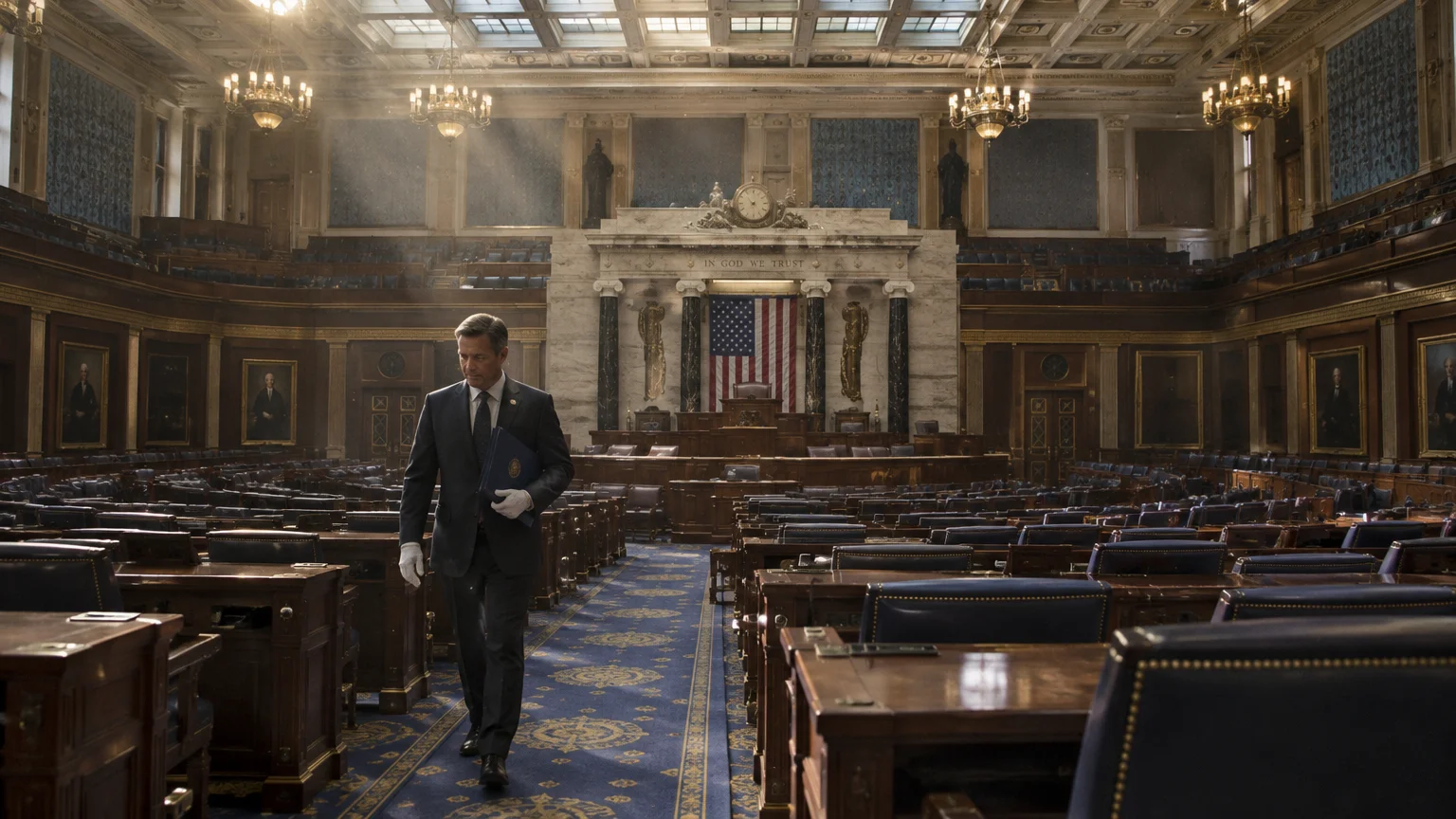
When you watch a foreign leader speak to a packed House chamber, you are witnessing one of Washington’s most misunderstood diplomatic rituals. While news broadcasts routinely label these gatherings as joint sessions, Congress nearly always convenes them as informal joint meetings instead.
Understanding this procedural difference helps you separate genuine constitutional mandates from diplomatic honors. You can track how congressional leaders bypass executive branch control and use Capitol Hill ceremonies to shape American foreign policy.
From revolutionary heroes to wartime prime ministers, these historic gatherings reveal how legislative procedure reflects changing global alliances across two centuries of public records.
Understanding the Procedural Line Between Joint Sessions and Joint Meetings
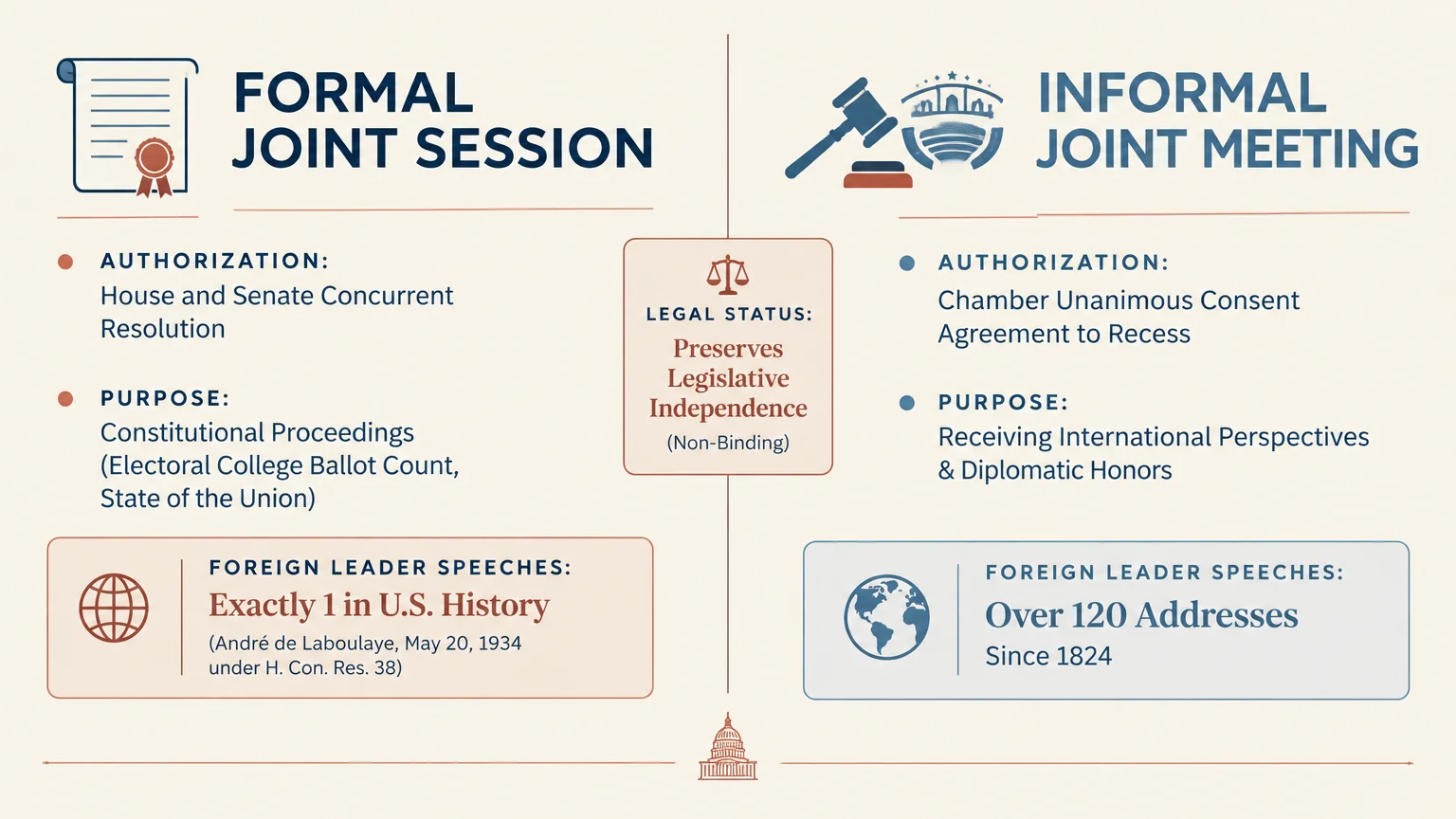
You must understand a vital procedural distinction before reviewing these historic speeches. In congressional parlance, a joint session and a joint meeting represent entirely different legislative instruments.
A formal joint session requires both the House and Senate to pass a concurrent resolution. Congress reserves these constitutional gatherings for official executive proceedings, such as counting Electoral College ballots or receiving the presidential State of the Union address.
By contrast, congressional leadership hosts foreign dignitaries through joint meetings. Each chamber simply adopts a unanimous consent agreement to recess and assemble informally in the House of Representatives chamber.
The Congressional Research Service notes that this distinction preserves legislative independence. Because a joint meeting does not require a formal statute or resolution, lawmakers can hear international perspectives without binding the legislature to official diplomatic actions.
Out of more than 120 addresses by foreign dignitaries since 1824, Congress has organized nearly all of them as joint meetings. Only once has a foreign representative addressed a strictly designated joint session.
Our editorial team selected these nine landmark addresses based on verified parliamentary records from the Office of the Historian of the U.S. House of Representatives and the Senate Historical Office.
Each entry marks a pivotal milestone where international leaders influenced domestic legislation, forged wartime alliances, or redefined American bilateral relations. They showcase how parliamentary procedure shapes foreign diplomacy on Capitol Hill.
André de Laboulaye
On May 20, 1934, French Ambassador André de Laboulaye achieved a procedural distinction that remains unique in American legislative history. He became the only foreign dignitary ever to address a formal joint session of Congress.
Lawmakers established this gathering by passing House Concurrent Resolution 38 during the 73rd Congress. The measure specifically designated a joint session to commemorate the centennial of the death of the Marquis de Lafayette.
President Franklin D. Roosevelt escorted Ambassador Laboulaye into the House chamber to address the assembled lawmakers.
The ambassador’s speech highlighted the enduring democratic kinship between France and the United States.
Because Congress convened through a formal concurrent resolution rather than a standard recess agreement, this ceremony stands alone. Every other foreign leader in history addressed an informal joint meeting instead.
- Parliamentary status: Formal Joint Session authorized under House Concurrent Resolution 38.
- Official record: Congressional Record, 73rd Congress, 2nd Session, pages 9170–9172.
- Key participants: French Ambassador André de Laboulaye and President Franklin D. Roosevelt.
King Kalākaua of Hawaii
On December 18, 1874, King David Kalākaua of the Kingdom of Hawaii made institutional history. He became the first foreign head of state to address a joint meeting of the United States Congress.
The House and Senate suspended regular legislative business by unanimous consent to welcome the Hawaiian monarch. Lawmakers gathered in the House chamber to hear his appeal for stronger commercial ties.
A severe cold prevented King Kalākaua from delivering the address himself. Former Massachusetts Representative Elisha Hunt Allen, serving as Hawaii’s chancellor, read the royal remarks aloud to the assembled lawmakers.
This historic gathering laid the diplomatic groundwork for the Reciprocity Treaty of 1875. That landmark economic pact granted duty-free access to the American market for Hawaiian sugar and transformed Pacific trade.
- Parliamentary status: First joint meeting address by a reigning foreign monarch.
- Official record: Congressional Record, 43rd Congress, 2nd Session, page 154.
- Diplomatic outcome: Accelerated passage of the commercial Reciprocity Treaty of 1875.
Winston Churchill
On December 26, 1941, British Prime Minister Winston Churchill delivered one of the most consequential wartime addresses in Capitol history. His speech came just nineteen days after the Japanese attack on Pearl Harbor.
The Library of Congress notes that lawmakers convened this joint meeting in the Senate Chamber rather than the House Chamber. Leaders chose the smaller room because many members were away on Christmas recess.
Churchill rallied the American legislature with stirring rhetoric, famously asking what kind of people the Axis powers thought the Allies were. His physical presence solidified the burgeoning wartime alliance between Britain and the United States.
Churchill addressed joint meetings three times during his career, establishing a long-standing record. His 1941 speech proved that congressional invitations could serve as immediate instruments of wartime mobilization.
- Parliamentary venue: Senate Chamber (one of the rare joint meetings held outside the House floor).
- Official record: Congressional Record, 77th Congress, 1st Session, pages 10117–10119.
- Historic context: First joint meeting address delivered during active American participation in World War II.
Queen Juliana of the Netherlands
On April 3, 1952, Queen Juliana of the Netherlands broke a significant institutional barrier. She became the first woman to address a joint meeting of both congressional chambers.
Nine years earlier, Madame Chiang Kai-shek of China had addressed the House and Senate in separate back-to-back sessions. Queen Juliana was the first female dignitary to speak before both bodies assembled together in one room.
Her Majesty used the address to express Dutch gratitude for the Marshall Plan following World War II. She also called for global cooperation and the defense of democratic institutions during the intensifying Cold War.
Both chambers adopted simple recess motions to stage the ceremony in the House chamber. Her appearance established a vital precedent, opening the joint meeting podium to female heads of state.
- Parliamentary milestone: First woman to address a joint meeting of Congress.
- Official record: Congressional Record, 82nd Congress, 2nd Session, pages 3433–3435.
- Key policy theme: Postwar reconstruction under the Marshall Plan and transatlantic security.
Lech Wałęsa
On November 15, 1989, Polish Solidarity leader Lech Wałęsa stepped to the House podium as a private citizen. He had never held public office or served as a head of state.
His address occurred just six days after the fall of the Berlin Wall signaled the collapse of Soviet control across Eastern Europe. Congressional leadership used the joint meeting format to honor grassroots democratic movements.
Wałęsa opened his historic address in Polish with the famous phrase, “We, the People,” echoing the United States Constitution. The chamber erupted in standing applause as he asked America for economic partnership rather than charity.
This invitation established a modern precedent for honoring transformative democratic leaders before they achieved formal executive power. Wałęsa won the Polish presidency the following year in December 1990.
- Dignitary status: Private labor union leader and future President of Poland.
- Official record: Congressional Record, 101st Congress, 1st Session, pages 28841–28843.
- Historical timing: Delivered less than one week after the opening of the Berlin Wall.
Nelson Mandela
On June 26, 1990, Nelson Mandela addressed a joint meeting of Congress just four months after his release from twenty-seven years of imprisonment. He spoke as deputy president of the African National Congress.
Mandela used his congressional address to urge lawmakers to maintain economic sanctions against South Africa’s apartheid regime. He praised Congress for overriding a presidential veto in 1986 to pass the Comprehensive Anti-Apartheid Act.
The U.S. Senate Historical Office records that Mandela received multiple extended standing ovations from members of both political parties. His speech directly influenced federal policy regarding the enforcement of trade restrictions.
Mandela’s appearance demonstrated how foreign dissidents could leverage congressional meetings to sustain international pressure on oppressive regimes. He returned to Washington four years later as South Africa’s democratically elected president.
- Political status: Anti-apartheid leader and political prisoner released in February 1990.
- Official record: Congressional Record, 101st Congress, 2nd Session, pages 15632–15635.
- Policy focus: Preservation of economic sanctions established under Public Law 99-440.
Yitzhak Rabin and King Hussein
On July 26, 1994, Israeli Prime Minister Yitzhak Rabin and King Hussein I of Jordan made diplomatic history on Capitol Hill. They became the only duo of foreign leaders to address a joint meeting together.
Just one day earlier, both leaders had signed the historic Washington Declaration at the White House. That agreement formally ended forty-six years of official belligerency between Israel and Jordan.
Congressional leadership offered the House floor so both leaders could present their vision of Middle Eastern peace directly to lawmakers. Rabin and Hussein addressed the chamber in succession, emphasizing shared security and regional economic development.
This joint appearance helped secure bipartisan congressional support for bilateral aid packages and debt forgiveness for Jordan. It remains an extraordinary example of Congress hosting two foreign heads of government simultaneously.
- Historic distinction: First and only dual address by two foreign leaders to a single joint meeting.
- Official record: Congressional Record, 103rd Congress, 2nd Session, pages 17947–17951.
- Diplomatic achievement: Codified legislative support for the Israel-Jordan Peace Treaty of October 1994.
Pope Francis
On September 24, 2015, Pope Francis became the first pontiff in Roman Catholic history to address a joint meeting of the United States Congress. Speaker John Boehner had pursued this historic invitation for two decades.
Speaking as both the spiritual leader of the global Catholic Church and the sovereign head of Vatican City, the Pope challenged lawmakers on moral governance. He delivered his address in English to a packed House chamber.
Pope Francis framed his remarks around four iconic Americans: Abraham Lincoln, Martin Luther King Jr., Dorothy Day, and Thomas Merton. He urged lawmakers to practice dialogue, abolish the death penalty, combat poverty, and protect the environment.
The House Office of the Historian recorded unprecedented logistical coordination across Capitol Hill to accommodate the papal visit. The event underscored how Congress can use joint meetings to host international moral leaders.
- Institutional first: First Roman Catholic pontiff to address assembled members of Congress.
- Official record: Congressional Record, 114th Congress, 1st Session, pages H6187–H6190.
- Core themes: Global immigration, environmental stewardship, economic dignity, and capital punishment.
Volodymyr Zelenskyy
On December 21, 2022, Ukrainian President Volodymyr Zelenskyy made his first trip outside Ukraine following the Russian invasion earlier that year. He traveled directly to Washington to address a joint meeting of Congress.
Zelenskyy arrived dressed in his signature olive-green military sweatshirt, emphasizing that his country remained engaged in active combat. Nine months earlier, on March 16, 2022, he had delivered an extraordinary virtual video address to lawmakers.
In his in-person address, Zelenskyy argued that American financial and military assistance was an investment in global security rather than charity. He presented lawmakers with a Ukrainian battle flag signed by frontline soldiers fighting in Bakhmut.
In exchange, congressional leaders presented Zelenskyy with an American flag flown over the Capitol dome. The speech directly preceded legislative approval of an additional multi-billion-dollar security assistance package.
- Diplomatic context: First in-person international trip by the Ukrainian president during the 2022 Russian invasion.
- Official record: Congressional Record, 117th Congress, 2nd Session, pages H9955–H9958.
- Tangible outcome: Mobilized legislative backing for the 2023 Consolidated Appropriations Act.
| Dignitary | Country / Entity | Date | Chamber | Procedural Mechanism | Significance |
|---|---|---|---|---|---|
| André de Laboulaye | France | May 20, 1934 | House | Concurrent Resolution | Only formal joint session for a foreign official |
| King Kalākaua | Kingdom of Hawaii | Dec 18, 1874 | House | Unanimous Consent | First reigning monarch to address a joint meeting |
| Winston Churchill | United Kingdom | Dec 26, 1941 | Senate | Unanimous Consent | First wartime address; held in Senate Chamber |
| Queen Juliana | Netherlands | Apr 3, 1952 | House | Unanimous Consent | First woman to address a joint meeting |
| Lech Wałęsa | Poland (Solidarity) | Nov 15, 1989 | House | Unanimous Consent | First private citizen in modern era to speak |
| Nelson Mandela | South Africa (ANC) | Jun 26, 1990 | House | Unanimous Consent | Addressed Congress months after prison release |
| Y. Rabin & King Hussein | Israel & Jordan | Jul 26, 1994 | House | Unanimous Consent | Only dual joint meeting address in history |
| Pope Francis | Holy See / Vatican | Sep 24, 2015 | House | Unanimous Consent | First papal address to assembled lawmakers |
| Volodymyr Zelenskyy | Ukraine | Dec 21, 2022 | House | Unanimous Consent | Wartime address securing critical defense aid |
How Congressional Leadership Controls the Diplomatic Stage
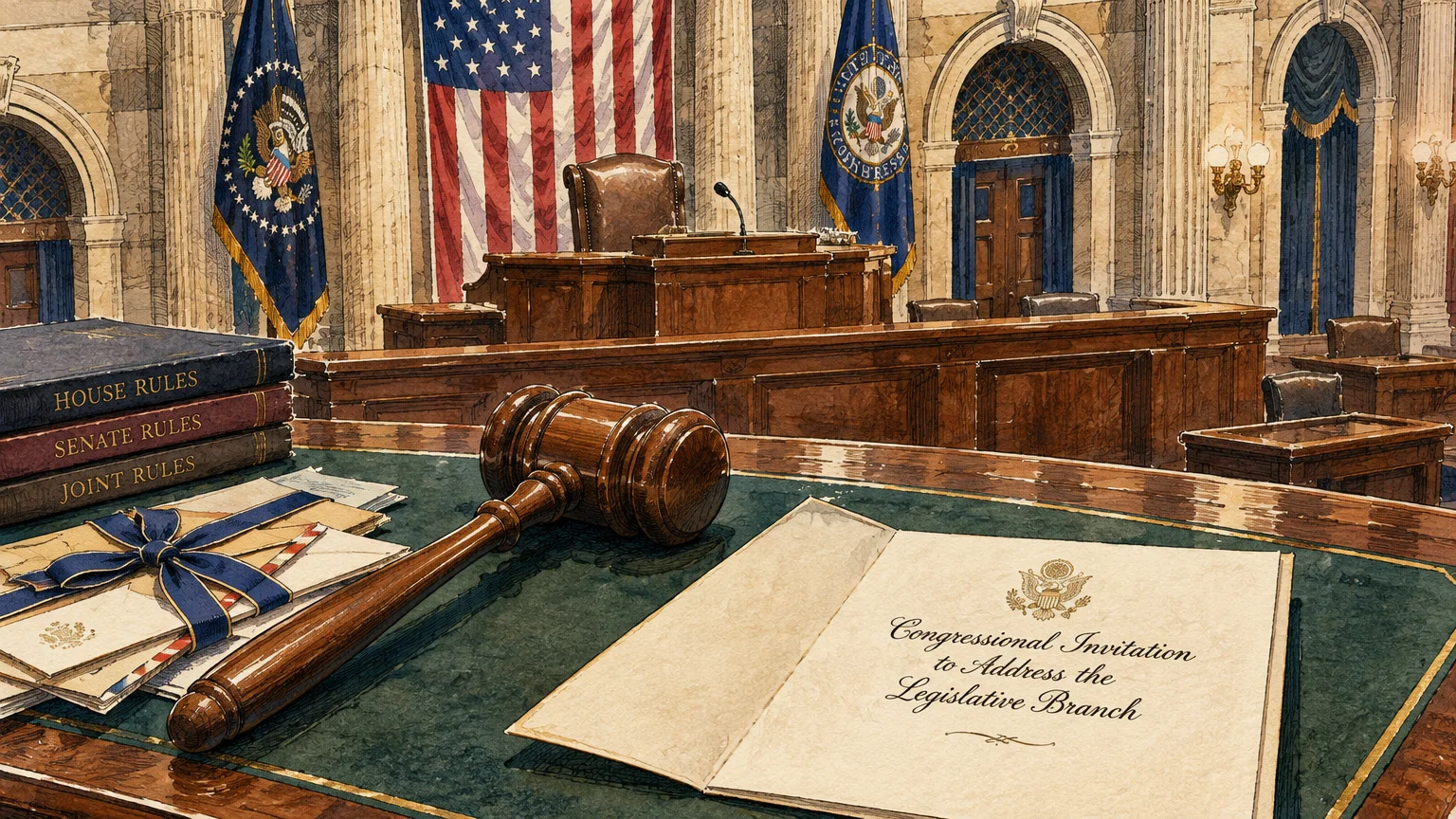
When you analyze the history of these addresses, a clear constitutional reality emerges. Congressional leaders use the joint meeting podium as an independent instrument of American foreign policy.
The Speaker of the House exercises complete procedural control over who speaks in the House chamber. No federal statute or constitutional clause requires the Speaker to consult or seek permission from the White House.
While congressional leaders traditionally coordinate foreign invitations with the State Department, independent legislative invitations occasionally trigger intense diplomatic friction. Lawmakers can elevate leaders whom the executive branch prefers to keep at arm’s length.
For example, in March 2015, Speaker John Boehner invited Israeli Prime Minister Benjamin Netanyahu to address a joint meeting without notifying President Barack Obama. Netanyahu used the platform to lobby directly against the Iran nuclear agreement.
Netanyahu holds the record for addressing joint meetings, speaking four times between 1996 and 2024. That total broke his previous tie with British Prime Minister Winston Churchill, who addressed lawmakers three times.
Procedural flexibility explains why Congress relies on joint meetings rather than formal joint sessions for foreign leaders. Joint meetings do not require formal recorded votes or concurrent resolutions that could stall on the floor.
By relying on simple unanimous consent recess motions, leaders can swiftly organize an international reception. This parliamentary device allows the legislative branch to project American diplomatic power on its own terms.
The practice also provides foreign leaders with unprecedented access to the American public. A speech to Congress offers international figures a global television audience and direct access to federal budget appropriators.
From the Marquis de Lafayette in 1824 to modern heads of state, Capitol Hill addresses remain unique diplomatic instruments. They blend high ceremonial pageantry with direct legislative lobbying.
Frequently Asked Questions About Joint Meetings of Congress
Who holds the authority to invite foreign leaders to speak to Congress?
The Speaker of the House controls invitations to address a joint meeting. Because the assembly takes place in the House chamber, the Speaker serves as the institutional gatekeeper.
The Speaker typically coordinates with the Senate Majority Leader and the minority party leaders before issuing an official invitation. However, the executive branch possesses no constitutional veto over congressional invitations.
Why does Congress almost never use a formal joint session for foreign leaders?
A formal joint session requires both chambers to pass a concurrent resolution. This procedural hurdle requires floor time and exposes the diplomatic invitation to potential partisan amendments or filibusters.
In contrast, a joint meeting requires only a routine unanimous consent agreement to recess. This parliamentary tool gives congressional leaders maximum flexibility to host foreign leaders without legislative delay.
Which foreign dignitary has addressed Congress the most times?
Israeli Prime Minister Benjamin Netanyahu holds the solo record, having addressed joint meetings four times. He delivered speeches to Congress in 1996, 2011, 2015, and 2024.
Prior to 2024, Netanyahu was tied with British Prime Minister Winston Churchill. Churchill addressed lawmakers three times across his career, speaking in 1941, 1943, and 1952.
How does a virtual address to Congress differ from an official joint meeting?
A virtual address, such as Volodymyr Zelenskyy’s speech on March 16, 2022, functions as an informal member briefing. It does not constitute an official joint meeting of Congress.
Official joint meetings require lawmakers to formally convene and assemble in the physical chamber. Only speeches delivered in person appear in the Congressional Record as official legislative proceedings.