The United States Secret Service protects the American presidency today, but the agency originally pursued financial criminals. President Abraham Lincoln approved its founding in 1865 to combat rampant paper currency counterfeiting during the American Civil War.
Congress did not assign permanent executive protection duties to the bureau until decades later. Three presidential assassinations across 36 years forced reluctant lawmakers to convert federal Treasury investigators into full-time presidential bodyguards.
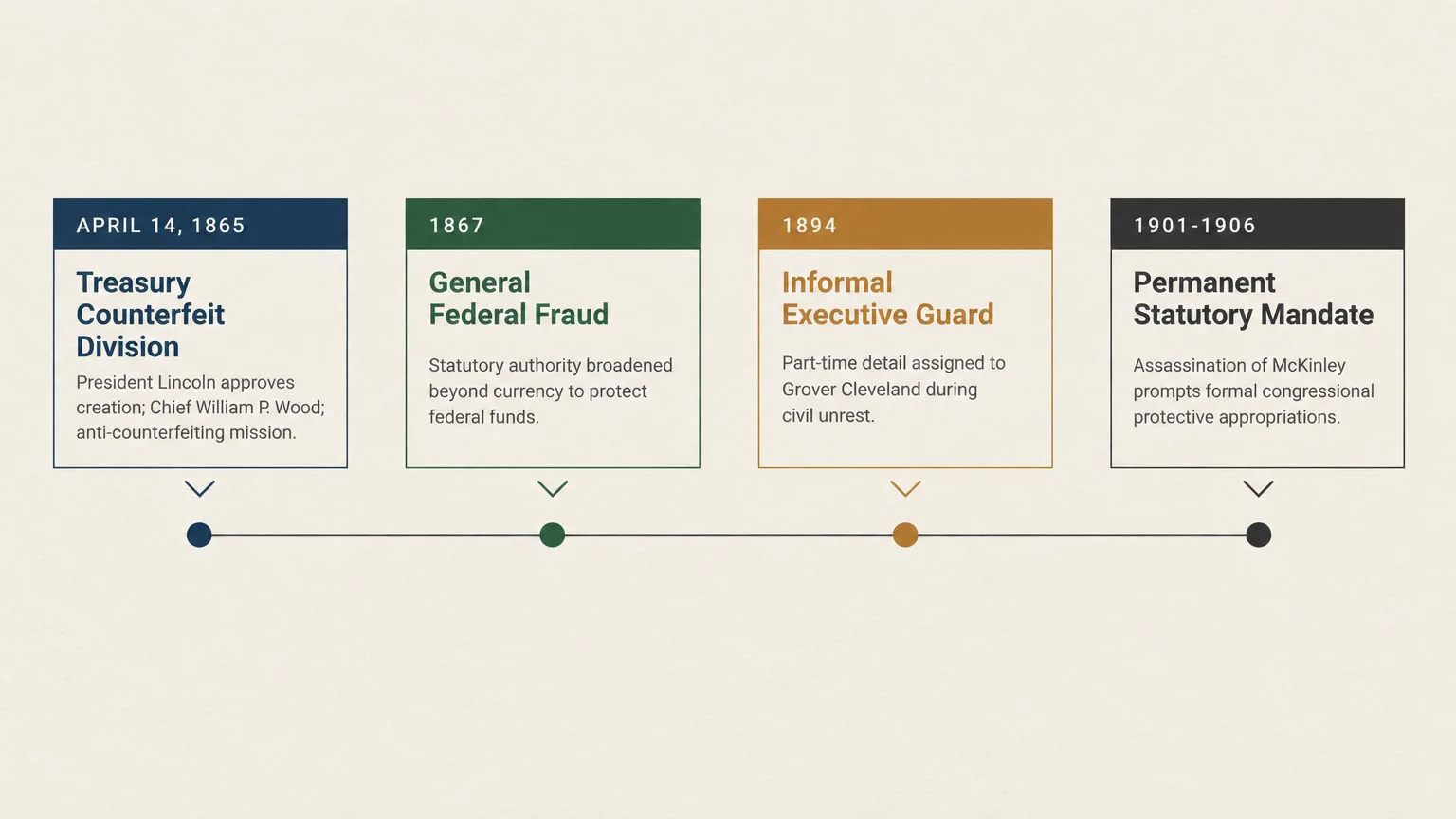
Statutory Milestones in the Evolution of Federal Executive Protection
This list chronicles nine milestones that redefined the Secret Service from its 1865 founding in the Treasury Department to its modern structure under the Department of Homeland Security.
Each entry covers a statutory enactment, appropriations rider, or executive directive that expanded the agency’s legal authority.
Lincoln Approves the Secret Service to Combat Counterfeit Currency
On April 14, 1865, President Abraham Lincoln approved the creation of the Secret Service Division within the Department of the Treasury. Hours later, John Wilkes Booth fatally shot him at Ford’s Theatre in Washington, D.C.
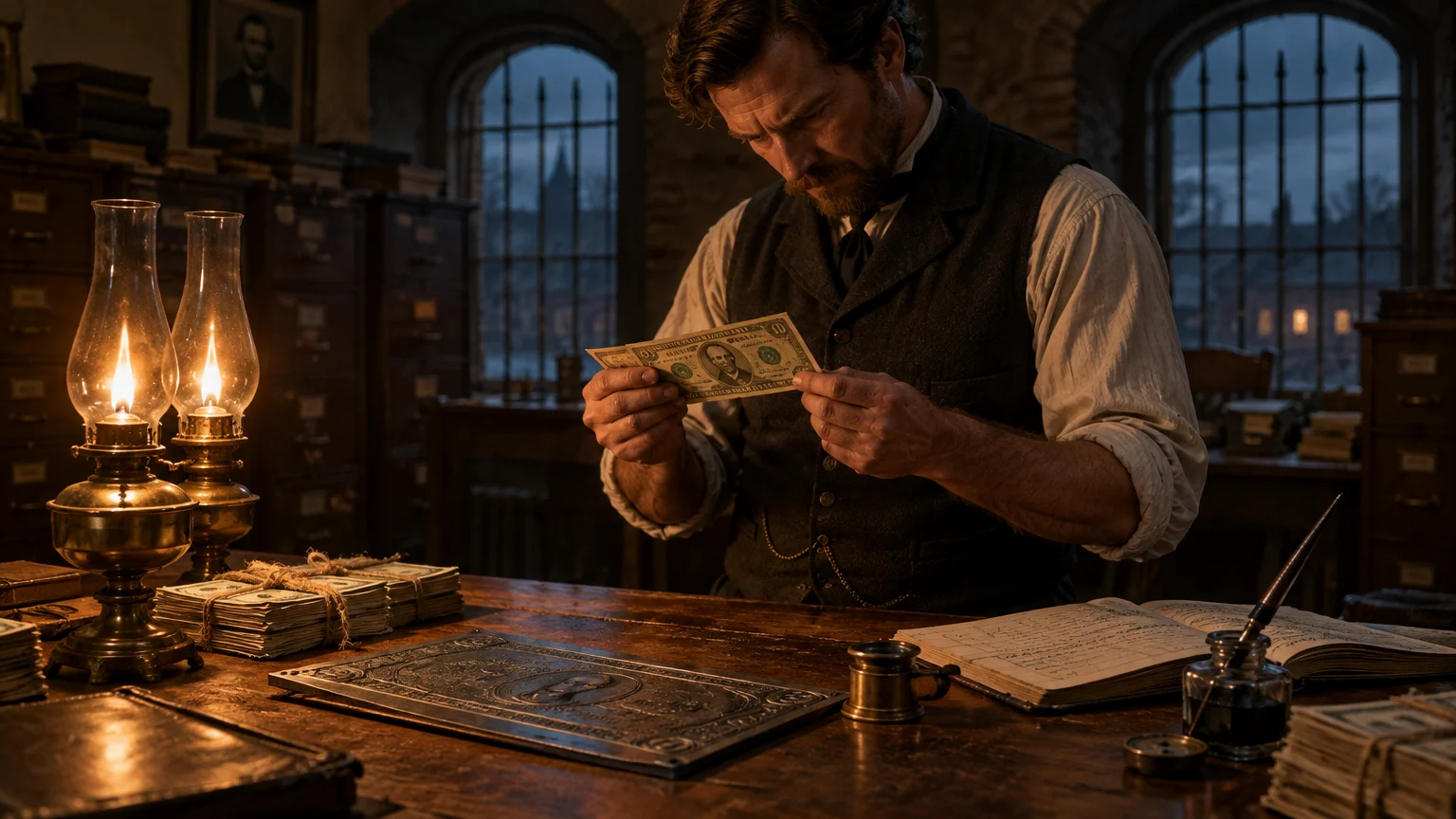
Treasury Secretary Hugh McCulloch proposed the bureau because counterfeiting threatened Union economic stability at the end of the Civil War. Approximately one-third of all circulating paper currency was counterfeit in early 1865.
The agency officially began operations on July 5, 1865, under its first chief, William P. Wood.
Its initial workforce raided illicit print shops and arrested currency counterfeiters rather than guarding public officials.
As documented in the Library of Congress April 14 collection, the early division held no statutory authority to guard the commander in chief.
Congress Expands Fraud Authority Beyond Paper Money
In the Sundry Civil Appropriations Act of 1867, Congress broadened the Secret Service’s jurisdiction beyond currency counterfeiting. Lawmakers appropriated funds for “detecting persons perpetrating frauds against the United States.”
This provision made the Treasury unit the federal government’s primary general investigative force. The Department of Justice did not exist until 1870, and the Bureau of Investigation was not founded until 1908.
Secret Service operatives investigated the Ku Klux Klan, illicit liquor distillers evading whiskey excise taxes, western public land swindlers, and mail robbers. Operatives also conducted counterespionage operations during the 1898 Spanish-American War.
Despite this broad investigative portfolio across federal jurisdictions, Congress still did not assign physical security details to the president.
Frances Cleveland Requests Informal Protection at Gray Gables
In 1894, the Secret Service deployed its first informal protection detail for a sitting president. First Lady Frances Cleveland requested security assistance for President Grover Cleveland following heightened public unrest and labor strikes.
Economic fallout from the Panic of 1893 spurred personal threats against Cleveland from displaced workers. The Treasury Department dispatched three operatives without formal congressional authorization or dedicated protective appropriations.
The operatives traveled to the Cleveland summer residence at Gray Gables in Bourne, Massachusetts, to secure the estate perimeter. Agents posed as groundskeepers, fishermen, and farmhands around the waterfront property and later followed the family to Washington.
The McKinley Assassination Forces Full-Time Executive Details
On September 6, 1901, anarchist Leon Czolgosz shot President William McKinley at the Pan-American Exposition in Buffalo, New York. McKinley died eight days later, marking the nation’s third presidential assassination in 36 years.
Following the assassination, McKinley’s secretary and cabinet asked the Secret Service to protect his successor, Theodore Roosevelt. Relying on local municipal police and ceremonial military escorts had left the executive branch exposed.
In 1902, the Secret Service assumed full-time, round-the-clock responsibility for presidential safety. The initial permanent White House protective detail consisted of two operatives working rotating shifts.
A historical report by the Congressional Research Service notes that this informal arrangement initiated continuous executive protection four years before Congress funded it by statute.
Annual Sundry Civil Appropriations Fund Presidential Security
Congress officially appropriated funds for presidential protection for the first time in the Sundry Civil Expenses Act of 1906 (34 Stat. 708).
This statute provided dedicated funding for protective operations starting in fiscal year 1907.
Despite providing money, Congress declined to pass a permanent charter for executive branch protection. Lawmakers required the Secret Service to renew its protective funding every year through annual appropriations bills.
Several members of Congress feared that a permanent federal detective force could monitor political rivals or investigate lawmakers.
In 1908, Congress barred the use of Secret Service operatives by other departments, prompting President Theodore Roosevelt and Attorney General Charles Bonaparte to create the Bureau of Investigation inside the Justice Department.
For 45 years after 1906, presidential security relied on recurring annual budget votes rather than permanent codified law.
Federal Threat Legislation Extends Coverage to First Families
On February 14, 1917, Congress enacted 39 Stat. 919, making threats against the life of the president a federal felony punishable by up to five years in prison.
Codified at 18 U.S.C. § 871, the law gave operatives authority to investigate and arrest individuals before an physical assault occurred.
After the United States entered World War I in April 1917, security threats against President Woodrow Wilson rose. Congress responded in October 1917 (40 Stat.
384) by expanding Secret Service protection to cover the president’s immediate family.
In the same era, Congress extended protective details to the president-elect, securing the constitutional transition between Election Day and Inauguration Day.
Congress Establishes the Permanent White House Police Force
On September 14, 1922, Congress and President Warren G. Harding established the White House Police Force under Public Law 67-300 (42 Stat.
841). This uniformed force provided fixed physical security across the executive mansion and surrounding grounds.
Before 1922, security at the executive residence relied on a detail of Washington Metropolitan Police officers and soldiers. Harding requested a permanent force dedicated to controlling access to the White House.
The force reported to the president’s military aide until Congress placed it under the Secret Service chief in May 1930 (46 Stat. 328).
Combining facility guards and personal bodyguards under a single command eliminated coordination gaps at the White House.
Renamed the Executive Protective Service in 1970 and the Secret Service Uniformed Division in 1977, the branch guards the White House complex, the Vice President’s residence, and foreign diplomatic missions in Washington.
Blair House Assassination Attempt Codifies Permanent Protection
On November 1, 1950, two armed Puerto Rican nationalists, Oscar Collazo and Griselio Torresola, attempted to assassinate President Harry S. Truman at Blair House.
White House Police Officer Leslie Coffelt was mortally wounded defending the entrance, fatally shooting Torresola during the gunfight.
The attack ended congressional reliance on temporary annual appropriations riders for the Secret Service. Lawmakers moved to place the agency’s protective and law enforcement powers into permanent federal statute.
On July 16, 1951, President Truman signed Public Law 82-79 (65 Stat. 122).
The statute permanently codified Secret Service protective responsibilities in Title 18, Section 3056 of the United States Code.
The 1951 Act permanently authorized protection for the sitting president, his immediate family, the president-elect, and the vice president (upon request, made mandatory in 1962).
Candidate Protections and the Homeland Security Transition
On June 5, 1968, Sirhan Sirhan fatally shot Senator Robert F. Kennedy in Los Angeles after his California Democratic primary victory speech.
President Lyndon B. Johnson immediately ordered the Secret Service to guard all major presidential candidates.
Within 24 hours, Congress enacted Public Law 90-331 (82 Stat. 170) to authorize protection for major presidential and vice-presidential candidates and nominees.
President Johnson detailed the directive in his June 6, 1968 signing statement.
On March 1, 2003, the agency transferred from the Treasury Department to the newly created Department of Homeland Security. That transfer ended 138 years of Treasury oversight under the Homeland Security Act of 2002 (Public Law 107-296).
As of 2026, 28th Director Sean M. Curran leads more than 8,200 personnel operating on an annual budget of approximately $3.2 billion.
The agency retains its dual statutory mandate, investigating financial and cyber crimes while protecting national and visiting leaders.
| Year | Catalyst | Statutory / Legal Authority | Mandate Added |
|---|---|---|---|
| 1865 | Civil War currency crisis | Treasury Department Directive | Anti-counterfeiting financial crimes |
| 1867 | Post-war government fraud | Sundry Civil Appropriations Act | General federal fraud investigations |
| 1894 | Panic of 1893 labor unrest | Informal White House request | Part-time summer protection for Cleveland |
| 1902 | McKinley assassination | Informal congressional request | Full-time protection for Theodore Roosevelt |
| 1906 | Roosevelt security requirements | Sundry Civil Expenses Act (34 Stat. 708) | First dedicated annual protection funds |
| 1917 | World War I security threats | 39 Stat. 919 and 40 Stat. 384 | Threat felony law and First Family details |
| 1922 | White House perimeter risks | Public Law 67-300 (42 Stat. 841) | White House Police Force created |
| 1951 | Blair House Truman attack | Public Law 82-79 (18 U.S.C. 3056) | Permanent codified protection for President |
| 1968 | Robert F. Kennedy assassination | Public Law 90-331 (82 Stat. 170) | Major presidential candidate protection |
| 2003 | Post-9/11 security restructuring | Homeland Security Act of 2002 | Agency transferred to Homeland Security |
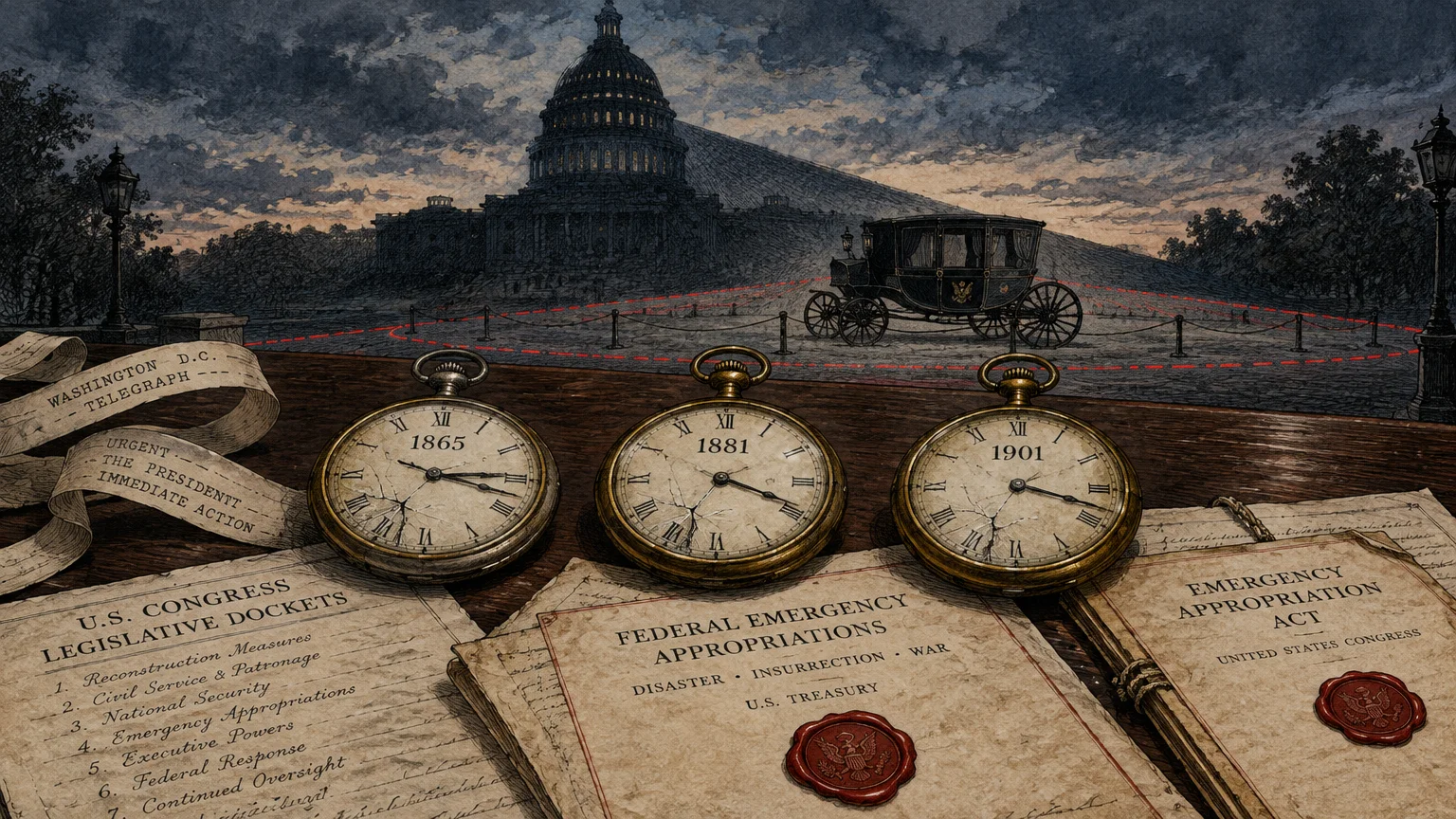
How Crises and Reactive Legislation Shaped Modern Executive Protection
The statutory expansion of the Secret Service followed a reactive pattern across American history. Congress rarely created or broadened federal protective authorities proactively, acting instead after assassinations or armed assaults.
Lawmakers originally turned to the Treasury Department in 1901 because the federal government had no other nationwide investigative force. Keeping both missions under one roof preserved the agency’s dual mandate.
Today, 18 U.S.C. § 3056 defines the protective roster for executive officials, former presidents, candidates, and visiting foreign heads of state, as well as the agency’s authority over National Special Security Events.
Agents continue to split their careers between physical protection details and criminal investigations into counterfeiting, wire fraud, and cybercrime.
Frequently Asked Questions About Secret Service History
Why did Abraham Lincoln create the Secret Service if it did not protect him?
President Lincoln approved the Secret Service solely to suppress counterfeit currency threatening the Union economy in 1865. Personal presidential protection was not a federal statutory duty in the nineteenth century.
Local Washington Metropolitan Police officers and military details guarded the White House during the Civil War. Lincoln attended Ford’s Theatre on April 14, 1865, assigned a single Metropolitan Police officer, John Frederick Parker.
Can a protected president or political candidate decline Secret Service protection?
Under 18 U.S.C. § 3056(a), sitting presidents, vice presidents, presidents-elect, and vice presidents-elect cannot decline Secret Service protection. All other eligible protectees—including former presidents, spouses, adult children, and major presidential candidates—may decline coverage.
Former President Richard Nixon became the only former president to relinquish his statutory detail when he terminated Secret Service protection in 1985.
Why does the Secret Service still investigate financial crimes today?
Congress kept the agency’s financial and electronic crimes jurisdiction intact when transferring the bureau to the Department of Homeland Security in 2003.
Field offices use financial fraud and cybercrime investigations to train agents in forensic analysis, surveillance, and threat assessment before they rotate onto protective details.
When did former presidents receive lifetime Secret Service protection?
Congress first granted former presidents lifetime protection in 1965 under Public Law 89-186, following the assassination of John F. Kennedy.
In 1994, a budgetary provision (Public Law 103-329) reduced post-presidency protection to 10 years for presidents taking office after January 1, 1997.
On January 10, 2013, President Barack Obama signed the Former Presidents Protection Act of 2012 (Public Law 112-257), restoring lifetime Secret Service protection to George W. Bush, Obama, and all subsequent presidents.