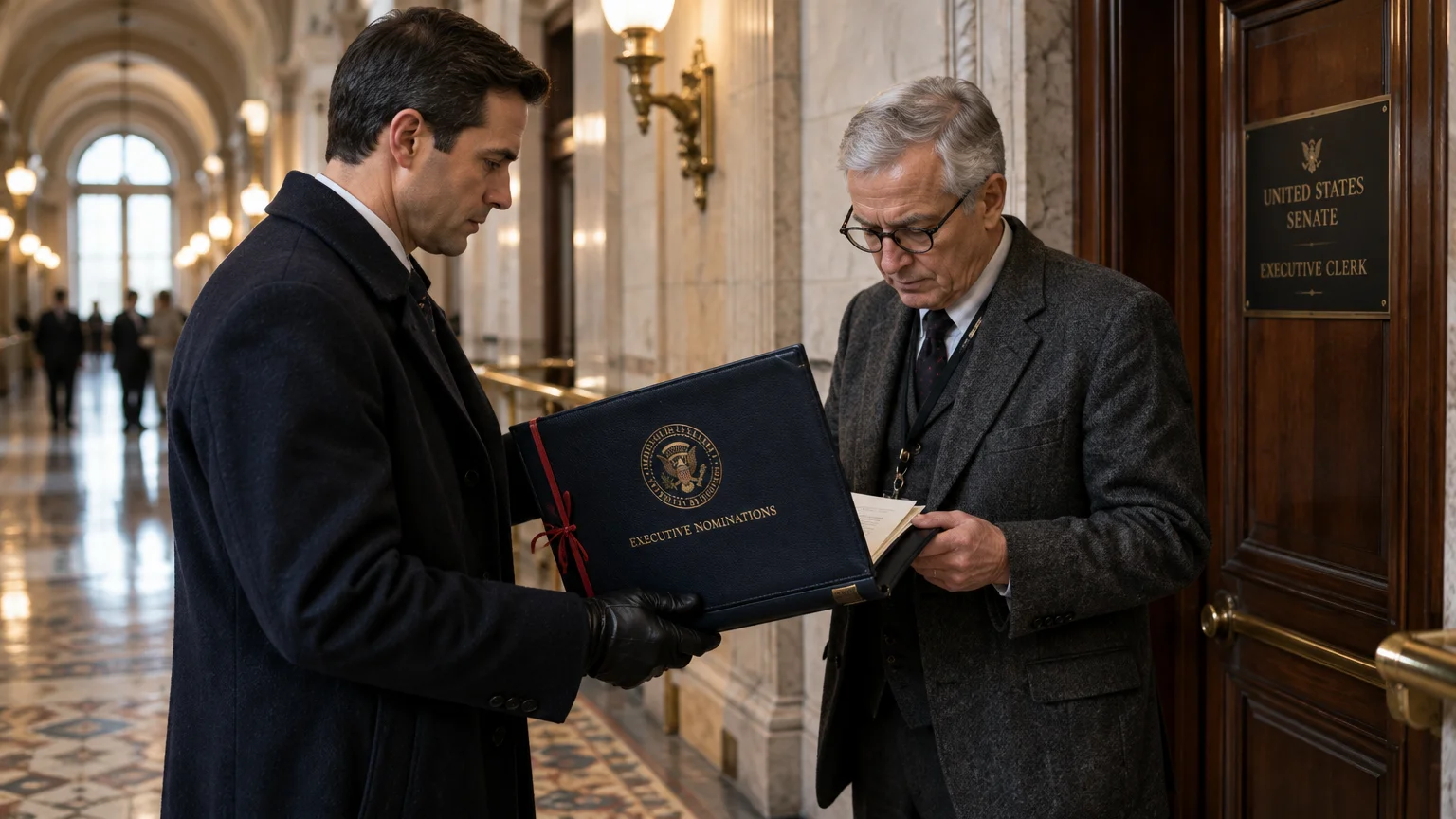
You can track how a president governs by watching how quickly the Senate processes executive branch nominees. The federal government relies on roughly 1,200 Senate-confirmed leaders to manage executive departments, enforce regulations, and direct foreign policy.
An incoming administration cannot install these leaders overnight. Federal law and internal Senate rules require intensive financial vetting, FBI background checks, and committee scrutiny before a final floor vote can take place.
Knowing how this confirmation pipeline operates helps you evaluate administration staffing delays and congressional oversight. Here are the core statutory mechanics and floor rules that govern all executive confirmations.
Scope, Legal Authorities, and Selection Standards
This guide explains the statutory frameworks and Senate rules that regulate presidential appointments as of April 30, 2026. It tracks the journey an executive nominee takes from White House vetting to final confirmation.
We selected these eight procedural milestones based on their direct impact on government operations. Each item reflects verifiable federal statutes, historical precedents, Supreme Court rulings, or published Senate administrative guidelines.
Under Article II of the Constitution, executive authority divides into distinct tiers. While civil service laws protect career employees, political leadership remains subject to presidential selection and legislative oversight.
The positions examined here include Cabinet secretaries, departmental deputies, regulatory commissioners, and executive agency general counsels. Understanding these rules clarifies why administration transitions take months to complete.
The Article II Appointments Clause and the PAS Roster
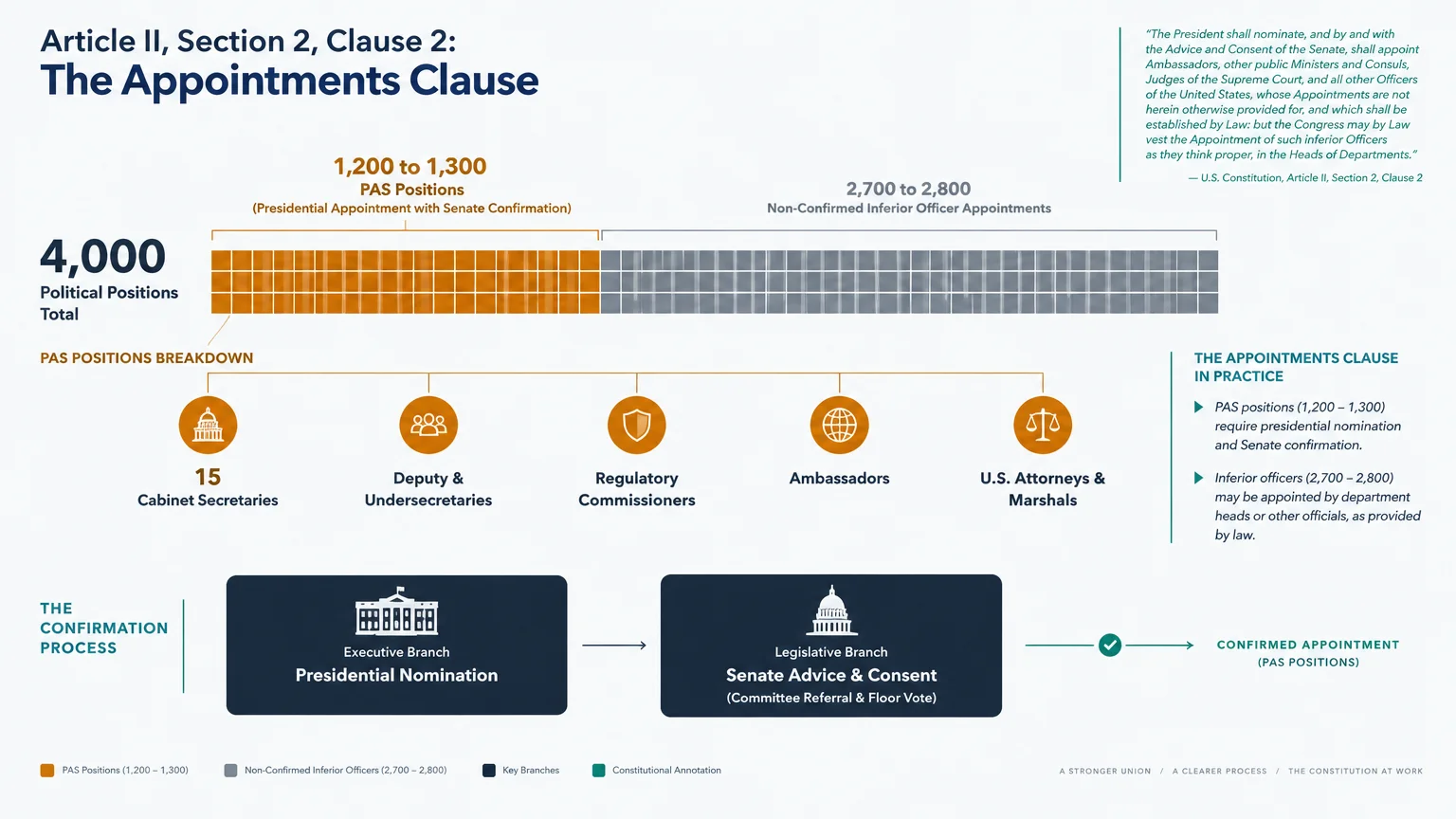
The constitutional foundation for executive staffing originates in Article II, Section 2, Clause 2 of the United States Constitution. Known as the Appointments Clause, it divides federal leadership into principal officers and inferior officers.
The President possesses the sole authority to nominate federal officers. However, the President can only appoint principal officers with the Advice and Consent of the Senate.
Across the federal bureaucracy, a president fills roughly 4,000 political positions. Of those positions, between 1,200 and 1,300 carry the formal classification of Presidential Appointment with Senate Confirmation, abbreviated as PAS.
The PAS category encompasses the 15 Cabinet secretaries, along with deputy secretaries, undersecretaries, and assistant secretaries. It also includes independent agency heads, federal regulatory commissioners, ambassadors, U.S. attorneys, and U.S. marshals.
The Appointments Clause grants Congress discretion over inferior officers. Lawmakers may vest the appointment of lower-level officials exclusively in the President, the federal courts, or executive department heads.
This statutory balance prevents an executive branch monopoly over federal administration. At the same time, it ensures the Senate cannot select executive personnel directly.
Every PAS position remains vacant until the Senate formally confirms a nominee or the president installs a temporary officer under statutory vacancy rules. This constitutional division sets the stage for protracted oversight battles.
The Senate assigns presidential nominations to specific standing committees based on jurisdiction. For example, the Committee on Foreign Relations reviews ambassadors, while the Committee on the Judiciary evaluates federal prosecutors.
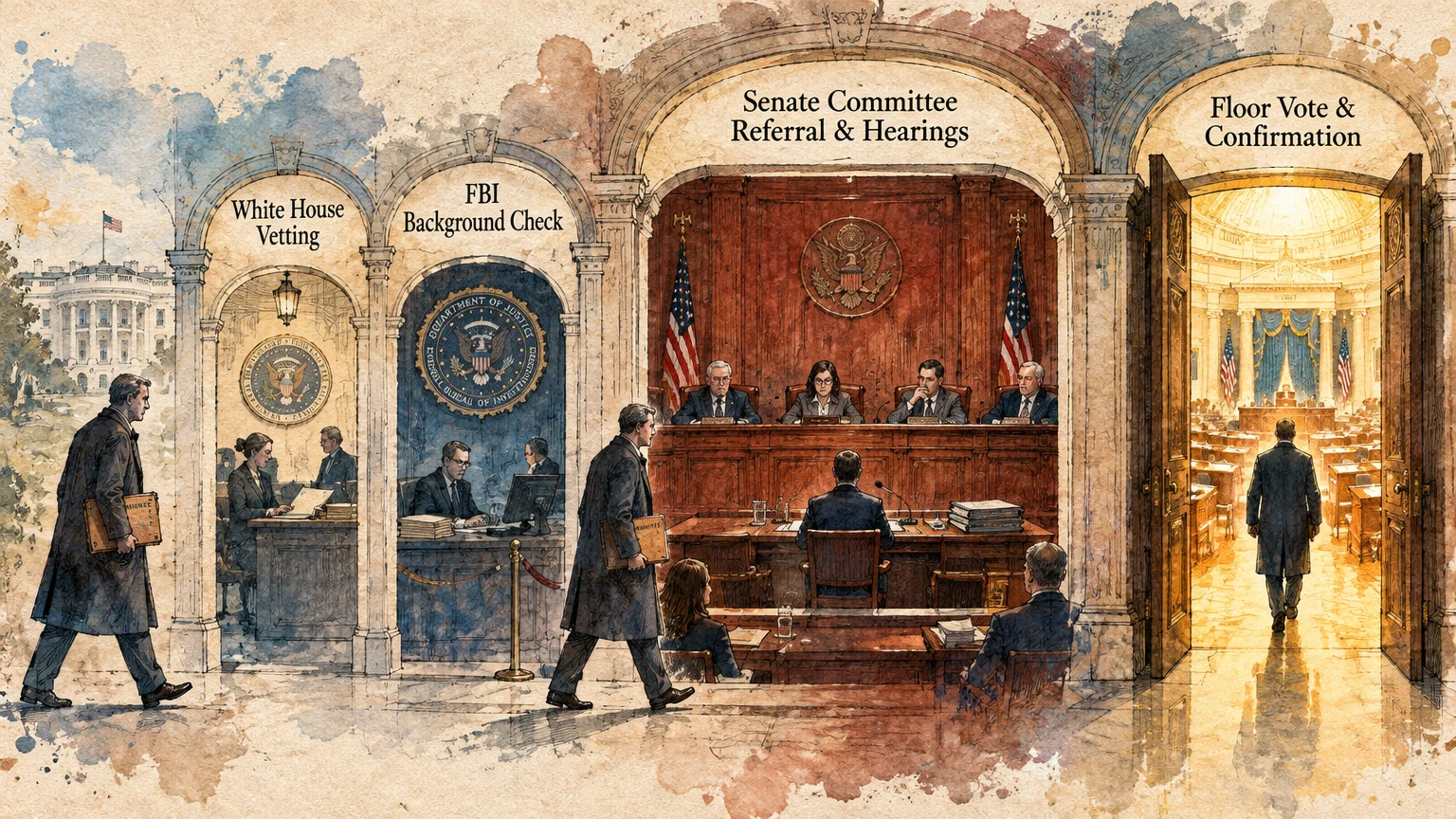
This committee referral ensures specialized legislative panels vet candidates before the full Senate considers their qualifications. Without committee approval or a formal discharge motion, nominations rarely reach the executive calendar.
The Plum Book Catalog and the PLUM Act Modernization
Every four years, the federal government publishes a comprehensive registry titled United States Government Policy and Supporting Positions. Practitioners and journalists universally refer to this document as the Plum Book.
The Plum Book originated in 1952 during the transition to President Dwight D. Eisenhower.
After twenty years of Democratic leadership, incoming Republican officials required a complete roster of appointable federal jobs.
Historically, the Government Publishing Office released the book in print following each presidential election. It listed salaries, tenure types, and position categories across every executive department and independent board.
In December 2022, Congress modernized this reporting system by enacting the Periodically Listing Updates to Management Act, known as the PLUM Act. Lawmakers incorporated the statute into the National Defense Authorization Act for Fiscal Year 2023 (Public Law 117-263).
The PLUM Act requires the Office of Personnel Management to maintain an authoritative, publicly accessible online database. Instead of waiting four years for a printed volume, the public can review updated appointment rosters annually.
The database catalogs filled offices, current vacancies, and positions held by acting officials. This modernization provides you with a transparent inventory of who exercises executive authority across the federal government.
By standardizing position descriptions, the online directory exposes prolonged administrative vacancies. It also clarifies which positions require full Senate confirmation and which slots allow direct presidential appointment.
The Government Accountability Office regularly audits executive branch staffing data to track compliance with federal reporting mandates. You can verify agency leadership vacancies through these periodic oversight summaries.
The transition from printed registers to the PLUM Act database represents a substantial administrative transparency reform. It enables real-time public scrutiny of executive appointments without bureaucratic delays.
Pre-Nomination Ethics Reviews and Background Investigations
A nominee’s public confirmation journey represents only the final stage of an extensive executive screening process. Before sending a formal nomination to Capitol Hill, the White House subjects candidates to exhaustive vetting.
The Federal Bureau of Investigation conducts an in-depth background investigation into the candidate. Agents interview former employers, neighbors, business associates, and family members to identify potential security risks or character vulnerabilities.
Simultaneously, candidates must satisfy the requirements of the Ethics in Government Act of 1978. Nominees submit detailed financial disclosures using OGE Form 278e to the U.S. Office of Government Ethics.
This disclosure requires nominees to report investment assets, corporate affiliations, liabilities, sources of personal income, and spousal holdings. Ethics attorneys examine these holdings against Title 18, Section 208 of the United States Code.
Section 208 makes it a federal crime for an executive officer to participate personally in government matters affecting their financial interests. To prevent conflicts, nominees must negotiate a binding ethics agreement with agency ethics counsel.
These ethics agreements frequently mandate asset divestitures, resignations from corporate boards, or the establishment of qualified blind trusts. The Office of Government Ethics must certify the disclosure before transmitting the package to the Senate.
Senate committees refuse to schedule confirmation hearings until they receive this certified ethics agreement. Any delay in resolving financial entanglements stalls the nomination process before legislative consideration even begins.
Under Title 5 of the Code of Federal Regulations, Section 2634, nominees must certify that their disclosure filings are complete. Knowingly falsifying ethics disclosures carries criminal penalties under 18 U.S.C.
Section 1001.
When a nominee must divest corporate assets to resolve a conflict, the Office of Government Ethics issues a certificate of divestiture. This administrative certificate allows the nominee to defer capital gains taxes on mandatory sales.
The Streamlining Act and Fast-Track Calendar Procedures
By the early twenty-first century, the sheer volume of PAS positions produced severe administrative gridlock. Hundreds of routine, non-policy appointments clogged Senate committee calendars for months.
To address this backlog, Congress enacted the Presidential Appointment Efficiency and Streamlining Act of 2011. President Barack Obama signed the bipartisan legislation into law on August 10, 2012.
Public Law 112-166 permanently eliminated the Senate confirmation requirement for 163 internal executive positions. These roles included departmental assistant secretaries for public affairs, financial officers, and internal management directors.
By converting these 163 posts into direct presidential appointments, Congress reduced committee workloads without weakening constitutional oversight of major regulatory leaders. The White House could fill administrative slots immediately upon vacancy.
Alongside the statutory reform, the Senate adopted Senate Resolution 116 during the 112th Congress. The resolution established an expedited consideration calendar for an additional 272 non-controversial positions.
Under S.Res. 116, positions on advisory councils and regional boards bypass formal committee hearings.
The nomination moves directly to the Senate Executive Calendar unless an individual senator files a formal objection within ten session days.
If a senator objects, the nomination reverts to standard committee referral. This dual track balances legislative scrutiny for high-stakes leadership against efficiency for low-profile advisory panels.
Under Public Law 112-166, Congress also eliminated confirmation requirements for several thousand appointments to commissioned military and scientific corps. This streamlined the confirmation process for routine promotions.
These statutory exemptions preserved committee resources for higher-stakes political nominations. The reforms demonstrated that Congress could adjust confirmation requirements by statute when administrative backlogs threatened government operations.
The Elimination of the Executive Filibuster
For decades, the Senate minority party used the filibuster to delay or block executive branch nominees. Under Senate Rule XXII, closing debate on a nominee required invoking cloture through a three-fifths supermajority vote.
This 60-vote requirement meant that a united minority party could prevent floor votes on sub-Cabinet officials and regulatory panels. Individual senators frequently placed informal holds on nominees to extract policy concessions from the executive branch.
Partisan friction peaked on November 21, 2013, when the Senate considered judicial and executive nominees. Senate Majority Leader Harry Reid raised a point of order against the 60-vote threshold for nominations.
The presiding officer ruled against the point of order under Senate precedent. The majority then moved to appeal the ruling, triggering a procedural showdown known as the nuclear option.
By a vote of 52–48, the Senate established a new procedural precedent. The vote lowered the cloture threshold for all executive branch and lower federal court nominations to a simple majority.
This institutional shift stripped the minority party of its absolute veto over executive personnel. Following the precedent, a Senate majority aligned with the president can confirm executive nominees without minority cooperation.
Direct Cabinet rejections have remained exceptionally rare throughout American history. Only nine Cabinet nominations have ever suffered defeat in a formal Senate floor vote, the most recent being John Tower in 1989.
The 2013 precedent did not apply to Supreme Court nominations. The Senate maintained the 60-vote threshold for high court justices until an April 6, 2017 precedent lowered that standard as well.
By lowering the threshold to 51 votes, the Senate reshaped political incentives for executive staffing. Presidents no longer needed to negotiate bipartisan consensus candidates for high-ranking sub-Cabinet posts.
The Floor Debate Reduction Precedent of 2019
Lowering the cloture threshold to 51 votes in 2013 did not eliminate all procedural bottlenecks. Opponents continued using post-cloture floor debate limits to consume valuable legislative calendar time.
Under Senate Rule XXII, a successful cloture vote triggered up to 30 hours of post-cloture floor debate. Even when a nominee had guaranteed majority support, the minority could insist on burning every allotted debate hour.
Exhausting 30 debate hours per nominee severely restricted the number of confirmations the Senate could process each legislative week. Backlogs grew, leaving crucial sub-Cabinet offices vacant for extended periods.
On April 3, 2019, Senate Majority Leader Mitch McConnell initiated another procedural reform. The Senate voted 51–48 to establish a new precedent governing post-cloture consideration for executive branch nominees.
The new rule slashed post-cloture debate time from 30 hours down to just two hours for most sub-Cabinet executive positions. This reduction applied to assistant secretaries, undersecretaries, and general counsels across executive departments.
However, the Senate retained the full 30-hour debate requirement for Cabinet-level positions. It also preserved the 30-hour cap for members of multi-member independent regulatory commissions, such as the Federal Communications Commission.
This procedural change allowed the Senate majority to confirm several sub-Cabinet officials in a single afternoon. It curtailed delay tactics while preserving thorough floor debate for the highest-ranking executive officers.
In the Congressional Record for April 3, 2019, senators debated whether the 30-hour debate requirement protected minority rights or simply weaponized legislative delay. The procedural vote passed on strict party lines.
The two-hour debate cap applies to district court judges and non-Cabinet agency officials alike. This procedural efficiency allowed the majority to confirm dozens of executive officers during single legislative sessions.
The Federal Vacancies Reform Act Time Limits
Presidents cannot bypass the Senate confirmation process by installing permanent acting officials indefinitely. Congress established strict legal guardrails by passing the Federal Vacancies Reform Act of 1998, codified at 5 U.S.C.
Sections 3345 through 3349d.
The Vacancies Act governs who may temporarily perform the non-delegable functions of a vacant PAS position. Under the statute, only first assistants, other Senate-confirmed officers, or senior executive service employees may serve as acting heads.
The statute imposes rigid operational deadlines. An acting official may serve for a maximum of 210 days from the date the vacancy occurred.
To accommodate executive branch transitions, the law provides an exception for new administrations. During a president’s first year in office, the statutory service window extends to 300 days.
Once the president formally submits a nomination to the Senate, the statutory 210-day or 300-day clock pauses. The acting official may continue serving throughout the entire duration of the Senate’s consideration.
If the Senate rejects, returns, or the president withdraws that nomination, a new 210-day period begins immediately. If a second nomination fails, another final 210-day window takes effect.
The Vacancies Act carries severe enforcement penalties. Actions taken by an acting official serving beyond these statutory time limits have no legal force and cannot be ratified retroactively by a subsequent confirmed officer.
In NLRB v. SW General, Inc. (2017), the Supreme Court strictly interpreted Section 3345(b) of the Vacancies Act. The Court held that an official nominated for a permanent post cannot serve as acting head.
This judicial enforcement prevents the White House from circumventing Senate review by letting a pending nominee run an agency simultaneously. Any official actions taken in violation of this rule remain void.
Supreme Court Restrictions on Recess Appointments
Article II, Section 2, Clause 3 grants the president power to fill vacancies that happen during the recess of the Senate. These recess commissions expire at the end of the Senate’s next legislative session.
Throughout American history, chief executives used recess appointments to install personnel when the Senate refused to confirm them. Presidents frequently waited for holiday adjournments to bypass legislative resistance.
To block recess appointments, the Senate adopted the practice of holding pro forma sessions. During these sessions, the chamber gavels in for a few minutes every three days, conducting no substantive legislative business.
The constitutional conflict reached the Supreme Court in the landmark case of National Labor Relations Board v. Noel Canning. In 2012, President Obama made several appointments during a three-day break between pro forma meetings.
On June 26, 2014, the Supreme Court ruled unanimously 9–0 that the appointments violated the Constitution. Justice Stephen Breyer delivered the opinion of the Court, defining clear limits on executive recess powers.
The Court held that the Senate is in session whenever it says it is, provided it retains the capacity to conduct business. Furthermore, the Court established that a Senate recess must last at least 10 consecutive days to trigger recess appointment authority.
Because the Senate routinely convenes pro forma sessions every few days, it effectively prevents ten-day recesses from occurring. As a result, Noel Canning closed the primary constitutional loophole used to bypass Senate confirmation.
In the Congressional Record, pro forma sessions are recorded as official legislative days even when they last under sixty seconds. The Senate regularly uses them during August recesses and winter holidays.
By affirming the Senate’s authority over its own schedule, the Supreme Court protected legislative prerogatives. Presidents can no longer bypass confirmation hearings unless the Senate intentionally adjourns for ten or more consecutive days.
The table below outlines the core procedural rules, statutory thresholds, and historical precedents that govern executive confirmations.
| Procedural Milestone | Year Enacted | Legal Authority | Practical Impact |
|---|---|---|---|
| Cloture Threshold Reform | 2013 | Senate Precedent (Rule XXII) | Lowered cloture threshold from 60 votes to 51 votes for all executive nominees. |
| Post-Cloture Floor Debate | 2019 | Senate Precedent (Rule XXII) | Cut debate from 30 hours to 2 hours for sub-Cabinet executive nominees. |
| Streamlining Act Exemption | 2012 | Public Law 112-166 | Converted 163 internal executive positions into direct presidential appointments. |
| Expedited Resolution Track | 2011 | Senate Resolution 116 | Placed 272 non-controversial board positions on an expedited floor calendar. |
| Vacancy Duration Limits | 1998 | 5 U.S.C. § 3346 (FVRA) | Capped acting service at 210 days generally, and 300 days during inaugural years. |
| Recess Appointment Ruling | 2014 | NLRB v. Noel Canning | Prohibited recess appointments during pro forma breaks shorter than 10 days. |
How the Modern Confirmation Machine Functions
When you evaluate the appointment pipeline, you see a system shaped by recurring institutional friction. The Senate has consistently defended its constitutional advice-and-consent prerogatives against executive expansion.
At the same time, the sheer growth of the federal government made nineteenth-century confirmation customs unworkable. Congress responded by carving out administrative exemptions and slashing floor debate hours.
The elimination of the 60-vote filibuster altered how administrations recruit personnel. White House transition teams no longer need to find consensus candidates who appeal across party lines.
A unified majority can confirm partisan loyalists to top sub-Cabinet posts with 51 votes. However, when the Senate majority belongs to the opposing party, confirmations slow to an absolute crawl.
Senate Standing Rule XXXI adds further operational pressure to executive staffing. Under this standing rule, unconfirmed nominations automatically return to the President whenever the Senate adjourns or recesses for more than 30 days.
Unless the Senate grants unanimous consent to hold nominations over the recess, the White House must formally resubmit every pending candidate. This reset adds weeks of paperwork to already strained agency leadership pipelines.
Meanwhile, the Federal Vacancies Reform Act prevents presidents from ignoring the Senate by relying indefinitely on unconfirmed deputies. Acting leaders face strict expiration dates that threaten the legal validity of their executive decisions.
Every administration must balance thorough ethical screening against statutory vacancy clocks. Understanding these interlocking rules explains why federal departments frequently operate for months under interim leadership.
Frequently Asked Questions About Senate Confirmations
Why do some sub-cabinet positions remain vacant for over a year?
Nominees must navigate multi-layered vetting before floor consideration begins. Extensive FBI background investigations and OGE financial conflict reviews can take three to six months to complete.
Once submitted to the Senate, committee scheduling, paperwork requests, and full floor calendars introduce additional delays. If an acting official’s term expires during this process, the position remains legally vacant until confirmation.
Can an individual senator permanently block an executive nomination?
An individual senator cannot permanently veto a nominee on their own. While a senator can place an informal hold, the majority leader can bypass it by filing for cloture.
Because invoking cloture requires only a simple majority under the 2013 precedent, holds now serve primarily as temporary delay tactics. A determined Senate majority can always force a floor vote.
What happens to pending nominations when the Senate recesses?
Under Senate Standing Rule XXXI, all unconfirmed nominations automatically return to the White House if the Senate recesses for more than 30 days. The chamber routinely waives this rule by unanimous consent.
However, if a single senator objects to unanimous consent, the nominations return to the executive branch. The President must resubmit the nominations to revive legislative proceedings.
How many Cabinet nominees has the Senate rejected in a formal floor vote?
Throughout American history, the full Senate has rejected only nine Cabinet nominations in recorded floor votes. The first rejected nominee was Roger B.
Taney for Treasury Secretary in 1834.
The most recent floor rejection occurred on March 9, 1989, when the Senate rejected John Tower for Secretary of Defense by a vote of 47–53. Most troubled nominations withdraw before facing a floor vote.




