You can measure a leader’s legacy through landmark headlines, but statutory archives reveal how governing actually happens. Examining legislative mechanics gives you a clearer view of policy formation than campaign rhetoric ever provides.
While major milestones dominate public memory, lesser-known roll calls and statutory compromises reshaped everything from consumer banking to federal data transparency. These overlooked decisions still affect your daily financial rights and civic records.
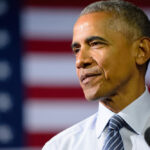
By reviewing primary roll calls, statutory texts, and public archives, you can track the procedural tactics that built Barack Obama’s career. Here is what the documented record shows across four decades of public service.
Tracking Public Service Through the Legislative Record
This analysis examines eleven documented milestones from Barack Obama’s career spanning 1990 through 2026. Each entry relies on primary records, including state legislative journals, congressional roll-call votes, the Federal Register, and presidential archives.
You will not find well-worn campaign slogans or speculative commentary here. Instead, each milestone highlights specific statutory provisions, vote tallies, procedural tools, or structural shifts in governance.
Reviewing these public records shows how local statehouse strategies translate into federal executive actions. You can use these examples to evaluate contemporary policy debates and understand legislative power dynamics.
These entries illustrate how incremental committee maneuvers and statutory definitions often drive systemic change. They offer a grounded perspective on modern American political institutions.
Presidency of the Harvard Law Review
In February 1990, the eighty-member editorial board of the Harvard Law Review elected Barack Obama as its president for Volume 104. At age twenty-eight, he became the first African American to hold the post in the journal’s 103-year history.
The selection process required multiple rounds of paper evaluations and internal debates among editors with sharply conflicting legal philosophies. Obama won the election by building consensus between conservative and progressive factions on the board.
The appointment generated national press coverage from major news outlets, including the New York Times. It brought his administrative style into the public eye for the first time.
In practical terms, managing the journal taught him how to referee competing constitutional viewpoints while overseeing a rigorous publication schedule. You can see this collaborative mediation model reappear throughout his later state and federal legislative work.
This milestone established his initial network in legal academia and civil rights law. It also led directly to a publishing contract that produced his 1995 memoir, setting his national political trajectory in motion.
For legal scholars, his election demonstrated how editorial leadership requires balancing institutional tradition with intellectual diversity. He prioritized analytical rigor over factional dogma during a contentious period in legal education.
Defeat in the 2000 Congressional Primary
On March 21, 2000, Obama faced four-term incumbent Representative Bobby Rush in the Democratic primary for Illinois’s 1st congressional district. Rush, a former Black Panther leader, held deep roots and strong name recognition across Chicago’s South Side.
Obama ran on technocratic policy reform, economic development proposals, and modernized public education initiatives. However, his campaign struggled to connect with working-class voters who viewed him as an academic outsider from Hyde Park.
Rush decisively defeated Obama by a margin of 61 percent to 30 percent. The primary loss demonstrated the limits of policy white papers when running against entrenched community relationships.
You can draw an actionable political lesson from this primary defeat. Challengers rarely overcome entrenched incumbents without building authentic coalitions with local civic institutions, labor unions, and neighborhood churches.
Rather than leaving public life, Obama restructured his coalition-building approach across Illinois. That strategic pivot directly enabled his successful statewide U.S. Senate bid just four years later.
Political organizers frequently cite this race as a textbook example of electoral miscalculation. It illustrates why direct neighborhood outreach and institutional endorsements matter more than theoretical white papers in local elections.
Mandatory Electronic Recording of Police Interrogations
In 2003, Obama authored and sponsored Senate Bill 15 in the Illinois General Assembly. The measure addressed widespread misconduct and coerced confessions documented in Cook County capital murder cases.
The statute enacted Public Act 093-0206 under Illinois compiled statutes. It made Illinois the first state in the nation to mandate electronic recording of entire interrogations in homicide investigations.
Law enforcement organizations initially mounted fierce resistance against the proposal, citing prohibitive equipment costs and tactical constraints. Obama spent months negotiating compromise language, including equipment grant phase-ins and specific custodial interrogation exceptions.
The Illinois Senate ultimately approved the bill with an unprecedented 58-0 unanimous roll call. Republican Governor Rod Blagojevich signed the legislation into law in July 2003.
For criminal justice advocates, this statute established an enduring evidentiary standard. Today, recording requirements protect your constitutional right to due process while shielding law enforcement agencies from false coercion allegations.
Multiple state legislatures later adopted the Illinois statute as a model for statutory interrogation reform. The measure proved that evidence-based criminal justice protections can secure broad support across both law enforcement and civil liberties groups.
The Illinois Senate “Present” Voting Record
During his eight years in the Illinois State Senate from 1997 to 2004, Obama cast approximately 130 “present” votes out of more than 4,000 total roll calls. Opponents heavily scrutinized these votes during his national campaigns.
In the Illinois General Assembly, a “present” vote carries specific procedural weight under state legislative rules. Unlike an absence, casting “present” confirms a lawmaker’s attendance while withholding affirmative support from a measure.
Lawmakers in Springfield frequently deploy this procedural mechanism to protest unconstitutionally drafted provisions or highlight flawed statutory language. It also allows legislators to facilitate ongoing negotiations without killing omnibus compromise bills prematurely.
For example, Obama cast “present” on several juvenile justice and reproductive health bills that he argued violated constitutional protections. He often sponsored alternative versions of those same bills once drafters corrected the legal flaws.
When analyzing statehouse records, you must distinguish between substantive legislative dissent and procedural maneuvers. Understanding local chamber rules prevents you from misinterpreting specialized voting records as simple indecision.
This voting history demonstrates how legislative tacticians maneuver through divided parliamentary chambers. Tracking roll-call records reveals how lawmakers use specialized procedural options to signal policy objections without blocking committee progress.
The Coburn-Obama Federal Funding Accountability and Transparency Act
In 2006, freshman Senator Obama partnered with conservative Republican Senator Tom Coburn of Oklahoma. Together, they introduced Senate Bill 2590 to modernize public oversight of federal spending.
Congress enacted the measure as Public Law 109-282, which you can review through Congress.gov. President George W.
Bush signed the bipartisan legislation into law on September 26, 2006.
The statute mandated the creation of USAspending.gov, a single, searchable website tracking all federal grants, contracts, loans, and financial awards. It opened federal procurement data to the public free of charge.
Prior to this statute, tracking federal contract recipients required filing formal Freedom of Information Act requests. The law eliminated those procedural barriers by imposing affirmative disclosure mandates on executive agencies.
You can use USAspending.gov today to monitor federal spending allocations in your home state or municipality. It serves as an actionable civic oversight tool for journalists, researchers, and taxpayers alike.
The statute demonstrated that federal spending transparency offers common ground across opposing political ideologies. It established the statutory benchmark for subsequent digital accountability acts passed over the following decade.
The Lugar-Obama Proliferation Detection Expansion
In 2005, Obama joined senior Republican foreign policy leader Senator Richard Lugar on an inspection tour across Ukraine, Russia, and Azerbaijan. They monitored secure containment facilities housing Soviet-era munitions and biological agents.
Their collaboration produced the Lugar-Obama proliferation detection initiative, which Congress enacted into law within Public Law 109-479 in January 2007. The measure significantly broadened the historic Nunn-Lugar Cooperative Threat Reduction framework.
Earlier nonproliferation efforts focused primarily on safeguarding fissile material and intercontinental ballistic missiles. The new statute expanded federal authority to assist foreign governments in securing conventional weapons, landmines, and man-portable air defense systems.
Shoulder-fired missiles posed a severe threat to commercial aviation if intercepted by non-state actors or terrorist networks. The program financed mobile detection systems and secure elimination facilities across Eastern Europe.
This partnership demonstrated how junior senators can leverage established committee leadership to enact national security policy. It proved that targeted, cross-party national security legislation can succeed even during periods of fierce partisan division.
The initiative eliminated thousands of surface-to-air missiles and stockpiled conventional munitions across former Soviet territories. It established an enduring model for cross-party threat-reduction diplomacy that later administrations maintained.
The Credit CARD Act of 2009
On May 22, 2009, President Obama signed the Credit Card Accountability Responsibility and Disclosure Act, documented as Public Law 111-24. The law fundamentally restructured retail credit practices across the United States.
Before this statute took effect, credit card companies routinely raised interest rates retroactively on existing account balances. Lenders also charged arbitrary fees for minor payment processing delays.
The act instituted strict consumer protections, mandating a forty-five-day advance notice for any significant contractual adjustments or rate hikes. It also prohibited issuers from imposing retroactive rate increases unless an account became sixty days delinquent.
Furthermore, the statute banned financial institutions from issuing credit cards to consumers under twenty-one without an adult co-signer or verifiable personal income. It ended aggressive marketing campaigns that targeted vulnerable college students on campus.
When you manage your monthly personal finances, this law shields you from predatory fee traps. It remains one of the most effective consumer regulatory overhauls of the twenty-first century.
Federal data later confirmed that the statute saved cardholders billions of dollars annually in unexpected penalty fees. It established permanent statutory guardrails that continue to govern consumer lending agreements today.
The Federal Direct Student Loan System Overhaul
On March 30, 2010, Obama signed the Health Care and Education Reconciliation Act, designated as Public Law 111-152. While news cycles focused on healthcare, the statute carried an enormous higher education overhaul.
For decades, the Federal Family Education Loan program paid private commercial banks federal subsidies to originate and guarantee student loans. Private lenders collected state-guaranteed profits while taxpayers absorbed the default risk.
The 2010 reconciliation bill eliminated these private bank subsidies entirely. It required the Department of Education to originate all federal undergraduate and graduate student loans directly through the Direct Loan program.
By cutting out private intermediaries, the statute redirected tens of billions of dollars over a decade. Congress dedicated those budgetary savings directly into expanding Pell Grant awards for low-income university students.
If you hold a federal student loan today, you borrow directly from the federal government because of this statutory change. The reform streamlined loan servicing structures and reduced commercial intermediary costs nationwide.
This overhaul demonstrates the strategic power of federal budget reconciliation rules. Major statutory programs can clear congressional deadlocks when legislative drafters integrate them into broader mandatory spending legislation.
The HIV Organ Policy Equity (HOPE) Act
On November 21, 2013, Obama signed the HIV Organ Policy Equity Act, enacted into law as Public Law 113-51. The measure amended the Public Health Service Act under 42 U.S.C.
274f-5.
Since 1988, federal statute had banned the acquisition and transplantation of organs from HIV-positive donors, even for recipients who already carried the virus. Medical advancements had rendered that absolute statutory prohibition scientifically obsolete.
The HOPE Act directed the Department of Health and Human Services to establish strict clinical research standards for organ transplants between HIV-positive individuals. It authorized organ procurement organizations to match qualifying donors with matching recipients.
The law saved lives by making hundreds of viable organs available each year to terminally ill patients. It also shortened wait times for HIV-negative patients waiting for standard donor organs.
This milestone shows how targeted statutory amendments can modernize public health frameworks. You can look to the HOPE Act as a clear model for bipartisan, science-based legislative reform.
Specialized surgical teams completed the first successful organ transplants under the HOPE Act in 2016. The law remains a leading example of how evidence-based medicine can overcome outdated statutory prohibitions.
The Modern Veto Record and Executive Orders
Across his two presidential terms, Obama exercised his constitutional veto power only twelve times. According to official U.S. Senate veto records, this represents one of the lowest veto totals in modern history.
Congress overrode only one of his twelve regular vetoes during his eight years in office. On September 28, 2016, both chambers overrode his veto of the Justice Against Sponsors of Terrorism Act.
The Senate voted 97–1 and the House voted 348–77 to enact the statute over executive objections. The override demonstrated the rare legislative alignment required to defeat a presidential veto.
Over that same period, Obama issued 276 executive orders, numbered 13489 through 13764. That produced an annual average of 34.5 executive orders, the lowest rate for a two-term president since Grover Cleveland.
These numbers challenge common public assumptions regarding unilateral executive actions. Reviewing roll-call tallies and executive directives gives you objective benchmarks to evaluate how administrations wield constitutional authority.
Executive governance relies on continuous negotiation between the White House and Capitol Hill. When presidents face opposition majorities, statutory discipline and targeted regulatory enforcement define their administrative reach.
The Digitized Obama Presidential Center
On June 18, 2026, officials dedicated the Barack Obama Presidential Center in Chicago’s historic Jackson Park. The campus officially opened to the public on June 19, 2026, in commemoration of Juneteenth.
Constructed across 19.3 acres at an estimated cost of $850 million, the complex introduced a fundamental structural shift in presidential archives. It operates as the nation’s first fully digitized presidential facility.
Under a partnership with the National Archives and Records Administration, the physical paper documents remain stored in federal repositories in Maryland. Meanwhile, the Chicago campus hosts an interactive civic and community center.
Researchers access declassified presidential files, executive orders, and administrative memoranda through digital interfaces maintained by the National Archives. This model democratizes historical research by eliminating the need for expensive in-person travel.
You can inspect declassified federal records from your home computer rather than traveling to a central physical repository. This shift redefines how presidential administrations preserve public documents for future generations.
This digital infrastructure creates an operational blueprint for future presidential record systems. It ensures that public access to declassified executive branch records expands alongside advances in digital archival storage.
| Milestone | Year | Office / Role | Statute or Document | Primary Outcome |
|---|---|---|---|---|
| Harvard Law Review | 1990 | Law Student | Volume 104 Board Election | First Black president of the journal. |
| Congressional Primary | 2000 | State Senator | IL-01 Democratic Primary | Defeated by Bobby Rush (61% to 30%). |
| Interrogation Recording | 2003 | State Senator | IL Public Act 093-0206 | First state to mandate taping homicide interrogations. |
| “Present” Votes Record | 1997–2004 | State Senator | IL Senate Roll Calls | Cast ~130 “present” votes out of 4,000+. |
| USAspending.gov Creation | 2006 | U.S. Senator | Public Law 109-282 | Created searchable federal spending database. |
| Lugar-Obama Act | 2007 | U.S. Senator | Public Law 109-479 | Expanded threat reduction to conventional weapons. |
| Credit CARD Act | 2009 | U.S. President | Public Law 111-24 | Banned retroactive rates; restricted cards for under-21s. |
| Direct Student Lending | 2010 | U.S. President | Public Law 111-152 | Ended bank subsidies; shifted to Direct Loans. |
| HOPE Act | 2013 | U.S. President | Public Law 113-51 | Authorized HIV-positive organ transplantation. |
| Executive Actions Record | 2009–2017 | U.S. President | 12 Vetoes; 276 EOs | Lowest annual EO rate since Grover Cleveland. |
| Presidential Center | 2026 | Former President | NARA Digital Archive | Dedicated June 2026 as first fully digital archive. |
What These Milestones Reveal About Modern Governance
When you examine these eleven milestones together, an unmistakable pattern emerges regarding modern governance. Major statutory shifts rarely occur solely through grand ideological confrontations.
Instead, enduring policy changes often depend on incremental procedural mechanisms, bipartisan coalitions, and targeted statutory adjustments. From open-spending databases to credit card protections, practical governance operates through dense legislative details.
You also see how inter-branch dynamics evolved across state and federal offices. Statehouse procedural strategies like “present” votes evolved into disciplined legislative packaging and targeted executive orders at the federal level.
Furthermore, these milestones highlight the structural limits of executive power. While presidents can issue directives and veto measures, lasting policy durability requires statutory codification and inter-branch consensus.
By studying these institutional records, you gain the analytical tools needed to separate political rhetoric from permanent policy outcomes. Understanding how bills actually pass allows you to hold elected officials accountable to the public record.
Frequently Asked Questions About Obama’s Legislative Career
Why did Obama cast so many “present” votes in the Illinois Senate?
Illinois legislative rules allow lawmakers to vote “present” to register attendance without taking a yes or no stance. State senators commonly cast “present” to signal unconstitutional bill drafting or protect ongoing bipartisan negotiations.
In Obama’s record, approximately 130 “present” votes out of more than 4,000 roll calls reflected this procedural tactic. In many instances, he subsequently sponsored amended versions once sponsors corrected the underlying statutory defects.
How did the student loan overhaul pass without a standalone vote?
Democratic congressional leaders packaged the student loan reforms into the Health Care and Education Reconciliation Act of 2010. By utilizing the budget reconciliation process, the measure required only a simple majority to clear the Senate.
This legislative maneuver bypassed the sixty-vote filibuster threshold typically needed for major statutory changes. It eliminated private bank subsidies and established direct federal student lending within an omnibus package.
Which presidential veto of Obama’s was overridden by Congress?
Congress overrode only one of Obama’s twelve presidential vetoes during his two terms. On September 28, 2016, both chambers decisively overturned his veto of the Justice Against Sponsors of Terrorism Act.
The Senate voted 97–1 and the House voted 348–77 to override the veto. The statute allowed families of terror victims to sue foreign governments in federal court.
Where are Obama’s physical presidential papers stored today?
Unlike previous presidential libraries, the Obama Presidential Center in Chicago does not house physical paper records. The National Archives and Records Administration maintains the physical documents in a secure federal storage facility in Maryland.
The National Archives digitized the entire collection to allow global online access. You can review declassified documents and administrative files through digital search portals without traveling to an archive.