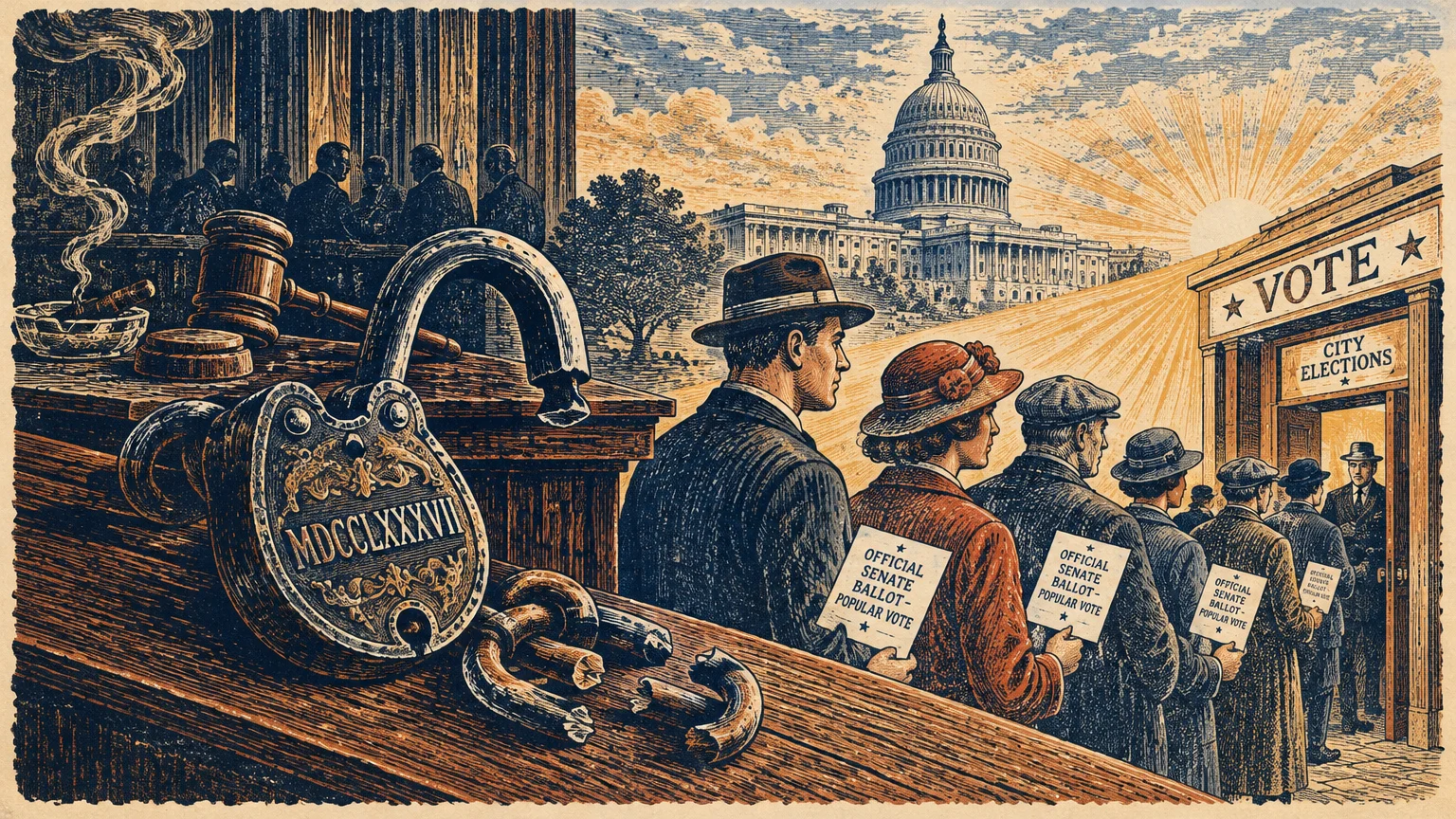
Before 1913, you had no direct vote for your state’s two U.S. senators. State legislatures chose them behind closed doors, often producing months of deadlock, corporate dealmaking, and open bribery.
Ratified on April 8, 1913, the Seventeenth Amendment stripped state assemblies of this power and transferred Senate elections directly to the ballot box. This constitutional reform fundamentally altered who could reach Capitol Hill.
By analyzing official legislative records and contested election cases, you can see how popular voting transformed senatorial qualifications, campaign funding, and legislative accountability across more than a century of American elections.
How Direct Elections Transformed the Character of the Senate
This numbered list tracks eight systemic ways the Seventeenth Amendment altered candidate selection, campaign mechanics, and institutional power.
It covers the critical transitional era from the Gilded Age through the modern electoral cycle in September 2025.
Our editorial team selected these shifts by reviewing roll-call tallies, contested election proceedings, and constitutional convention petitions preserved in federal records.
Each entry examines an identifiable shift in ballot access, campaign strategy, or constitutional mechanics that altered who won a seat in the chamber.
You will discover how grassroots voter rebellion replaced backroom deals and created the modern Senate landscape you navigate today.
Ending Legislative Deadlocks and Chronic Chamber Vacancies
Under Article I, Section 3, Clause 1 of the original Constitution, state legislatures selected two senators for six-year staggered terms.
The Framers assumed state lawmakers would act as sober trustees of state sovereignty during senatorial selections.
Instead, state legislative caucuses devolved into bitter factional trench warfare as national parties consolidated power.
If rival factions or opposing parties inside an assembly refused to compromise, legislative sessions regularly adjourned without selecting anyone.
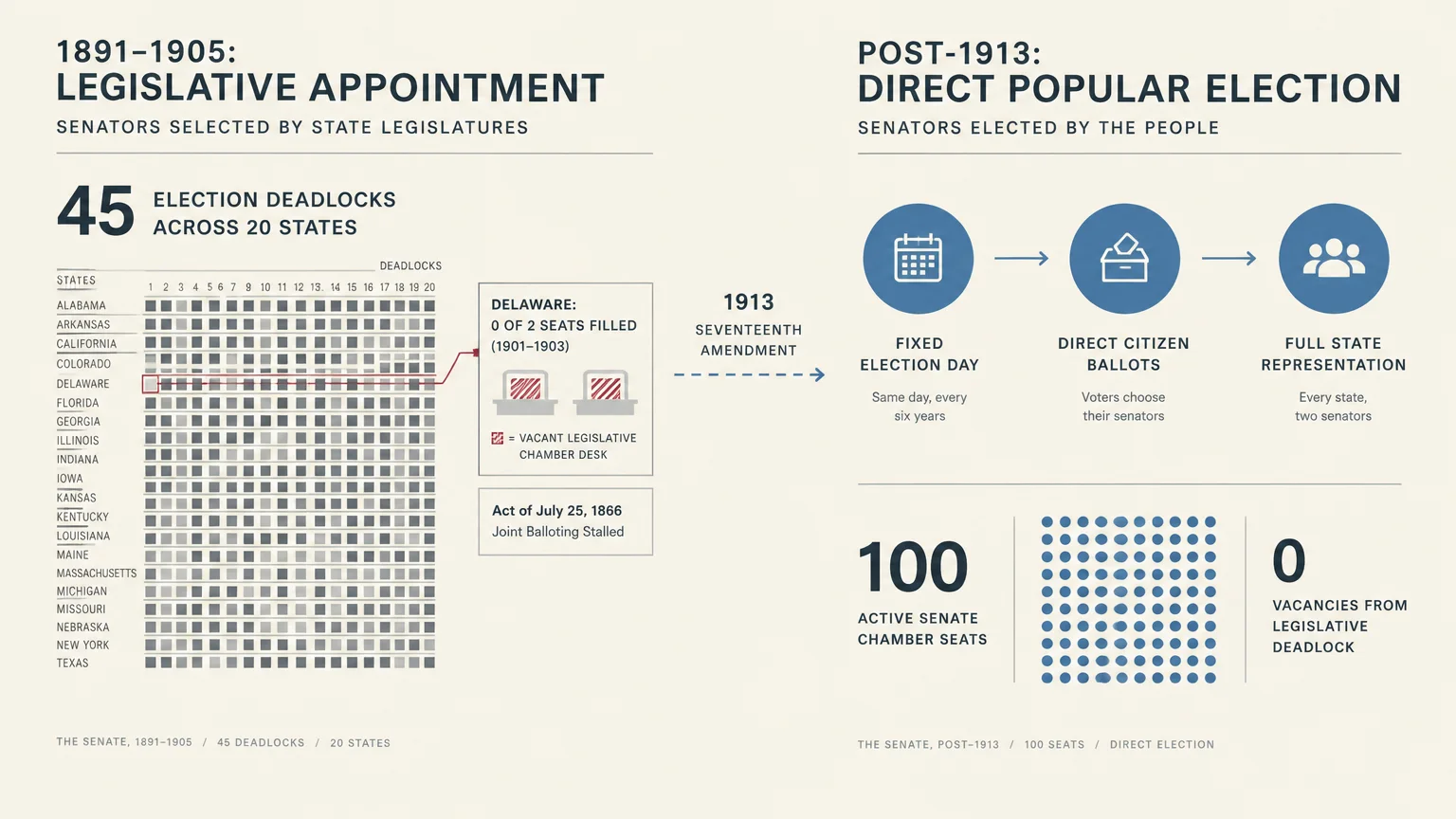
Between 1891 and 1905, state legislatures suffered 45 separate election deadlocks across 20 different states.
These prolonged disputes left millions of citizens without their constitutionally guaranteed equal representation in Congress.
Delaware suffered the most egregious structural breakdown in the nation; partisan paralysis left the state partially unrepresented for years.
The state experienced repeated deadlocks between rival Republican factions led by gas magnate J. Edward Addicks.
Between 1901 and 1903, Delaware held zero representation in one of its two Senate seats because rival factions blocked every candidate.
During the 56th Congress, three separate states suffered vacancies because their state legislatures failed to elect a candidate.
To curb these chronic standoffs, Congress had passed the Act of July 25, 1866 (14 Stat. 243).
That statute required daily joint legislative balloting at noon, yet obstinate lawmakers routinely cast blank ballots to prolong gridlock indefinitely.
Factional party bosses frequently weaponized these deadlocks to deny political rivals a seat in Washington.
The Seventeenth Amendment removed state legislatures from this equation entirely, ensuring that legislative spite could no longer paralyze representation.
You now elect senators on fixed, predictable election days, preventing state lawmakers from depriving your state of its federal voice.
Dismantling Boss-Controlled Seats and Millionaire Syndicates
During the late nineteenth century, journalists and citizens routinely derided the upper chamber as the “Millionaires’ Club.”
Industrial trusts, railroad conglomerates, and mining syndicates recognized that buying a few dozen state lawmakers cost far less than persuading the public.
Because a candidate needed only a bare majority in a state legislature, corporate agents routinely traded cash for legislative votes.
In Montana, copper king William A. Clark faced intense scrutiny in 1899 after investigators found envelopes stuffed with thousands of dollars given to state lawmakers.
Clark resigned his seat before the Senate could vote to unseat him, only for Montana’s lieutenant governor to immediately reappoint him.
The most explosive scandal involved Illinois Republican William Lorimer, whom the state legislature selected in 1909.
A subsequent state investigation revealed that four state legislators accepted bribes totaling thousands of dollars to vote for Lorimer.
In addition, investigators uncovered a $100,000 corporate slush fund raised by Chicago industrial barons to manipulate the legislative tally.
As documented in the official Senate Election, Expulsion, and Censure Cases, the Senate investigated Lorimer’s election twice.
During the first inquiry in 1911, the Committee on Privileges and Elections cleared Lorimer, sparking national public outrage.
A second Senate inquiry reopened the matter, gathering overwhelming evidence of corrupt vote-buying across the Illinois General Assembly.
On July 13, 1912, the Senate voted 55 to 28 to declare Lorimer’s election corrupt and invalid, unseating him from office.
The Lorimer scandal shocked the public and convinced remaining skeptics that indirect elections invited wholesale bribery.
Direct elections forced wealthy interests to compete before millions of voters, making it impossible to buy an election with a single bag of cash.
Candidates could no longer rely solely on corporate syndicates; they needed broad coalitions of working-class and middle-class voters to win.
Codifying Grassroots Primary Ballots Pioneered by the Oregon System
Frustrated by decades of congressional foot-dragging, Western states designed innovative mechanisms to force popular democracy on reluctant politicians.
The movement gained powerful momentum through populist and progressive reformers who demanded direct primary elections.
In 1908, Oregon voters passed a landmark ballot initiative known across the country as the “Oregon System.”
Under this procedure, legislative candidates signed formal pledges promising to vote for whichever U.S. Senate candidate won the statewide popular primary.
“Statement Number One” on the Oregon ballot legally bound state legislators to follow the popular vote, regardless of party affiliation.
The system worked so effectively that Oregon’s Republican-dominated legislature elected Democrat George Chamberlain in 1909 after voters selected him in the primary.
By the time Congress acted, 28 states had already adopted popular preferential primaries or binding candidate pledges.
According to the U.S. Senate Historical Office, Western state reforms made constitutional change inevitable.
Reformers also utilized Article V to bypass congressional resistance.
By 1910, 27 of the required 31 states had formally petitioned Congress for an Article V constitutional convention to force the issue.
Fearing a runaway constitutional convention that might rewrite other federal powers, the Senate finally surrendered its opposition on May 13, 1912.
The 62nd Congress passed House Joint Resolution 39 by a vote of 238 to 39 in the House and 64 to 24 in the Senate.
Connecticut became the decisive 36th state to ratify the amendment on April 8, 1913.
Secretary of State William Jennings Bryan certified the amendment on May 31, 1913.
The Seventeenth Amendment did not invent direct Senate voting from scratch; it codified the grassroots system that ordinary citizens had already built.
Establishing Modern Statewide Retail Campaigning
Before direct elections, senatorial hopefuls rarely campaigned among ordinary citizens in public squares or rural farming communities.
Instead, aspiring politicians spent their energy lobbying roughly 100 to 200 state lawmakers inside smoke-filled capital conference rooms.
The Seventeenth Amendment transformed the fundamental skillset you expect from a U.S. Senate candidate.
Contenders now had to build statewide campaign operations, tour diverse counties, and deliver speeches to mass audiences.
The first direct vote under the new amendment occurred in Georgia on July 15, 1913, where incumbent Augustus O. Bacon ran unopposed in a special election.
The first contested popular Senate election took place in Maryland on November 4, 1913.
In that historic contest, Democrat Blair Lee defeated Republican Thomas Parran by a margin of 112,485 votes to 73,300 votes.
Lee’s victory demonstrated that candidates needed public charisma, media strategy, and broad grassroots enthusiasm to secure victory.
Candidates were forced to speak directly to farmers, factory workers, and civic organizations rather than relying on backroom legislative patrons.
Nominees began using campaign trains, direct mailers, and newspaper advertising to appeal to voters across rural and urban divides.
This shift fundamentally expanded democratic debate, forcing Senate hopefuls to take clear public stances on tariff policies, labor laws, and currency reform.
Today, you evaluate Senate contenders through televised debates, public rallies, and community town halls because of this constitutional pivot.
Cementing the Modern Incumbency Advantage
Progressive advocates promised that direct elections would sweep corrupt, long-serving politicians out of office.
Reformers argued that public voting would act as an institutional broom, purging entrenched party loyalists from Capitol Hill.
However, historical election returns directly contradict the notion that direct democracy eliminated entrenched incumbents.
In November 1914, the nation held its first nationwide direct Senate elections across all 32 Class 3 seats.
Remarkable federal records reveal that 100 percent of incumbent senators who sought reelection in 1914 won their contests.
Every sitting senator who ran retained their seat, proving that direct elections did not automatically lead to high turnover.
Rather than weakening incumbents, direct elections gave sitting lawmakers new tools to consolidate their public standing.
Senators capitalized on name recognition, franked congressional mail, and federal constituent services to appeal directly to voters.
As the Constitution Annotated explains, the amendment democratized the ballot without destabilizing the chamber’s institutional continuity.
Furthermore, candidates who built strong personal brands could withstand shifts in state legislative control that previously would have ended their careers.
In the old system, a change in state legislative majorities meant automatic defeat for the sitting senator.
Under popular elections, popular incumbents routinely won reelection even when the opposing party captured the statehouse.
This dynamic established the powerful senatorial incumbency advantage that you still observe in contemporary congressional elections.
Shifting Interim Selection Power to State Governors
When a Senate seat became vacant under the original Constitution, only the state legislature could fill it.
If the legislature was out of session, the state executive could make temporary appointments until the next legislative meeting.
The Seventeenth Amendment created a flexible vacancy clause that permanently transformed how mid-term replacements reach Washington.
Under the text certified by the National Archives, state legislatures can empower governors to make temporary appointments until a special election.
This mechanism shifted enormous institutional leverage directly into the hands of state chief executives.
More than 200 senators have entered the chamber through gubernatorial appointment rather than direct election since 1913.
Appointed senators often gain immediate incumbency advantages, utilizing committee assignments and public exposure to win subsequent special elections.
Today, 46 states authorize their governors to appoint interim senators, while only Kentucky, North Dakota, Rhode Island, and Wisconsin prohibit it.
Oregon became the 46th state to permit interim gubernatorial appointments after passing an updated statute in July 2025.
In addition, 35 states allow an appointed senator to serve until the next regularly scheduled statewide general election.
Fifteen states require an accelerated standalone special election, though 11 of those permit an interim appointee while that election is organized.
Furthermore, nine states now legally require the governor to choose an appointee from the departing senator’s political party.
In Oregon, for example, the 2025 statute requires the appointee to have been affiliated with that party for at least 180 days.
Similar party-continuation laws operate in Arizona, Hawaii, Maryland, Montana, North Carolina, Utah, West Virginia, and Wyoming.
You will see this appointment power directly affect the balance of power during the November 3, 2026 midterm elections.
That election will feature 35 Senate races, including two high-profile special elections for seats vacated in early 2025 by Vice President JD Vance in Ohio and Secretary of State Marco Rubio in Florida.
Decoupling State Legislative Elections from National Partisanship
Before 1913, your vote for a state representative served as an indirect proxy vote for the U.S. Senate.
National party committees heavily meddled in statehouse races, flooding local campaigns with out-of-state money to secure legislative control.
Local matters like municipal roads, school funding, and state courts were often ignored during legislative campaigns.
Citizens were forced to choose between a preferred local representative and their preferred national balance of power in Washington.
In many states, voters elected state representatives purely because of which senatorial candidate that lawmaker promised to support.
By transferring Senate elections to a separate ballot line, the Seventeenth Amendment liberated state legislatures from federal proxy wars.
You gained the ability to split your ticket, choosing a state representative for local policies and a senator for national policies.
State legislators could no longer win office simply by promising to back a popular national figure for the Senate.
This separation fostered greater professionalization in state government while making state lawmakers directly accountable for local legislation.
It also forced Senate candidates to construct their own independent campaign organizations rather than relying on state legislative coattails.
As a result, state assemblies regained their focus on state-level statutory reforms, public infrastructure, and local economic development.
Synchronizing the Staggered Three-Class Senate System
The transition to direct popular elections did not transform the entire Senate overnight.
To preserve the constitutional requirement of rotating one-third of the chamber every two years, the reform unfolded in waves.
The Framers had established three distinct Senate classes in 1789 to prevent abrupt, destabilizing political upheavals.
Implementing the Seventeenth Amendment across these existing cohorts required three separate federal election cycles.
Class 3 senators faced the voters first during the November 1914 elections.
Class 1 senators followed in November 1916, marking the first time two-thirds of the chamber held popular mandates.
The final group, Class 2, faced statewide voters in November 1918.
On March 4, 1919, the 66th Congress convened with all 96 senators having attained office through direct popular election.
This methodical transition proved that the nation could dramatically expand democratic participation without fracturing the constitutional architecture.
The staggered six-year cycle continues to shield the Senate from sudden swings in public mood while guaranteeing ongoing voter oversight.
It ensures that two-thirds of the chamber always possesses legislative experience, balancing institutional stability with direct democratic legitimacy.
Today, you still experience this constitutional pacing every two years when approximately one-third of the Senate stands for election.
| Year | Milestone / Event | Legal / Electoral Mechanism | Significance for Voter Control |
|---|---|---|---|
| 1908 | Oregon System Adopted | Advisory Primary & Pledge | 28 states adopted popular primaries before the federal amendment. |
| 1912 | William Lorimer Unseated | Senate Vote (55–28) | Bribery scandal broke final Senate resistance to direct elections. |
| 1912 | Amendment Passes Congress | House Joint Resolution 39 | 62nd Congress sent direct election measure to the states. |
| 1913 | Ratification Completed | 36th State (Connecticut) | Transferred Senate elections from state legislatures to voters. |
| 1913 | First Contested Election | Maryland Special Election | Blair Lee won by 39,185 votes in first contested popular race. |
| 1914 | First Full Class Vote | Class 3 Senate Elections | 100% of incumbents running won, establishing modern incumbency power. |
| 1919 | Full Chamber Transition | 66th Congress Convenes | Completed full direct popular transition across all three Senate classes. |
| 2025 | Oregon Vacancy Reform | State Statute Enacted | 46 states now permit interim appointments by governors. |
What the Seventeenth Amendment Means for Modern Senate Elections
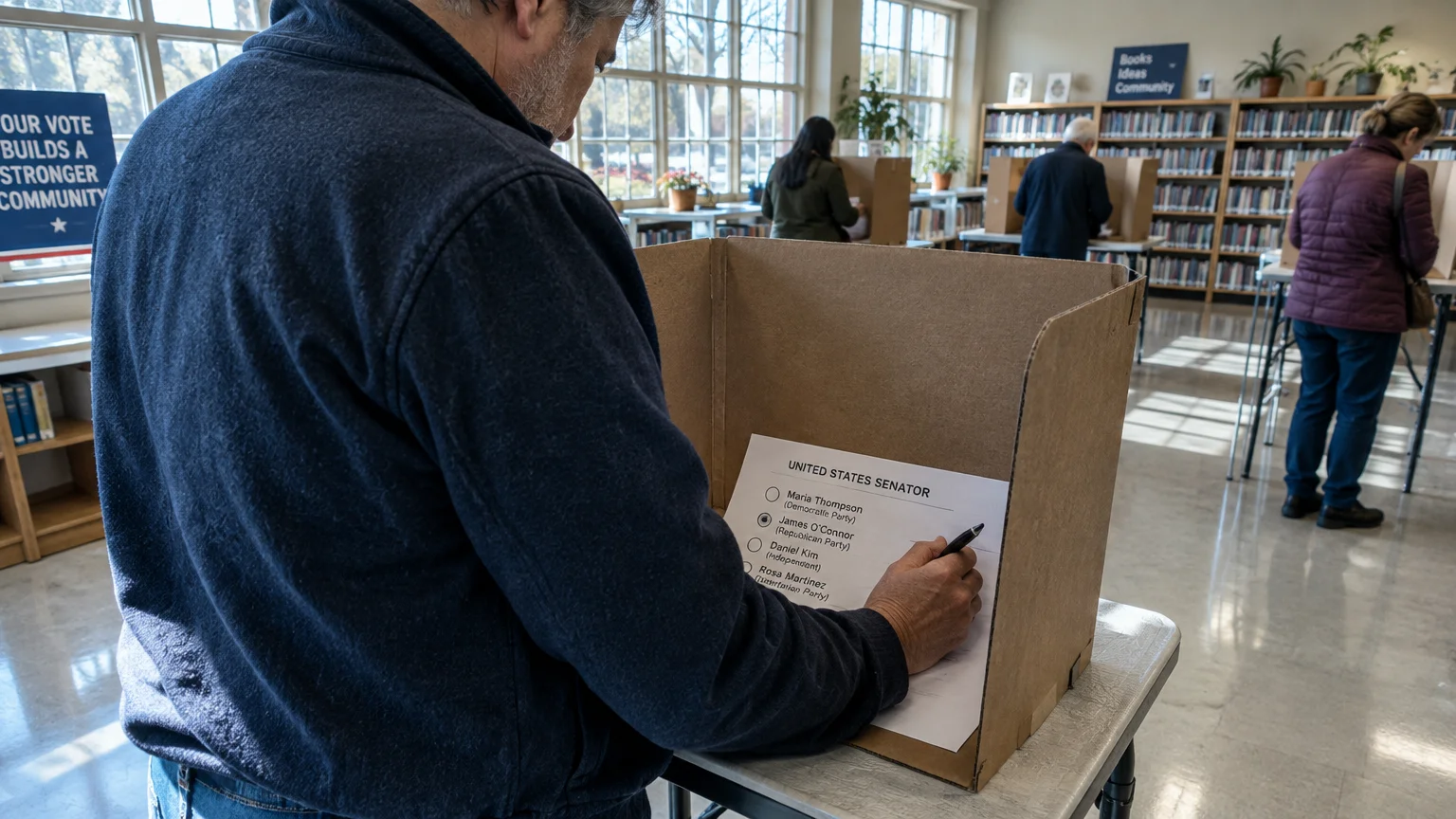
When you cast your ballot for the U.S. Senate today, you exercise a right that took decades of grassroots struggle to secure.
The Seventeenth Amendment fundamentally shifted power away from party bosses, state legislative caucuses, and corporate syndicates.
It established a modern political environment where candidates must court broad, diverse electorates across every county in your state.
However, direct elections did not remove money or influence from federal politics; they simply redirected campaign spending toward mass media and voter outreach.
Modern campaigns spend billions of dollars on digital advertisements, television broadcasts, and voter turnout operations rather than legislative lobbying.
In addition, the amendment’s vacancy provisions continue to shape chamber control in unexpected ways.
With over 200 appointed senators in history, gubernatorial selections routinely alter party majorities before voters ever cast a ballot.
In the 2026 cycle alone, appointed senators in Ohio and Florida will defend their seats in pivotal midterm special elections.
State-level legal reforms continue to refine this dynamic, with states like Oregon requiring appointees to match the departing senator’s political party.
Understanding this history allows you to evaluate contemporary debates about judicial appointments, campaign finance, and proposed constitutional amendments with clarity.
The Seventeenth Amendment remains one of the most consequential expansions of popular sovereignty in American constitutional history.
Frequently Asked Questions About the Seventeenth Amendment
Can a state legislature repeal the Seventeenth Amendment on its own?
No state legislature can unilaterally disregard or opt out of the Seventeenth Amendment.
Because the amendment is part of the U.S. Constitution, returning to legislative selection requires a new constitutional amendment under Article V.
That process demands either a two-thirds vote in both houses of Congress or an application by two-thirds of state legislatures, followed by three-fourths ratification.
Why did the Framers originally assign Senate elections to state legislatures?
The Framers intended the Senate to represent state sovereignty, serving as an institutional check against the directly elected House of Representatives.
In The Federalist No. 62, the Framers argued that legislative selection would favor seasoned, distinguished statesmen over popular demagogues.
By the late nineteenth century, however, rampant corporate bribery and legislative gridlock thoroughly undermined that original theoretical design.
How do governors handle Senate vacancies under current state laws?
Under the amendment’s vacancy clause, state law determines whether the governor can fill a sudden Senate vacancy.
As of September 2025, 46 states grant their governors interim appointment power, while four states require the seat to stay vacant until a special election.
In nine of those states, the governor must select a replacement belonging to the same political party as the vacating senator.
Did direct elections actually eliminate the power of wealthy donors in the Senate?
Direct popular elections ended the direct purchase of legislative seats in capital hotel rooms, but they did not eliminate the role of wealth.
Instead, the amendment increased campaign costs by requiring candidates to reach hundreds of thousands or millions of voters statewide.
Candidates became reliant on mass fundraising, media advertising, and donor networks rather than backroom deals with a handful of state lawmakers.