Every federal election takes place on the first Tuesday after the first Monday in November. You cast your ballot on this specific weekday because 19th-century federal statutes accommodated horse-and-buggy travel across an agrarian nation.
Congress designed this calendar framework to align with seasonal harvests, protect religious observances, and prevent early election returns from altering voter turnout.
Understanding these statutory roots explains why our modern voting schedule persists and how federal election laws continue to govern your access to the ballot box.
How Congress Standardized the Federal Election Calendar
Federal election timing is not an accident of tradition or an unchangeable constitutional rule. Article II, Section 1, Clause 4 of the U.S. Constitution gives Congress the authority to determine when states appoint presidential electors.
For the first five decades of American history, individual states chose their electors across an uncoordinated month-long span. That fragmented system created administrative confusion and opened the door to widespread partisan manipulation.
Congress addressed this chaos by passing uniform federal election laws during the 19th century. Lawmakers balanced practical travel obstacles, commercial market days, and religious customs to settle on early November Tuesdays.
This list examines the six foundational facts behind our national voting date. We selected each entry based on federal statutes, congressional floor debates, and historical records preserved by the National Archives.
These historical milestones establish a clear legal timeline spanning from the Second Congress in 1792 through 20th-century voting reforms. Each statute reflects a deliberate legislative choice to solve emerging logistical and technological challenges.
By reviewing these legal milestones, you can trace how an agrarian compromise became the enduring standard for modern American democracy.
The Chaotic Thirty-Four-Day Voting Window
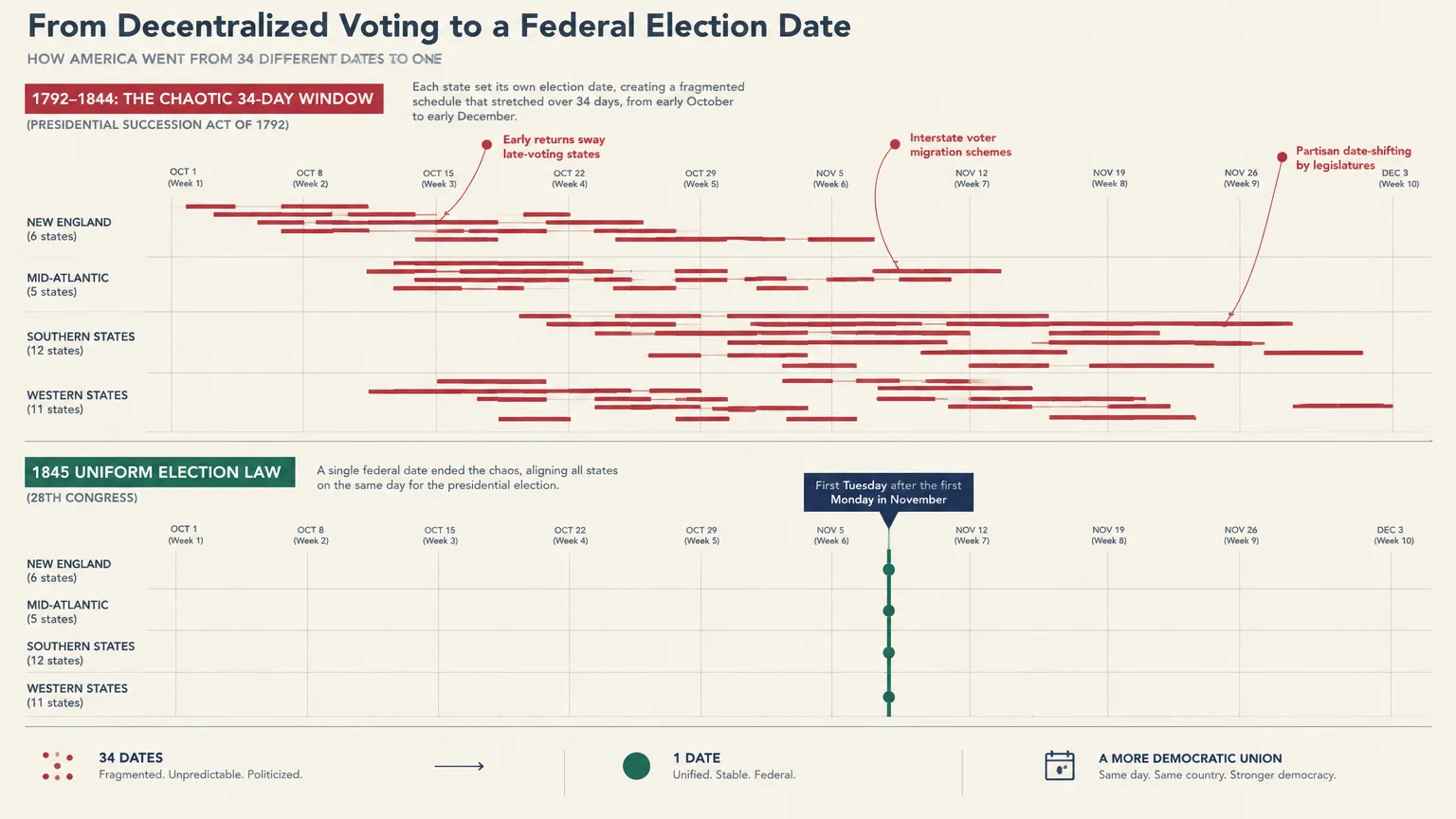
Before 1845, you would not have experienced a single, nationwide Election Day. Instead, each state scheduled its own federal voting date according to local preferences.
Congress established this decentralized schedule through the Presidential Succession Act of 1792 (1 Stat. 239).
The statute permitted states to conduct presidential elections anytime within a 34-day window before the first Wednesday in December.
Under this flexible standard, early national elections unfolded as rolling, disjointed contests. Some states cast ballots in early October, while others waited until late November or early December.
This decentralization accommodated the primitive transportation networks of the early republic. The federal government lacked the administrative capacity to manage simultaneous voting across distant frontier regions.
However, the 34-day window produced severe political distortions across the young country. States that voted late routinely waited to review early returns from other jurisdictions before mobilizing their own voters.
Partisan campaigns exploited these rolling schedules to create artificial electoral momentum. Newspaper editors published early returns from neighboring states to discourage opposition turnout and sway undecided citizens.
Political operatives also organized voter migration schemes across state lines during extended voting periods. Operatives transported partisan voters into later-voting jurisdictions, sparking frequent accusations of illegal repeat balloting.
These abuses intensified during the fierce presidential contests of 1828 and 1840. Expanding voter participation placed unprecedented strain on this uncoordinated and vulnerable state-by-state voting system.
State legislatures frequently shifted their election dates to maximize their state’s political leverage. This continuous schedule manipulation eroded public confidence in the integrity of presidential outcomes.
Federal election officials struggled to verify that electors were appointed within statutory deadlines. The staggered calendar generated repeated procedural challenges when Congress met to certify Electoral College results.
By the early 1840s, congressional leaders agreed that staggered elections invited systemic corruption. Lawmakers concluded that establishing a single national voting day was essential to secure federal elections.
The 34-day voting window proved that decentralization without coordination invited electoral chaos. Congress needed a statutory solution that established strict national uniformity.
Telegraph Technology and Early Return Fraud
The invention of the electric telegraph destroyed the practical viability of the 34-day voting window. Before instant telecommunications, election results traveled slowly across dirt roads by horseback or postal coach.
In March 1843, Congress appropriated $30,000 to construct Samuel Morse’s experimental telegraph line connecting Washington, D.C., with Baltimore. That modest investment permanently altered how political information spread across state borders.
Morse transmitted his famous message, “What hath God wrought,” on May 24, 1844. Within months, commercial telegraph networks expanded rapidly between major urban centers along the Atlantic coast.
The disruptive impact of this technology surfaced immediately during the November 1844 presidential election between James K. Polk and Henry Clay.
For the first time, election results bypassed normal travel delays.
Early returns from states like Pennsylvania and Ohio flashed across telegraph wires to states that had not yet voted. This immediate transmission of vote tallies disrupted ongoing elections in remaining states.
Congressional debates document how instant information distorted voter turnout in later-voting jurisdictions. When citizens discovered their candidate was trailing in early states, many became discouraged and stayed home.
Even worse, early returns encouraged aggressive ballot manipulation in undecided territories. Partisan organizers hired “floaters” to travel across state lines to cast illegal ballots in competitive states.
During House floor proceedings in December 1844, lawmakers warned that rapid communication made coordinated fraud simple. Representative Alexander Duncan of Ohio argued that staggered dates invited political cartels to manipulate outcomes.
The Congressional Globe recorded intense arguments about protecting the ballot from instantaneous communication. Members acknowledged that early telegraph reports effectively disenfranchised voters in late-reporting districts.
Congress recognized that lawmakers could not restrict the telegraph or prevent newspapers from reporting breaking results. The only constitutional solution was requiring every state to cast presidential ballots on the exact same day.
By standardizing the election calendar, Congress eliminated the information gap that fueled cross-border corruption. Simultaneous voting prevented any state from reacting to another state’s certified tallies.
Technological progress forced Congress to modernize electoral administration. The electric telegraph directly accelerated the passage of uniform federal election timing.
Agrarian Harvest Calendars and Winter Weather
When Congress chose November for federal elections, lawmakers adapted the schedule to the rhythms of American agriculture. In the 1840s, the vast majority of the American labor force worked on farms.
Today, less than 2% of employed Americans work in agriculture, according to the U.S. Census Bureau. Yet the 19th-century agrarian calendar still dictates when you vote today.
Spring was an impractical time to schedule national elections because farmers had to plow fields and plant crops. Leaving fields during planting season threatened a family’s livelihood and food security for the year.
Summer presented equally severe obstacles for farming communities across the country. Rural families spent June, July, and August cultivating crops, cutting hay, and maintaining equipment in intense summer heat.
Early autumn was fully committed to the demanding labor of harvesting major staple crops. Farmers worked long hours gathering corn, picking cotton, harvesting wheat, and storing produce before the first frost.
By early November, farmers had completed the bulk of their harvest chores. The harvest was safely stored in barns, providing rural citizens a brief window of availability for civic duties.
Delaying elections until December or January would have severely restricted voter turnout. Nineteenth-century rural roads were unpaved dirt paths that turned into impassable mud or froze into treacherous ruts during winter.
Heavy snow and freezing temperatures routinely isolated rural homesteads in northern states and western territories. Traveling long distances to a polling site in midwinter posed serious physical hazards for voters.
November occupied the perfect operational window between seasonal farm work and severe winter weather. Dirt roads remained passable for horse-and-buggy travel, and agricultural workers could spare time away from their land.
Floor speeches during the 28th Congress repeatedly cited rural road conditions as a decisive factor. Lawmakers emphasized that scheduling elections after November would effectively disenfranchise frontier populations.
By choosing early November, Congress maximized political participation among the nation’s agrarian majority. The federal government anchored the national calendar to the practical realities of working people.
This agrarian compromise remains embedded in federal statute books. Although the American economy evolved into an urbanized society, our national voting schedule remains anchored to the harvest cycle.
Sabbath Observance and County Seat Market Days
Selecting Tuesday solved a difficult balance between religious observance, travel limitations, and local commerce. In the 19th century, polling locations were not established in local neighborhood precincts.
Instead, voters traveled to their designated county seat to cast paper ballots at the courthouse. Rural residents often lived fifteen to twenty miles away from these central administrative hubs.
Because voters traveled by horse, buggy, or on foot, reaching the county seat took an entire day. A complete voting trip required three consecutive days for travel, balloting, and the return journey.
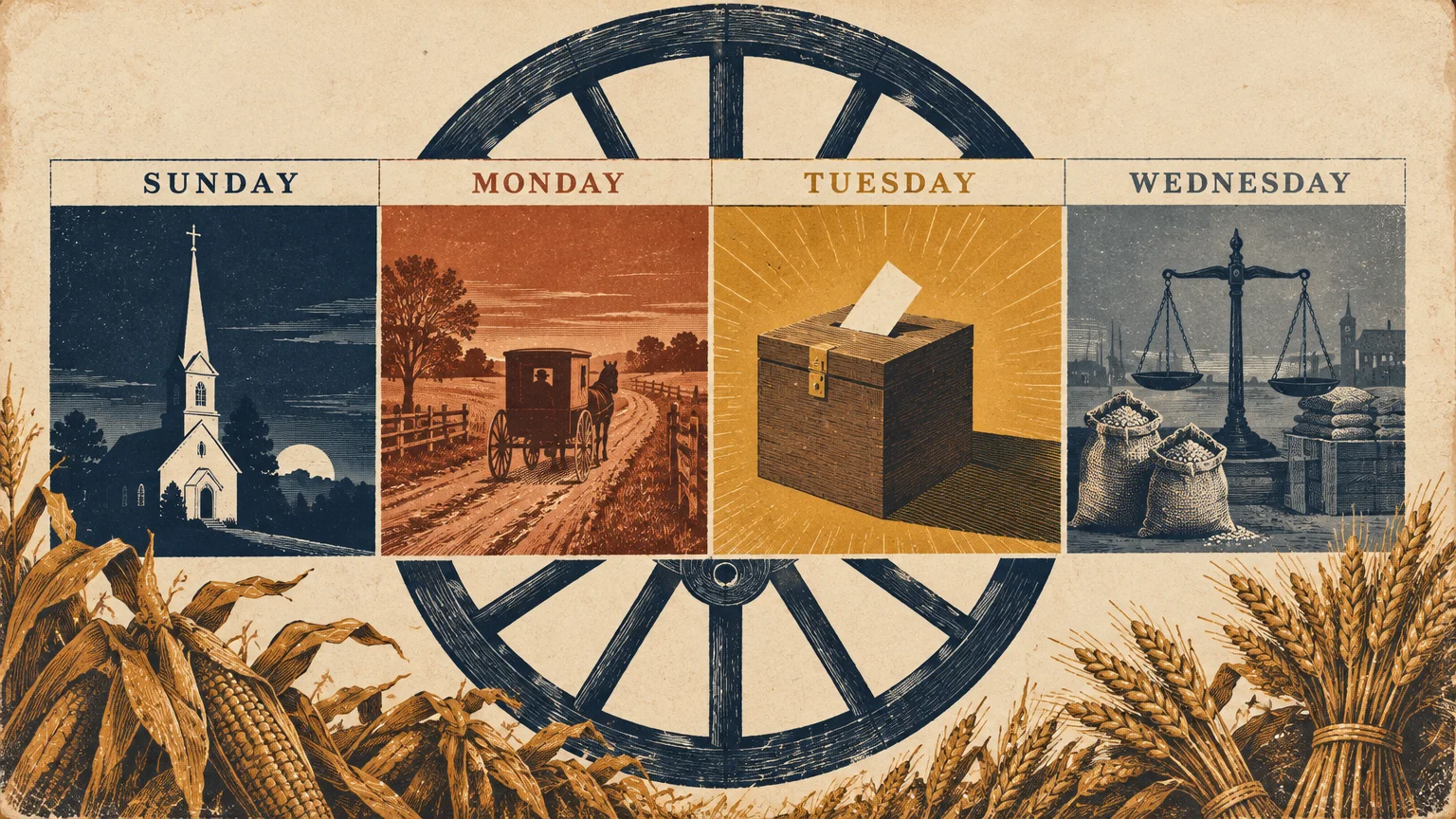
Holding national elections on Monday was unacceptable to 19th-century American society. Voting on Monday would force rural citizens to begin their journey on Sunday.
Traveling on Sunday violated the Christian Sabbath, which prohibited unnecessary travel and secular business. Devout voters and religious institutions fiercely opposed any voting schedule that disrupted Sunday worship.
Wednesday presented an equally difficult hurdle for rural communities. In most counties, Wednesday was designated as market day, when farmers brought livestock and crops into town for auction.
Scheduling an election on market day caused overcrowding and commercial confusion at the county seat. Farmers could not easily manage public voting and private commerce on the exact same day.
County courts also held regular judicial sessions on Wednesdays. Lawmakers avoided combining court dockets, market congestion, and polling lines within small county seats.
Tuesday offered the ideal compromise between spiritual duties and commercial routines. Voters could attend religious services on Sunday, travel to the county seat on Monday, and vote on Tuesday.
After casting ballots on Tuesday, farmers could conduct business or return home before Wednesday market trading commenced. This schedule accommodated county commerce without disenfranchising rural voters.
Tuesday was never selected for modern convenience, but rather as an essential buffer for rural life. It respected religious rest on Sunday while preserving vital economic markets on Wednesday.
This delicate logistical balance prioritized accessibility for an agrarian citizenry. Congress tailored national democracy to align with established weekly social routines.
The First-Monday Rule and Merchant Accounting
Federal law does not simply designate the first Tuesday in November as Election Day. Instead, the statute mandates the Tuesday next after the first Monday in the month.
This precise phrasing prevents Election Day from ever falling on November 1. If Congress had selected the first Tuesday, Election Day would land on November 1 whenever a month began on a Tuesday.
Lawmakers deliberately avoided November 1 because of religious and economic conflicts. First, November 1 is All Saints’ Day, a sacred holy day of obligation in the Roman Catholic Church.
Catholic doctrine requires members to attend mass and refrain from unnecessary servile work on All Saints’ Day. Congress structured the calendar so Catholic voters would never have to choose between their faith and their ballot.
Second, the first day of each month was critical to 19th-century business operations. Merchants, bankers, and shopkeepers traditionally reserved the first day of the month to balance their books.
Business owners tallied monthly accounts, recorded credit transactions, and settled outstanding debts on the first. Traveling to vote on the first day of the month disrupted these sensitive commercial tasks.
Lawmakers also worried that end-of-month financial settlements could improperly influence voting behavior. Rapid debt collections or sudden foreclosures on November 1 might sway how distressed business owners cast ballots.
Congressional drafting records show that lawmakers intentionally included the first-Monday buffer to protect financial routines. Balancing business stability and civic duty was an explicit goal of the 28th Congress.
The “first Monday” rule ensures that November 1 always passes before the national election takes place. Consequently, federal Election Day must always fall between November 2 and November 8.
This statutory mechanism shielded religious observances and protected commercial accounting simultaneously. It remains a masterclass in pragmatic 19th-century legislative drafting that still governs your ballot today.
The mathematical precision of this rule prevents calendar collisions year after year. It demonstrates how statutory drafting solved multi-layered societal friction points in early America.
Congressional Expansion and Uniform Ballot Mandates
The original 1845 law applied solely to the appointment of presidential electors. President John Tyler signed the Presidential Election Day Act of 1845 (5 Stat.
721) on January 23, 1845.
The nation held its first unified presidential election under the statute on November 7, 1848, electing Zachary Taylor. However, congressional elections remained scattered across different dates for another three decades.
Individual states continued electing representatives in the spring, summer, or autumn of even-numbered years. This fractured schedule created strange anomalies where some lawmakers waited over a year to take their seats.
To unify the legislative branch, Congress passed the Apportionment Act of February 2, 1872 (17 Stat. 28).
The law established a uniform national election day for the House of Representatives.
Congress refined this statutory framework on March 3, 1875, codifying the mandate at 2 U.S.C. § 7. The uniform House voting schedule took full effect across all states during the 1876 federal elections.
According to historical analyses from the Office of the Historian of the U.S. House of Representatives, unifying congressional voting prevented regional momentum from tipping national control.
Because state legislatures selected U.S. senators under the original Constitution, the 1872 statute did not apply to the Senate. Direct popular election of senators required a constitutional amendment.
The ratification of the Seventeenth Amendment in 1913 instituted the direct popular election of senators. Congress quickly extended the Tuesday-in-November mandate to regular Senate elections beginning in 1914.
A detailed study by the Congressional Research Service confirms that this completed the unification of federal elections. Every regular federal contest now occurred on the same coordinated date nationwide.
Through these successive statutes, Congress transformed an emergency anti-fraud measure into a comprehensive national standard. The November Tuesday rule grew from a presidential fix into the bedrock of American representative elections.
Today, 2 U.S.C. § 7 continues to dictate congressional scheduling across all fifty states. It binds congressional races directly to the presidential voting timetable established back in 1845.
This comprehensive framework unified all federal elections under a single, synchronized statutory umbrella. It ensures that national representation is decided simultaneously across the entire republic.
| Statute or Measure | Year Enacted | Federal Offices Covered | Statutory Date Mandate |
|---|---|---|---|
| Presidential Succession Act | 1792 | Presidential Electors | 34-day window before December |
| Presidential Election Day Act | 1845 | Presidential Electors | Tuesday after first Monday in Nov |
| Apportionment Act (2 U.S.C. § 7) | 1872 | U.S. Representatives | Tuesday after first Monday in Nov |
| Seventeenth Amendment Expansion | 1914 | U.S. Senators | Tuesday after first Monday in Nov |
Why the 1845 Framework Still Shapes Modern Voting
The logistical conditions that inspired the 1845 law have disappeared from modern American life. Paved highways, motor vehicles, and electronic communications have replaced horse-and-buggy travel and the primitive Morse telegraph.
Despite these technological transformations, federal law still anchors our elections to early November Tuesdays. Congress retains full constitutional authority to adjust federal voting dates, but the statutory baseline remains remarkably resilient.
Today, federal Election Day is not a paid federal holiday under 5 U.S.C. § 6103. While federal employees do not receive an automatic day off, state laws have evolved to accommodate working voters.
Fourteen states currently recognize Election Day as a formal state public holiday, closing local government offices and schools. Another 28 states and Washington, D.C., legally require employers to grant workers paid or unpaid voting leave.
These statutory accommodations help bridge the gap between 19th-century agrarian schedules and 21st-century corporate workweeks. State-level voting policies ensure that citizens can fulfill civic duties without sacrificing wages.
States have also modernized voting access through extensive no-excuse absentee voting and multi-week early voting periods. While millions of Americans cast ballots early, the Tuesday deadline remains the ultimate legal cutoff for federal tallies.
Under this enduring schedule, the next national midterm elections are set for November 3, 2026. The next presidential contest will follow on November 7, 2028.
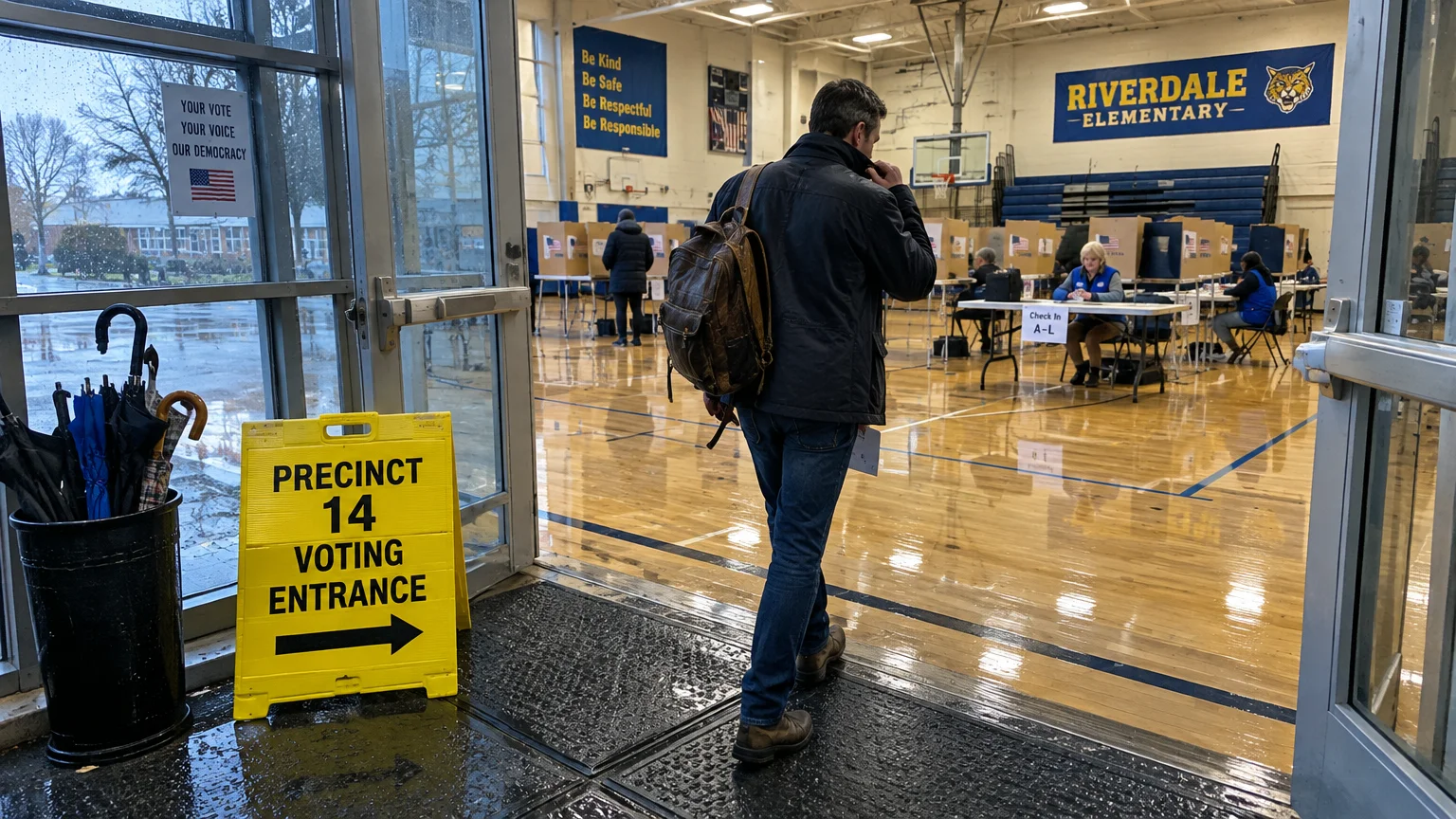
Whenever you enter a voting booth on a Tuesday morning, you interact with laws written for 19th-century dirt roads. Understanding this history empowers you to evaluate ongoing national debates over federal voting access and holiday reform.
The endurance of Tuesday voting highlights the institutional permanence of early federal statutes. What began as a compromise for farmers on horseback continues to structure modern civic participation across the United States.
Recognizing how these historical statutes function allows you to navigate voter registration deadlines, time-off requests, and ballot options effectively. The framework remains an active, governing force in your democratic rights.
Frequently Asked Questions About Federal Election Day
Can Congress change Election Day to a weekend without a constitutional amendment?
Yes, Congress possesses full constitutional authority to change federal election timing through regular legislation. Article I, Section 4 and Article II, Section 1 give Congress power over the times, places, and manner of federal elections.
Lawmakers would simply need to amend 2 U.S.C. § 7 and Title 3 of the U.S. Code. A constitutional amendment is not required to move voting to a Saturday or Sunday.
Past legislative proposals have suggested weekend voting to improve turnout among hourly workers. However, those proposals have consistently stalled due to logistical concerns and debate over poll worker availability.
Why hasn’t the federal government designated Election Day as a national holiday?
Designating a new federal holiday requires an act of Congress signed by the president. Lawmakers have introduced numerous bills to make Election Day a holiday, but none have achieved the necessary bipartisan votes.
Opponents cite the economic cost of closing federal agencies and financial markets for an additional business day. Other critics argue that expanded early voting and mail ballots make an official federal holiday unnecessary.
Because federal holidays only close federal agencies and banks, private employers would still not be required to give workers paid leave. Consequently, reform advocates increasingly focus on state-level voting leave laws.
What are the earliest and latest possible calendar dates for Election Day?
Under the “Tuesday next after the first Monday” formula, the earliest possible date for Election Day is November 2. This occurs whenever November 1 falls on a Monday.
The latest possible date is November 8, which occurs whenever November 1 falls on a Tuesday. The statutory formula guarantees that voting never occurs on November 1.
This narrow seven-day window provides predictability for state election administrators and campaign organizers. Every future federal election will inevitably fall between November 2 and November 8.
Does federal law require your employer to grant you time off to vote?
No federal statute mandates paid or unpaid voting leave for private-sector employees. Your rights to voting leave depend entirely on the statutory laws of your specific state.
Currently, 28 states and Washington, D.C., enforce laws requiring employers to give workers time off to vote. Many of these statutes require employees to provide advance notice to their supervisors.
You should check with your state election agency or human resources department before Election Day. Knowing your state’s voting leave provisions ensures you can cast your ballot without risking employment penalties.